
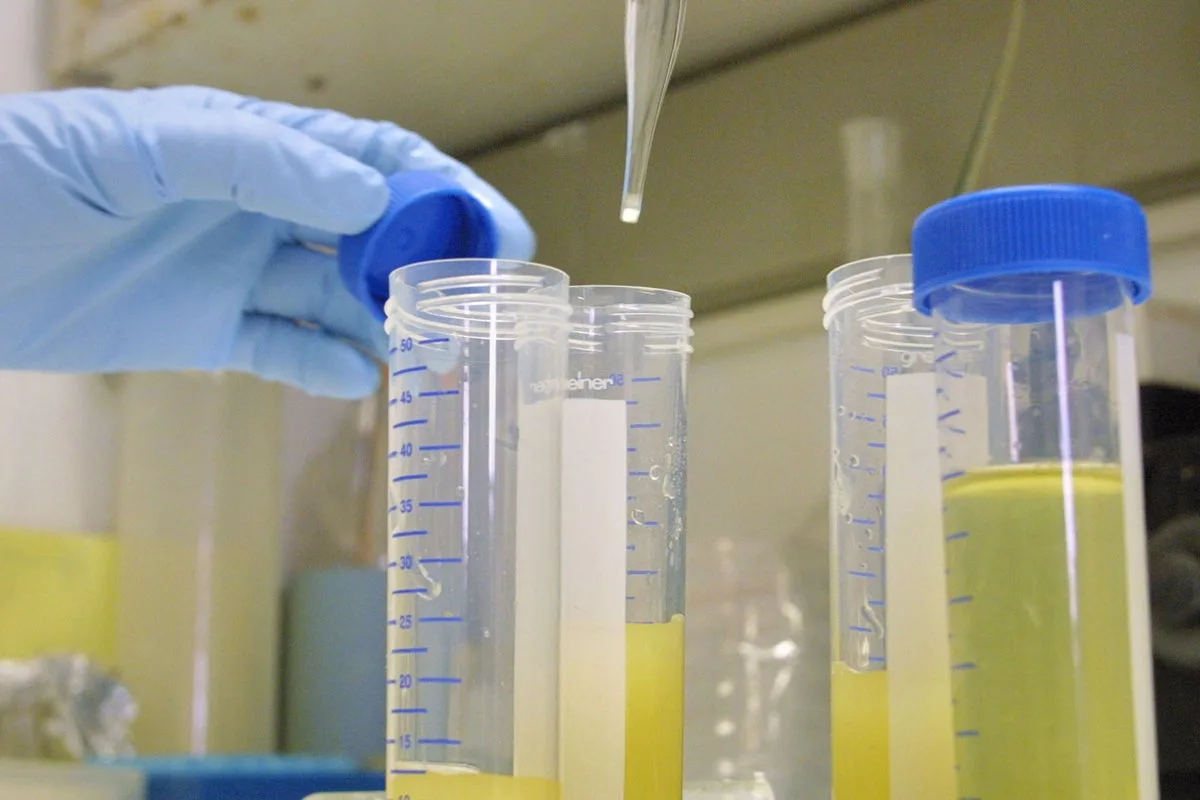
A groundbreaking urine test for lung cancer could be rolled out across the NHS within five years, offering a vital new tool for early diagnosis of the deadly disease. Currently, most lung cancer cases in England are identified at advanced stages, significantly complicating treatment and reducing survival chances.
The innovative test, developed by scientists funded by Cancer Research UK, identifies specific 'zombie' cell proteins that signal the presence of early-stage lung cancer. These senescent cells are alive but unable to grow and divide, and they can promote the emergence of cancer cells by reprogramming their environment.
Researchers have created a sensor that is injected into the body, interacting with zombie cell proteins and releasing a detectable compound into urine. The biomarker has been validated using human tissue samples and large genetic datasets, as described in the journal Nature Ageing.
Professor Ljiljana Fruk from the University of Cambridge expressed optimism, stating her hope to see the test 'working in real patients and rolled out across the NHS within the next five years, making a real difference to people at risk of this devastating disease.' The sensor has not yet been tested in humans, but clinical trials are the next step.
The test may also work for detecting other lung diseases such as pulmonary fibrosis, and the team is fundraising to adapt it for other types of cancer. Professor Daniel Munoz-Espin noted that the sensor could allow primary care detection of therapy resistance and early lung cancer development.
Cancer Research UK’s spokesman for the east of England, Patrick Keely, said: 'With new technologies opening doors to new discoveries, we’re living in a golden age of research, which is powerfully underlined by this innovative new urine test to detect early lung cancer.'




