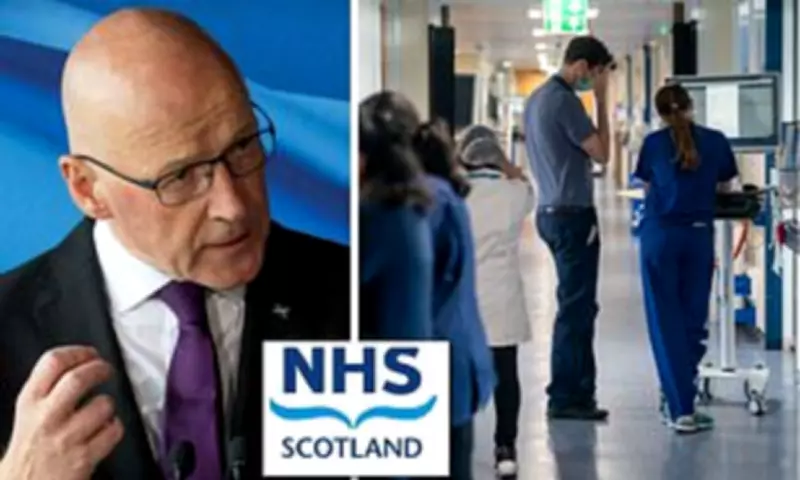
First Minister John Swinney and Health Secretary Neil Gray are facing intense pressure to issue a formal apology to patients after the Scottish Government conceded it will fail to meet its flagship pledge to eradicate year-long waits within the NHS. The admission has been branded "shameful" by political opponents, who accuse the SNP of overpromising and underdelivering on a critical healthcare commitment.
Broken Pledge on Year-Long Waits
The SNP administration had vowed to eliminate all waits exceeding fifty-two weeks for outpatient appointments, diagnostic tests, and inpatient treatments by the end of March 2026. This target was already an extension from an initial September 2024 deadline set in mid-2022. Despite recent efforts to reduce the post-pandemic backlog, an official progress report has now confirmed the goal will not be achieved.
Although the document notes that extreme waiting times are "substantially lower," it explicitly states: "Not every patient waiting over a year will have received their appointment or treatment by the end of March 2026." The data reveals outpatient waits for tests and treatments have only halved since July of last year, while inpatient and day case waits have fallen by less than thirty percent.

Political Condemnation and Demands for Accountability
Scottish Conservative health spokesman Dr Sandesh Gulhane led the criticism, declaring: "This is yet another shameful broken promise on the NHS from John Swinney and the SNP. Not having to wait more than a year for treatment should never have been an ambitious pledge, but that is the reality of the SNP-run health service." He highlighted that similar delays were "virtually eradicated" in England under the previous UK Conservative government, contrasting this with the tens of thousands of Scots still enduring excessive waits.
Scottish Labour deputy leader Jackie Baillie accused the government of knowingly stringing patients along, stating: "It has been obvious for quite some time that the SNP would fail to meet this target, yet they chose to string people along until they finally had to admit it." She pointed out that Swinney has already ruled out sacking Gray for the failure, suggesting the First Minister is "willing to accept failure in his government."
Scottish Liberal Democrat leader Alex Cole-Hamilton added: "The SNP are heading into this election with a series of broken promises. They cannot be trusted with your health. They do not deserve a single vote from anyone who's struggling to get the vital care they need."
Current Waiting Times and A&E Performance
As of January, 53,334 patients were waiting more than a year for treatment, including 6,391 who have been waiting over two years. The progress report indicates that health boards have been instructed to communicate with these patients and provide clearer timeframes, but it acknowledges some individuals waiting beyond two years may still lack an appointment date by April.
This revelation coincides with worsening A&E performance across Scotland. Last week, only 64.9 percent of emergency department patients were admitted, transferred, or discharged within the four-hour target, down from 66.4 percent. Waits of eight hours increased to thirteen percent of all patients, while twelve-hour waits remained steady at 5.5 percent.
Government Response and Defiance
In response, Health Secretary Neil Gray accepted there is "more to do" but insisted the NHS is "turning a corner." He said: "I am proud of the progress we have made and based on my discussions with NHS Chief Executives we expect further substantial improvements on long waits. The data clearly shows our NHS is turning a corner and with the current trajectory, I expect a number of specialties within Boards will have nobody waiting longer than a year for treatments or procedures by the end of March."
Gray emphasised "real, sustained progress," citing eight consecutive monthly reductions in year-long waits, fewer than fifty patients waiting in most specialties across health boards, and an additional 108,000 consultant-led outpatient appointments and procedures this year. However, the political fallout continues to mount as opposition parties demand accountability and apologies for what they describe as a betrayal of patient trust.