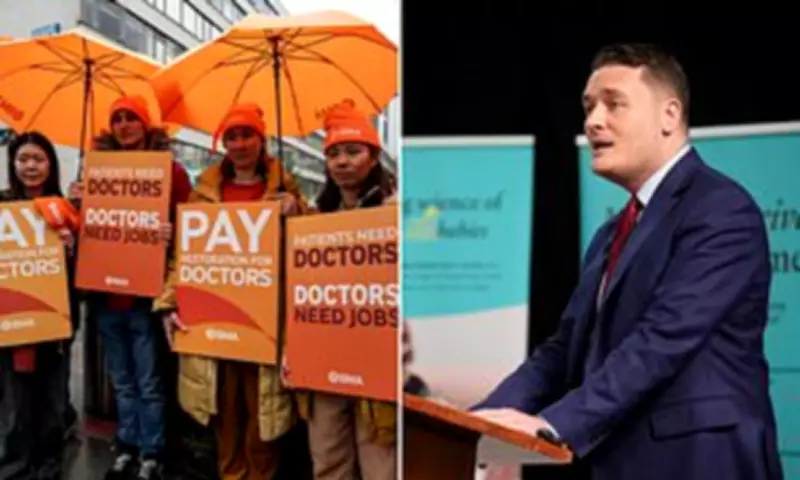
Health Secretary Wes Streeting has issued a firm ultimatum to resident doctors in England, demanding they accept the government's latest pay offer by next Thursday or risk losing it entirely. In a stark warning delivered to MPs, Streeting declared that any future proposal to the medics "will not look better than what is on offer today," as the government braces for potential economic impacts from the conflict in Iran.
Impending Strike Action Looms Large
Resident doctors, formerly known as junior doctors, are scheduled to commence a six-day strike at 7am on April 7, immediately following the Easter weekend. This marks the 15th instance of industrial action by these medical professionals within three years, as they continue to demand a substantial 26 per cent pay increase to address what they describe as years of pay erosion.
Government's Position on Pay and Global Uncertainty
Streeting revealed that the rejected deal would have provided resident doctors with an average pay rise of 4.9 per cent this year. He emphasized that, combined with previous pay decisions, this package would have resulted in resident doctors being 35.2 per cent better off on average compared to four years ago.

The Health Secretary directly addressed the British Medical Association's (BMA) reference to the war in Iran as justification for rejecting the offer. "We are planning on the basis of a prolonged conflict," Streeting told Parliament, explaining that such a scenario would inevitably affect the economy and public finances. "Were that to happen, a future offer to resident doctors will not look better than what is on offer today," he stated unequivocally.
BMA's Stance and Internal Dynamics
The BMA's resident doctors committee, chaired by Dr Jack Fletcher, has maintained that global events and economic indicators pointing to sustained high inflation necessitate a stronger pay uplift. Fletcher argued that accepting the current offer would risk "locking in further erosion of pay" at a time when doctors continue to leave the UK for opportunities abroad.
Streeting accused the committee of unilaterally rejecting the deal without presenting it to members for consideration. He expressed frustration that the committee has "thus far refused to meet me," while extending an offer to meet with the entire resident doctor committee to resolve the impasse.
NHS Leadership Expresses Disappointment
Sir Jim Mackey, chief executive of NHS England, voiced profound disappointment at the collapse of negotiations. Speaking at an NHS England board meeting, Mackey revealed, "We felt very, very, very close that we had a deal that could work for all parties. It's incredibly disappointing that it fell to bits at the last minute."
Mackey acknowledged that the health service must now prepare for "what's probably a long period now of dispute," noting that the NHS has managed previous strikes effectively but must establish "a bit of a rhythm" to maintain business as usual during prolonged industrial action.
Strike Authorization and Historical Context
In February, BMA members voted overwhelmingly to extend their industrial action mandate for an additional six months. The ballot saw participation from more than half of eligible members, with 53 per cent voting and a remarkable 93 per cent endorsing continued strike action.
The upcoming six-day walkout represents the joint-longest strike in the ongoing dispute, which has seen resident doctors take industrial action 15 times since 2023. Streeting warned that if the BMA does not reconsider by next Thursday, his department will shift focus to "minimising the disruption from this unnecessary and unwarranted strike action," which would also consume funds allocated for the proposed pay deal.
The Health Secretary's ultimatum creates a critical juncture in the long-running pay dispute, with both sides appearing entrenched in their positions as the strike deadline approaches.