Will Rain Ease America's Severe Allergy Season? Expert Insights Revealed
Rain's Impact on US Allergy Season: Expert Analysis

Will Rain Bring Relief to America's Severe Allergy Season? Expert Analysis

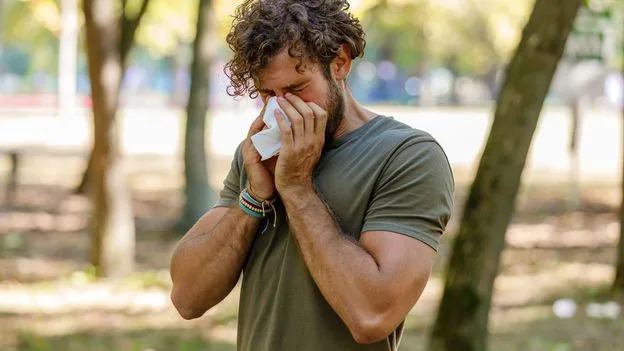
Spring allergy season has arrived forcefully across the United States, with approximately 80 million Americans experiencing sneezing, watery eyes, and discomfort as tree pollen saturates the atmosphere. Record-breaking heat combined with windy conditions have triggered significant pollen surges in numerous states including Colorado, Utah, Georgia, North Carolina, Arizona, Virginia, and Texas. Forecasters indicate that arid conditions will persist across Central states with minimal respite expected.

As human-induced climate change continues to elevate temperatures, medical experts warn that pollen seasons are projected to commence earlier, extend longer, and produce higher pollen concentrations. This week, AccuWeather predicts cooler and wetter conditions across Western regions, with storm systems anticipated over the Four Corners States and Pacific Northwest. But does rainfall genuinely provide relief for allergy sufferers? What essential information should Americans understand this season?

Rain's Dual Role in Allergy Management

"Rain presents a mixed blessing for allergy sufferers," stated Dr. David Corry, an allergist at Baylor College of Medicine. He explained that precipitation does cleanse pollen from the air, offering "immediate relief" for many individuals. However, rainfall simultaneously promotes mold growth and stimulates vegetation that produces pollen.

Wide Pickt banner — collaborative shopping lists app for Telegram, phone mockup with grocery list

According to 13 News Now, there exists a distinction between gentle spring showers and heavy downpours. Intense rainfall can actually dislodge additional pollen particles. "If rain fails to wash all pollen from streets into drainage systems while oak trees remain pollinating, the cycle recommences," Dr. Corry elaborated. "Rain also encourages weed and grass growth, amplifying allergy triggers."

Proactive Strategies Beyond Rainfall

The most effective approach to symptom alleviation involves proactive measures rather than awaiting precipitation. Initially, individuals should minimize exposure to allergens through physician-administered blood or skin tests identifying specific triggers.

Dr. Rachel Miller, System Chief of the Division of Clinical Immunology at Mount Sinai's Icahn School of Medicine, recommended protective measures for tree pollen allergies: "If tree pollen is identified as a trigger, wearing hats and sunglasses outdoors, removing shoes upon entering homes, and showering immediately can substantially reduce exposure." She additionally advised utilizing N95 masks during yard work and protective goggles.

Medication Usage and Common Errors

Numerous pharmaceutical options exist for symptom management when administered correctly. These include eye drops, oral tablets, and nasal sprays. Dr. Kathleen May, an allergist at Augusta University in Georgia, informed The Associated Press that nasal sprays represent among the most efficacious seasonal allergy treatments, yet patients frequently misuse them.

"Individuals should direct the spray nozzle toward the ear rather than inserting it upward into the nostril," she clarified. For those experiencing medication intolerance or persistent symptoms, Dr. Miller suggested allergen immunotherapy through injections (allergy shots) or sublingual medications.

Debunking Common Allergy Myths

A prevalent misconception suggests that honey consumption protects against allergies by exposing individuals to pollen. The American Academy of Allergy Asthma & Immunology has largely discredited this theory, noting that bees typically pollinate flowers lacking airborne pollens responsible for seasonal allergies. "Allergenic pollen would only appear in honey accidentally through wind dispersal into hives or onto blossoms," the organization clarified.

Pickt after-article banner — collaborative shopping lists app with family illustration

Long-Term Solutions and Emerging Allergies

While medications provide temporary relief, allergy shots offer potential long-term solutions. Dr. Sharon Chinthrajah, associate professor of medicine and pediatrics at Stanford Medicine, explained: "Physicians can administer allergy shots containing minimal allergen quantities to desensitize the immune system." Dr. Kathleen May added that such treatments can yield prolonged or permanent symptom remission, though specialists avoid labeling them as cures since allergies may reemerge later.

Johns Hopkins Medicine's Dr. Murray Ramanathan Jr., professor of otolaryngology, emphasized that allergies can develop at any life stage: "Previous absence of allergy symptoms doesn't guarantee future immunity." Dr. Chinthrajah concluded with holistic advice: "Focus on restoring skin barriers through hydration, improving sleep patterns, maintaining balanced nutrition, regular exercise, and obtaining vitamin D through outdoor exposure."