New Mexico Launches Historic Probe into Forced Sterilizations of Native American Women
In a landmark move, the state of New Mexico has initiated a comprehensive investigation into the forced and coerced sterilizations of Native American women that occurred during the 1970s. This troubling chapter in history involved the Indian Health Service (IHS), a federal agency tasked with providing healthcare to Indigenous communities, which sterilized thousands of women without obtaining their full and informed consent. The state legislature recently approved a measure mandating the New Mexico Indian Affairs Department and the Commission on the Status of Women to examine the history, scope, and enduring impact of these practices.
A Legacy of Systemic Violations
The investigation aims to shed light on atrocities that have long haunted Native families, with findings expected to be reported to the governor by the end of 2027. State Senator Linda Lopez, one of the legislation's sponsors, emphasized the importance of understanding these events within New Mexico's borders. This initiative follows similar actions in other states; for instance, Vermont established a truth and reconciliation commission in 2023 to study forced sterilizations of marginalized groups, while California began paying reparations in 2024 to individuals sterilized without consent in state-run facilities.
Beyond the investigation, the New Mexico Legislature has laid the groundwork for creating a separate healing commission and formally acknowledging this little-known history. According to Sarah Deer, a professor at the University of Kansas School of Law, this reckoning is long overdue. She notes that women in these communities have carried these stories for decades, with the federal government largely failing to acknowledge what she describes as a campaign of "systemic" sterilizations. A 1976 U.S. Government Accountability Office (GAO) report documented some cases, but advocates argue the full scope remains unaccounted for.

Personal Testimonies Highlight Lasting Trauma
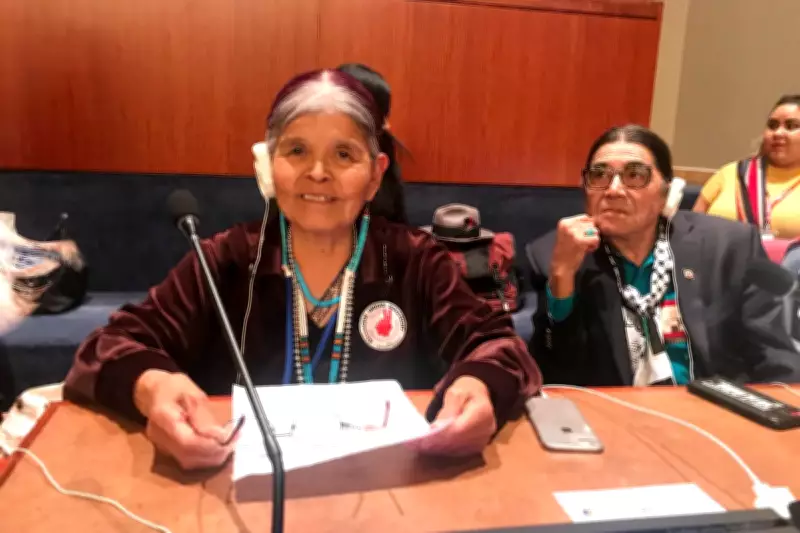
The human cost of these practices is starkly illustrated by survivors like Jean Whitehorse, a Navajo Nation citizen. In 1972, at age 22, she was admitted to an IHS hospital in Gallup, New Mexico, with a ruptured appendix. Amid extreme pain, she was presented with consent forms and recalls a nurse holding the pen in her hand as she signed. Years later, when struggling to conceive a second child, Whitehorse discovered she had undergone a tubal ligation during that surgery. The revelation devastated her, contributing to relationship breakdowns and alcoholism.
Whitehorse's story is not isolated. In the 1970s, advocates like the activist group Women of All Red Nations (WARN) raised alarms about women entering IHS facilities for childbirth or other procedures only to find themselves unable to conceive later. Dr. Connie Redbird Uri, a Choctaw and Cherokee physician, reviewed IHS records in 1974 and alleged that up to 25% of female patients of childbearing age had been sterilized. Some women were unaware of the procedures, while others were bullied into consent or misled about reversibility.
The GAO audit confirmed that IHS sterilized 3,406 women in four of its 12 service areas between 1973 and 1976, including in Albuquerque. It found that some patients were under 21 and that consent forms often violated federal regulations. However, the audit did not interview survivors, citing a study where patients struggled to recall past medical conversations, leaving gaps in understanding the full impact.
Seeking Healing and Accountability
For nearly 40 years, Whitehorse kept her experience private before sharing it with her daughter and family. She now advocates publicly, testifying in 2025 to the United Nations Permanent Forum on Indigenous Issues and calling for a U.S. apology. She hopes New Mexico's investigation will provide a venue for more victims to tell their stories, though advocates like Rachael Lorenzo of Indigenous Women Rising caution that the commission must avoid re-traumatizing survivors across generations.

The trauma extends beyond individual stories, affecting reproductive choices today. Dr. Donald Clark, a retired IHS physician, testified in a legislative hearing that he has seen patients in their 20s and 30s distrust contraception due to stories passed down by relatives. "It's still an issue affecting women's choice of birth control today," he said.
A Broader Pattern of Disenfranchisement
These sterilizations fit into a wider pattern of policies disrupting Native reproductive autonomy. A 1927 U.S. Supreme Court decision in Buck v. Bell upheld states' rights to sterilize people deemed "unfit," leading to forced sterilizations of immigrants, people of color, and disabled individuals throughout the 20th century. Lorenzo and Deer link this to other federal policies, such as the removal of Indigenous children to boarding schools and the 1976 Hyde Amendment, which restricts abortions in tribal clinics receiving federal funding.
Internationally, similar issues persist; in Canada, doctors were sanctioned as recently as 2023 for sterilizing Indigenous women without consent. Deer believes New Mexico's investigation could pave the way for accountability, though she warns that without federal cooperation, the commission's fact-finding abilities may be limited. As the state delves into this dark history, it seeks not only to uncover truths but also to foster healing and justice for affected communities.