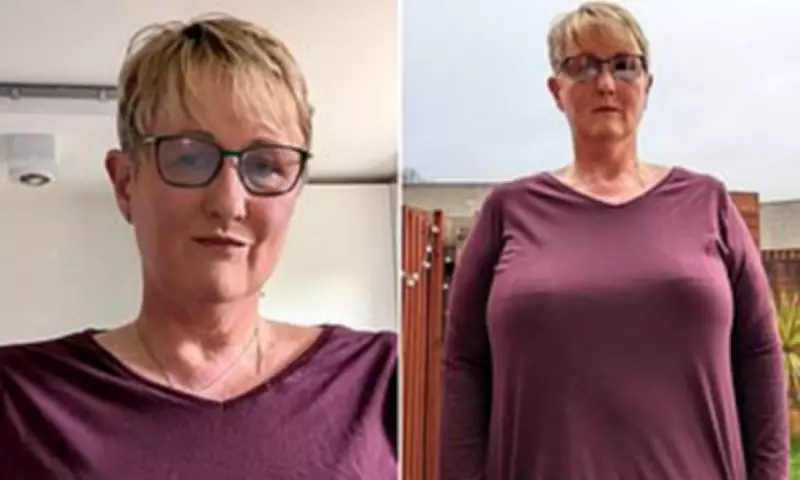
A Devon mother who despises the appearance of her "heavy and saggy" size 40K-cup breasts is urgently fundraising for private surgery after alleging the NHS rejected her requests over two decades. Joanna Brice, 52, from Devon, described being "flat-chested" until age 13, when her breasts rapidly expanded to a C cup, making her self-conscious and a target for schoolyard teasing.
Years of Physical and Emotional Struggle
"People, especially boys, would mock them, calling them jugs or melons," Ms Brice recalled. "They acted inappropriately, pulling my bra straps, which only heightened my self-consciousness. They always noticed my breasts first—never me as a person." Her bust continued growing after childbirth, reaching a 38DD by her first daughter's birth in 1996 and a 40EE by her second in 2000.
In the 2010s, she progressed to a G cup, and currently, her right breast measures 40K with her left at 40HH. This has led to severe back pain, nerve damage, and persistent fungal infections beneath her breasts. Shopping for bras is "very frustrating," she noted, with each bra costing at least £40, frequently breaking, and leaving permanent indentations on her shoulders.

Daily Discomfort and Social Limitations
"I feel sore, sweaty, and horrible by the end of every day," Ms Brice admitted. "I even apply Sudocrem under my breasts daily to prevent paper cuts." Swimming has become challenging due to a lack of suitable swimwear, and she struggles with sleep, maintaining a healthy lifestyle, and socialising.
"Losing weight didn't help," she explained. "It just made my breasts appear even worse. It's exhausting, frustrating, depressing, and miserable. I believe my breasts have caused significant self-image issues and self-doubt."
Repeated NHS Rejections
Ms Brice has sought a breast reduction through the NHS at least 20 times since 2000, citing both physical agony and mental health challenges. Despite submitting photographs and letters from her GP detailing the toll, her applications were consistently denied, often categorised as cosmetic rather than medically essential.
"It's not a cosmetic procedure—I simply want to be smaller so I can afford cheaper bras, wear normal clothes instead of tents, and live without constant pain," she emphasised. The weight of her bust has caused painful sores and chafing from bra straps.
Turning to Private Funding
With NHS funding unattainable, Ms Brice is now fundraising for private surgery, estimated at £10,000. The operation would involve repositioning her nipples, excising excess fat and tissue, and reshaping her breasts. "The surgery would transform every aspect of my life," she said. "I just want to be seen for who I am, not my breasts. I detest my appearance because of them. I've had enough and feel desperate."
NHS Devon's Stance and Broader Context
A spokesperson for NHS Devon stated: "We regret Joanna's situation. NHS Devon does not routinely commission breast reduction surgery, as per our commissioning policy. When a clinician identifies exceptional clinical circumstances, a request can be made via the NHS Devon Individual Funding Request process."
Exact figures for NHS breast reductions last year are unavailable, but data from the British Association of Aesthetic Plastic Surgeons shows 4,641 procedures in both NHS and private sectors in 2023. Privately in the UK, breast reduction surgery costs approximately £6,500, plus consultation and follow-up expenses.
Surgical Details and Similar Cases
Breast reduction surgery is performed under general anaesthesia, lasting two to three hours. Surgeons remove surplus fat, glandular tissue, and skin, relocate the nipples, and reshape the remaining breast tissue. Earlier this year, Lily Porter, 21, from Retford, Nottinghamshire, reported similar struggles, claiming her 36NN breasts caused constant pain and a sepsis infection in September 2025 due to skin tearing.
Ms Porter stated the NHS refused her surgery because her BMI classified her as obese, though she attributes nearly a third of her body weight to her breasts. "The NHS says my BMI is too high, but most of my weight is in my boobs," she lamented, highlighting ongoing challenges in accessing medically necessary reductions.