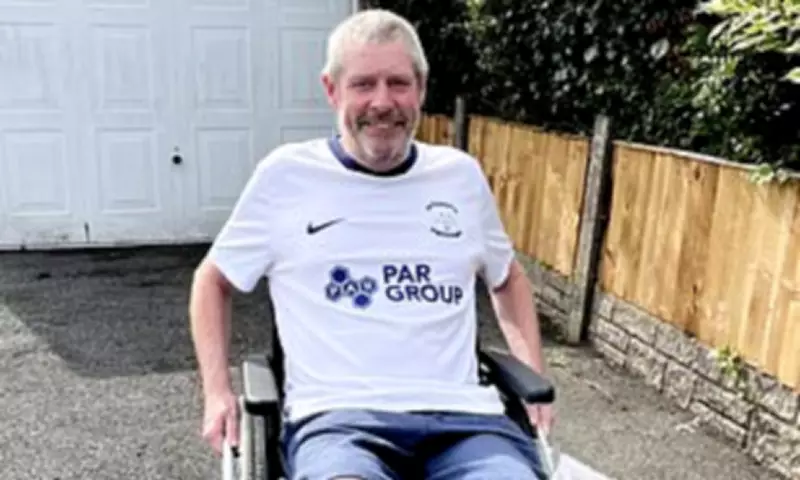
Lancashire Man's Stiffness Dismissed as Ageing Turns Out to Be Motor Neurone Disease
A Lancashire man who initially dismissed stiffness in his legs and sudden falls as merely 'part of getting older' has been diagnosed with motor neurone disease, a devastating neurological condition that attacks the nerves controlling movement. Andrew Chadwick, aged 53, first noticed the troubling symptoms in January 2025, which led to a trip over a curb that resulted in a cracked rib. Shortly after this incident, he experienced another fall, prompting growing concern.
'We Just Thought It Was His Age'
His wife, Joanna Chadwick, recounted their initial assumptions: 'He continued to struggle with walking, but we just thought it was his age, or that he had a trapped nerve or something.' The situation escalated when a physiotherapist urgently referred him to hospital for further investigation. 'He spent two weeks in hospital having tests, but nobody was telling me anything,' Mrs Chadwick added, highlighting the anxiety of the diagnostic process.
In June 2025, Mr Chadwick received the life-altering diagnosis of motor neurone disease, a condition that causes progressive muscle weakness and can lead to severe problems with breathing and eating. 'When Andrew received his diagnosis, I was devastated,' said Mrs Chadwick. 'I put my head in my hands and Andrew started crying. I couldn't speak. Nothing prepares you for that.'

Understanding Motor Neurone Disease
Motor neurone disease affects up to 5,000 adults in the United Kingdom at any given time, with a one in 300 lifetime risk of developing the illness. While it can impact adults of any age, it is more prevalent in individuals over 50. The disease targets motor neurons in the brain and spinal cord, leading to symptoms such as:
- Stiffness in muscles
- Difficulty walking and maintaining balance
- Persistent muscle cramps
- Progressive weakness that is typically life-shortening
For Mr Chadwick, the diagnosis meant giving up his career as an engineer, as he no longer possessed the physical strength required for the role. 'Since the diagnosis, Andrew's condition has worsened,' explained his wife. 'He now can't walk anywhere without a walking aid, even in the house. He's missed his walker a few times and fallen on the floor. He looked so helpless with tears in his eyes - he couldn't get up again.'
Daily Challenges and Medical Management
The daily realities of living with MND have become increasingly demanding. 'It takes him half an hour to get dressed; his legs are so stiff, so I put his socks on for him,' Mrs Chadwick shared. 'I have to make his lunch before I go to work because he can't cut meat up or butter bread.' In November 2025, a particularly frightening incident occurred when his feet gave way while exiting a car, resulting in head injuries that necessitated an emergency visit to A&E.
Currently, there is no cure for motor neurone disease, with treatments focusing on symptom management and enhancing quality of life. Mr Chadwick is prescribed two medications: Baclofen to relax his muscles and alleviate leg stiffness, and Riluzole, which may slow the progression of the disease.
Turning Tragedy into Positive Action
Despite the profound challenges, the Chadwicks have chosen to channel their energy into raising funds and awareness for MND charities. They have organised charity events and a sponsored walk on MND Awareness Day, with Mrs Chadwick committed to supporting her husband to the finish line. In a bold move, Mr Chadwick plans to participate in a sponsored skydive in May.
'We want to raise awareness for people with MND and show that even though you've got this horrible, cruel disease, you can still value life,' Mrs Chadwick stated. 'We're raising money for the MND Association and Andrew is doing a sponsored skydive in May. We just want to give back and help other people.'

Key Facts About Motor Neurone Disease
Motor neurone disease is a rare condition that predominantly affects individuals in their 60s and 70s, though it can occur in adults of all ages. It is caused by the gradual deterioration of motor neurons in the brain and nerves, though the exact reason remains unknown. While having a close relative with MND or frontotemporal dementia can increase risk, most cases are not hereditary.
Early symptoms to watch for include:
- Weakness in the ankles or legs, such as difficulty climbing stairs
- Slurred speech and swallowing difficulties
- A weakened grip and unexplained gradual weight loss
Individuals experiencing these symptoms should consult a GP, who may refer them to a neurologist for specialist assessment. Those with a family history of MND or frontotemporal dementia might also seek genetic counselling to discuss potential risks and testing options.