
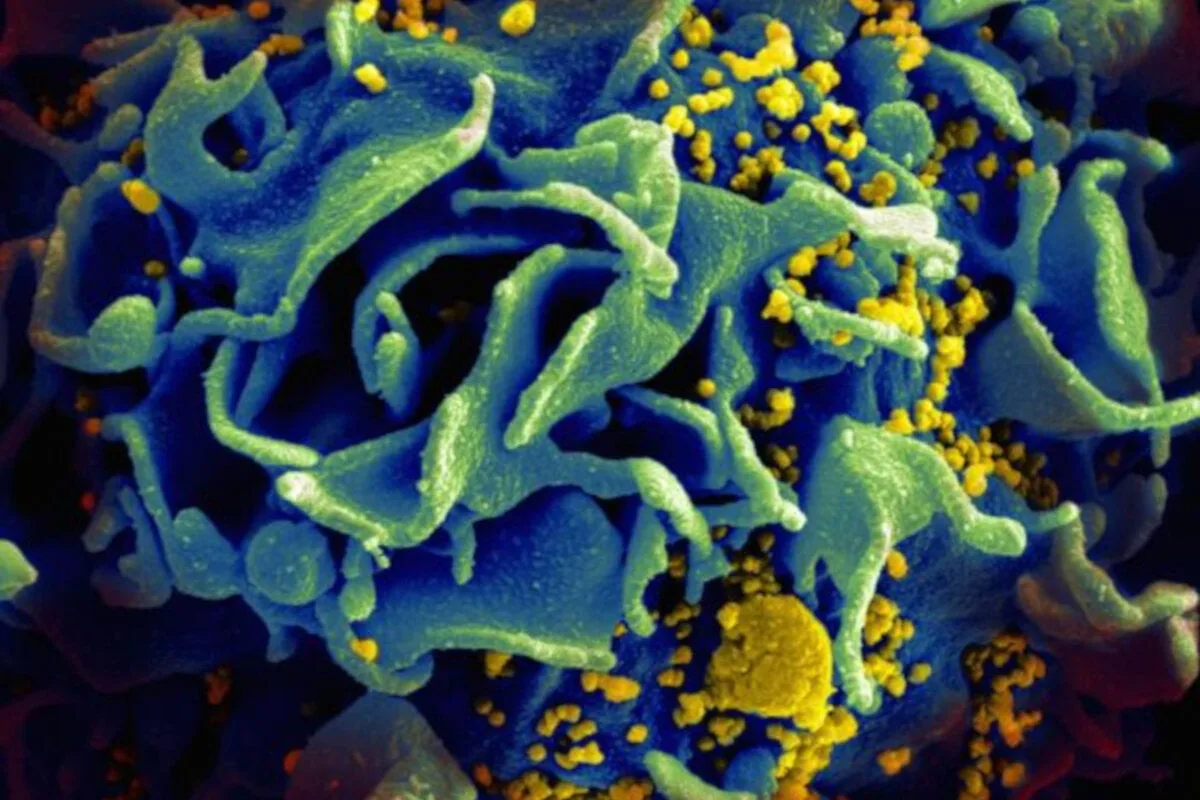
A 64-year-old man in Oslo has been in remission from HIV for the past five years after receiving a stem cell transplant from his brother, who carries a rare genetic mutation that confers resistance to the virus. This case is believed to be only the tenth instance of an HIV cure.
The brother’s cells contain the CCR5Δ32/Δ32 mutation, which removes the receptor proteins that HIV uses to infect cells. The transplant was initially performed to treat the patient’s bone marrow cancer, and he stopped taking antiretroviral medication 24 months later.
Two years after the transplant, tissue samples from the patient’s blood and gut showed no HIV DNA integrated into his own DNA. A comprehensive analysis of more than 65 million immune cells found no virus capable of replicating and no detectable HIV-specific T-cell responses. HIV antibody levels also declined gradually over four years.
“Replication-competent virus and HIV-specific T cell responses were absent,” researchers wrote in a study published in Nature Microbiology. “The absence of HIV-specific T cell responses … supports the hypothesis that such an absence correlates with sustained HIV remission.”
However, the researchers caution that this treatment is not widely applicable. “A sibling has a 25 per cent probability of being a match for a transplant, and the frequency of CCR5Δ32/Δ32 is around 1 per cent” in northern European populations, explained study co-author Anders Eivind Myhre from Oslo University Hospital. Another co-author, Marius Trøseid, said the patient “feels like he has won the lottery twice … He was cured of his bone marrow disease, which could be fatal, and he’s also now cured of HIV, most likely.”
While stem cell transplants are not a practical cure for most people with HIV, studying such cases may help identify markers to predict long-term remission.




