Kent NHS Trust Delayed Meningitis Alert for Two Days, Outbreak Investigation Reveals
An NHS trust in Kent has been reported to have waited two full days before raising the alarm about a serious meningitis outbreak, according to recent disclosures. The Queen Elizabeth the Queen Mother Hospital in Margate first notified the UK Health Security Agency (UKHSA) about a confirmed case on the afternoon of Friday, March 13. However, the patient had actually arrived at the hospital two days earlier, with the East Kent Hospitals NHS Trust delaying formal notification until a diagnosis was officially confirmed, as reported by BBC News.
Legal Duty and Tragic Consequences
Doctors are legally obligated to report suspected cases of meningitis to the UKHSA immediately upon suspicion, not after confirmation. This delay in reporting has been linked to a tragic outcome, with two students having died in the outbreak. Among the victims was 18-year-old Juliette Kenny, described by her grieving family as 'fit, healthy and strong' prior to her death. The other fatality was a student from the University of Kent, highlighting the vulnerability of young adults in such health crises.
The latest figures indicate that the number of confirmed cases has decreased this week, as more extensive testing revealed that some individuals had been incorrectly informed they were infected. On Monday, 20 cases of meningitis were confirmed, with an additional three under investigation, bringing the total to 23. This marked a reduction from the 29 cases reported on Sunday, which included 20 confirmed and nine under investigation.

Official Admissions and Response Measures
Dr Des Holden, acting chief executive of East Kent Hospitals NHS Trust, publicly acknowledged that officials could have acted more promptly. He stated, 'We recognise there was an opportunity prior to diagnosis to notify UKHSA.' While he refrained from discussing individual patient care details, he emphasized that the trust has maintained close contact with UKHSA since March 13 to manage patients presenting with suspected meningitis.
The UKHSA clarified that an earlier report could have initiated an investigation sooner and allowed for the provision of antibiotics to close contacts of the patient, potentially preventing the development of invasive meningitis. The agency identified March 13 as the peak of the outbreak, coinciding with the day the alarm was finally raised.
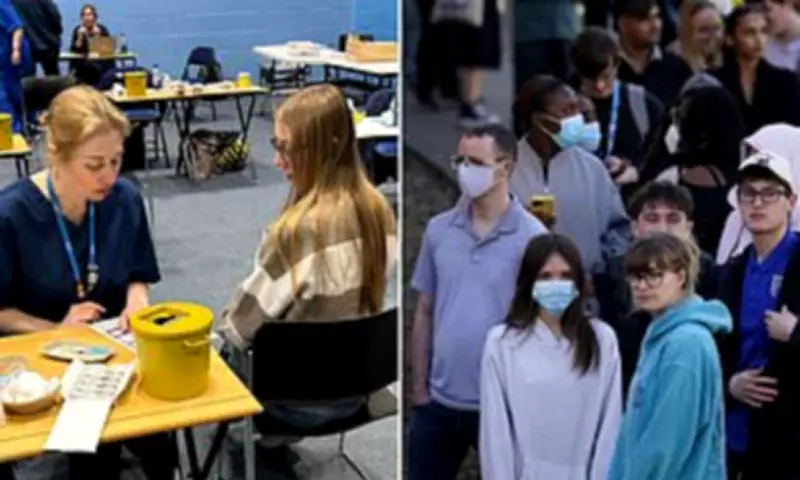
In response, officials began vaccinating University of Kent students on Wednesday, March 18. The following day, during a campus visit, Health Secretary Wes Streeting announced an expansion of the vaccination programme to include more individuals, such as sixth form pupils at four schools with known or suspected cases of MenB. This week, ministers further agreed to offer jabs to Year 11 pupils at those schools as a precautionary measure to ensure longer-term protection against the disease.
Outbreak Statistics and Strain Analysis
NHS Kent and Medway reported that by 11am on March 24, 13,386 doses of antibiotics had been administered, alongside 10,627 vaccines. All patients affected by the Kent outbreak required hospital admission, with nine admitted to the intensive care unit, where four remain under care.
The UKHSA previously indicated that the outbreak was caused by a new variant of group B meningococci, which exhibits significant mutations likely impacting the disease's transmission speed. This variant is closely related to one present in the UK for approximately five years but possesses potentially alarming differences. In a technical document published on Tuesday, the UKHSA admitted it is a 'realistic possibility' that the new strain is the 'main driver' of the outbreak.
Experts discovered that the bacteria's genome has 'multiple potentially significant genetic differences when compared to the most closely related genomes.' These differences are currently being evaluated to understand how they may alter the strain's behavior. Laboratory analysis has provided strong reassurance that the antibiotics and MenB vaccine being offered to at-risk groups will remain effective against this new strain.

Broader NHS Context
This incident occurs against a backdrop of declining public satisfaction with the NHS. A recent survey found that only one in four patients is satisfied with the service, with ratings increasing slightly from a record low of 21 per cent in 2024 to 26 per cent last year, according to an annual 'gold standard' survey that has tracked attitudes since 1983. More than half of the public (51 per cent) remain 'very' or 'quite' dissatisfied, as per analysis by the King's Fund and the Nuffield Trust health think tanks.
The UKHSA has been contacted for further comment on the ongoing investigation and response efforts.