Kent Meningitis Outbreak Escalates with 29 Confirmed and Suspected Cases
Health officials have confirmed that the number of meningitis cases linked to the escalating outbreak in Kent has risen to 29, marking an increase of two from yesterday's total of 27. The UK Health Security Agency (UKHSA) revealed in its daily update this morning that 18 cases have now been confirmed, with a further 11 under active investigation. Among the confirmed cases, 13 are known to be caused by meningitis B (menB). This overall total represents a significant rise from 27 yesterday, 20 on Tuesday, and 15 on Monday.
Tragic Losses and Family Appeals
The outbreak has claimed the lives of two young individuals: Juliette Kenny, an 18-year-old sixth former at Queen Elizabeth's Grammar School in Faversham, and an unnamed 21-year-old University of Kent student. Today, Juliette's father, Michael Kenny, expressed that his family's devastation is 'immeasurable' and issued a powerful call for better protection for young people against this deadly disease.
Juliette passed away last Saturday, just one day after first exhibiting symptoms that included vomiting and discolouration in her cheeks. Mr Kenny described his daughter as having been 'fit, healthy and strong' prior to her death, having successfully completed the practical assessment for her PE A-level on Thursday, March 12. He remembered Juliette as possessing a 'beautifully positive energy' and emphasized that 'no family should experience this pain and tragedy,' asserting that 'this can be avoided.'

In a heartfelt statement, Mr Kenny shared the harrowing timeline of his daughter's illness. He first became aware she was unwell when she vomited in the early hours of Friday, March 13, with no other symptoms at that time. By morning, a discolouration had appeared on her cheeks, prompting her parents to take her to a local emergency drop-in centre. She was administered antibiotics and transported by ambulance to A&E.
'Juliette fought bravely for hours, but despite the fantastic NHS hospital staff fighting alongside her, meningitis took her from us less than 12 hours later,' Mr Kenny recounted. 'We were with her at the end, and the last sounds that she heard were the voices of those who loved her telling her how very much loved and cherished she is.'
Vaccination Access Crisis and Public Response
Joining forces with the Meningitis Research Foundation, the Kenny family is urgently calling for the UK to take decisive action to improve access to the menB vaccination for teenagers and young people. Mr Kenny stressed, 'There are young people currently battling this and young people still at risk. The work to protect young people has started. It needs to be more. Juliette's impact on this world must be lasting change.'
Vinny Smith, chief executive of the Meningitis Research Foundation, highlighted that in 2015, the charity's advocacy for the menB vaccination to be 'routinely available' on the NHS for all at-risk age groups was 'not taken forward' as it was 'judged not to be cost-effective.' The menB jab was introduced on the NHS for babies in 2015, leaving the majority of young people born before that date unprotected unless they have obtained the vaccination privately. The Kenny family was unaware that the vaccine is not routinely available on the NHS for teenagers and young adults, necessitating private payment for access.
Mr Smith urged the Government to 'decide now to save lives' and underscored the 'lifelong impact' of menB, including potential disabilities. He argued that previous cost-effectiveness assessments failed to fully account for the severity of meningitis, its lifelong consequences, or the profound trauma and bereavement experienced by affected families.
Vaccination Clinics Overwhelmed by Demand
Today, health officials are anticipated to face rigorous questioning at a media briefing following incidents where more than 100 students were turned away while attempting to receive a vaccine yesterday. The University of Kent closed the vaccine queue on its Canterbury campus 'due to capacity' as it needed to conclude the clinic by 5pm. Estimates suggest over 100 individuals waiting for a jab were sent away.

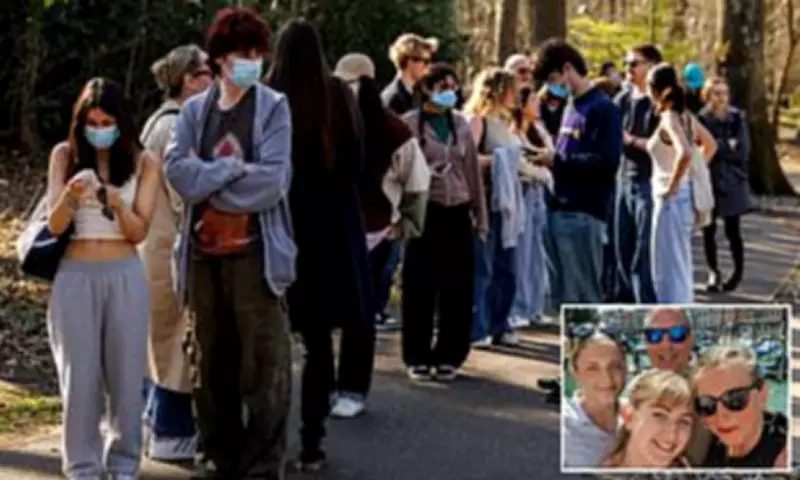
The university announced that the vaccination clinic would reopen from 9am to 5pm today, advising people to be in the queue by 2pm. By 8.45am this morning, approximately 700 staff and students were reportedly queuing outside the sports centre, with one student near the front stating she had joined the line at 7.55am.
Professor Dominic Abrams, a social psychology expert at the University of Kent, described the scenes as 'very reminiscent of Covid,' which he noted is 'somewhat traumatising for everybody.' He acknowledged that 'understandably people are very concerned and anxious,' but contrasted the current situation as 'more under control' than during the pandemic.
Official Response and Broader Measures
Professor Robin May, chief scientific officer of the UKHSA, attributed yesterday's queue issues to a 'staffing problem,' clarifying that there is no shortage of vaccine but that demand exceeded the staff's capacity to administer it within the allocated time. He emphasized that frontline response for exposed individuals involves prophylactic antibiotics, which have now been distributed, providing immediate protection. The vaccination being offered is for follow-up protection, and a delay of a day or two does not pose an immediate health risk for those on antibiotics.
Professor May also remarked that 'this is a very unusual outbreak,' with experts investigating why meningitis in these cases may have become more transmissible between people.
Health Secretary Wes Streeting has outlined that anyone who attended the local venue Club Chemistry from March 5 until March 15 will be offered the jab, alongside sixth-formers at four schools and other university students in Canterbury. Additional vaccination centres are scheduled to open across Kent as the Government's immunisation programme expands.
One facility at Faversham Health Centre began administering jabs at 9am today and will remain open through tomorrow. Further clinics are set to open today at the Vicarage Lane Clinic in Ashford and at the University of Kent, according to NHS England.
The UKHSA has announced that all patients eligible for antibiotics can now request both a vaccination and antibiotics 'from their local GP immediately - wherever they are in England,' covering students who have travelled home. The NHS reported that as of 5.30pm yesterday, 9,840 antibiotics and 2,360 vaccines have been administered to eligible individuals in Kent amid the outbreak.
In a move to alleviate demand, UKHSA stated that 20,000 vaccines from the NHS supply will be made available to the private market, easing pressure on pharmacies from people seeking to pay for a jab.
Ongoing Concerns and Political Pressure
Dr Anjan Ghosh, Kent County Council's director of public health, indicated yesterday that he could not yet definitively confirm the outbreak has been contained. The outbreak's reach extends beyond educational institutions, with Morrisons confirming an employee at its Sittingbourne distribution centre, who attended Club Chemistry, has contracted meningitis.
Olivia Parkins, an 18-year-old member of the University of Kent's cheerleading society, disclosed there have been three confirmed cases within the group, all currently hospitalized.
In a significant political development, 40 MPs have signed a letter addressed to the Health Secretary, urging the Government and health officials to collaborate with universities nationwide on catch-up vaccination programmes and to enhance public awareness. The letter also calls for the joint committee on vaccination and immunisation (JCVI) review of eligibility for meningitis vaccines to be conducted expediently.