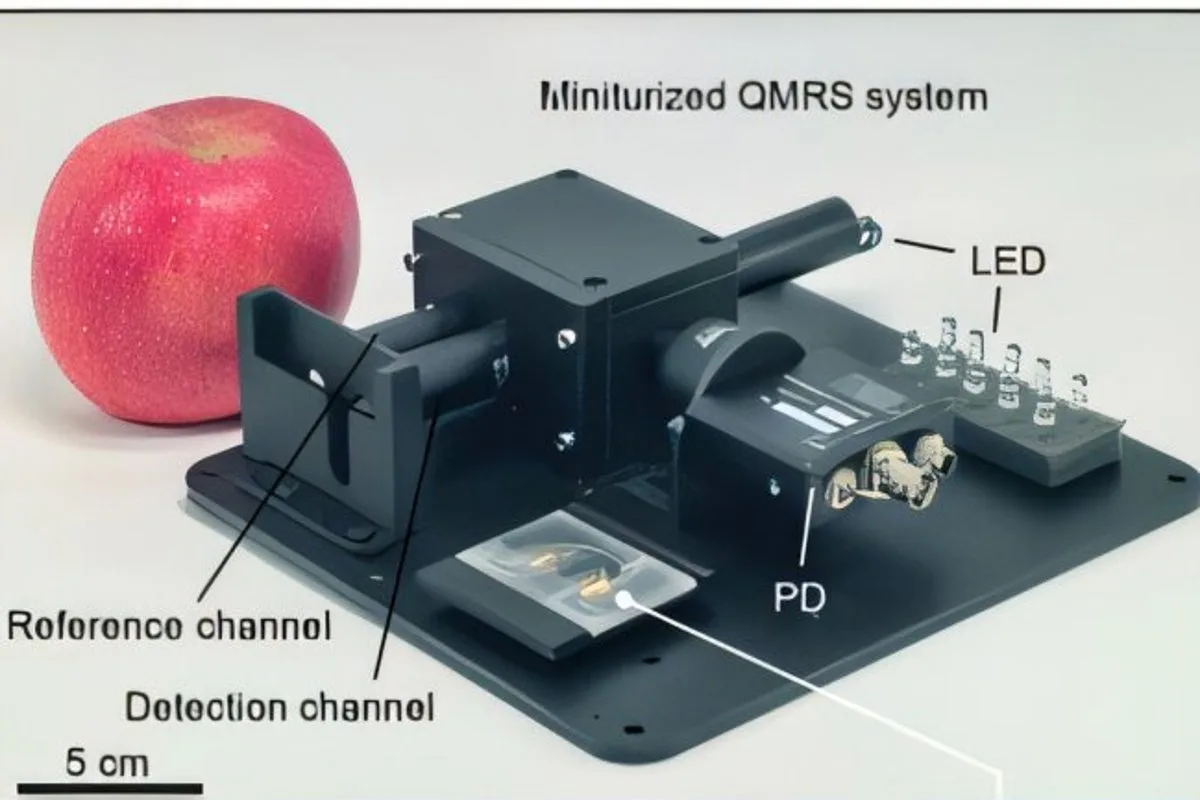
Chinese scientists have developed a handheld device that can detect early signs of lung cancer from a single drop of blood, a breakthrough that could make diagnosis easier and more timely. Traditional cancer detection relies on bulky instruments confined to laboratories, but this new device uses a compact sensor that measures how molecules bend light.
The sensor employs a 3D chip made from a specially engineered material that manipulates light in ways natural materials cannot. It consists of a light emitter, a light detector, and the chip, fabricated on 8-inch semiconductor wafers for mass production. This design simplifies the instrument, making it compatible with portable diagnostic systems.
In tests, the device detected vesicles—tiny bubble-like cell components found in low concentrations in blood—within 15 minutes. The sensitivity was nearly 10,000 times greater than standard lab assays. When analysing 170 human serum samples, it distinguished early lung cancer from healthy tissue with up to 95% accuracy, compared to about 75% for traditional ELISA methods.
Despite the promising results, the researchers caution that the prototype still has a long path before widespread medical use. Larger studies are needed to validate the technology across more patient groups, and further engineering is required for routine clinical or home deployment. The study was published in the journal Nature Photonics.