
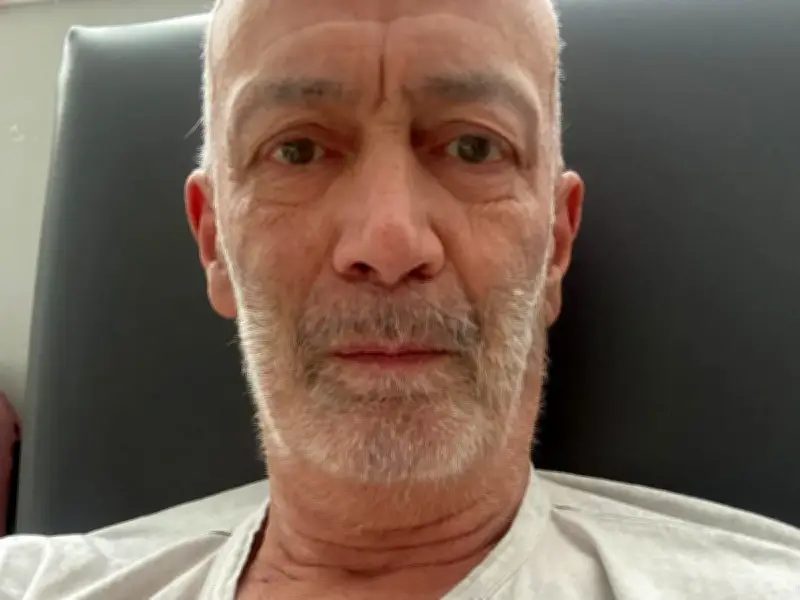
Ashley Grey, 59, a grandfather from Hillsborough, Sheffield, collapsed at hospital after believing his symptoms were just a "bad cold". He was later diagnosed with acute myeloid leukaemia, an aggressive cancer. After months of treatment, including a stem cell transplant, he is now cancer-free and works as a non-emergency patient transport worker.
From bad cold to cancer diagnosis
Ashley began feeling unwell in December 2022. By Christmas, he had a fever and was shaking, so his wife called 111. He was sent to Northern General Hospital, where tests showed his blood counts were "on the floor". He was then taken to the Royal Hallamshire Hospital, where a bone marrow biopsy confirmed acute myeloid leukaemia on New Year's Day 2023.
Ashley, a former patient transport worker, said: "I thought I’d just had a bad cold, and I’d even carried on working. Whilst I was at home, I started a fever and was shaking, so my wife called 111. It was Christmas week, and the walk-in was shut, so we were sent to A&E. When I got there, I collapsed, and tests showed all my healthy blood counts were on the floor. I had absolutely no idea."
Treatment and stem cell transplant
At Royal Hallamshire Hospital, he received blood transfusions and his diagnosis was confirmed. He then underwent several rounds of chemotherapy, losing his hair, and remained an inpatient for seven weeks before being discharged to continue treatment.
Thanks to a stranger's generosity, he received a life-saving stem cell transplant on May 16, 2023, which was his daughter's birthday. Ashley said: "I had side effects like sickness, diarrhoea and tiredness throughout my chemotherapy, and a nasty rash during my transplant, and I lost all my hair which affected me much more than I thought it would. But the haematology team were superstars, and I had so much gratitude, and that’s when I decided I wanted to do something more worthwhile with my life."
Returning to work and giving back
A few months after his transplant, Ashley was well enough to return to work as a lorry driver on a part-time basis. He then spotted a job as a non-emergency patient transport worker, helping transport disabled, elderly, sick or vulnerable people to and from outpatient clinics, day care centres and routine hospital admissions.
Three years on, he remains cancer-free. Ashley said: "I really enjoy getting people home and talking to people. One of the best things was when I first went back up to the O2 day ward in my job rather than as a patient and I saw one of the nurses that treated me there. To be there and to be better and doing something for others, it meant so much. Everybody and everyone in the hospital team have been absolutely brilliant. I can't thank them enough."
Leukaemia statistics and expert comment
Around 3,100 people are diagnosed with acute myeloid leukaemia in the UK every year. A stem cell transplant is often the only hope of a cure.
Dr Alex Kanellopoulos, Consultant Haematologist at Sheffield Teaching Hospitals NHS Foundation Trust, said: "Sheffield is a major centre for stem cell transplantation and everyone here is so proud of Ashley and all he has achieved following treatment. Although treatments for acute myeloid leukaemia have remained largely unchanged for the last few decades, there have been significant breakthroughs in recent years, including genetic techniques which allow us to track DNA changes and patient-specific markers of the disease in the blood and bone marrow, improving outcomes. New maintenance therapies have also helped to lower the risk of relapse. Our ambulatory care service also allows certain patients to receive a variety of treatments, including high-dose chemotherapy, without the need for an overnight hospital stay. This helps patients retain much-needed normality and independence during highly intensive treatments."




