
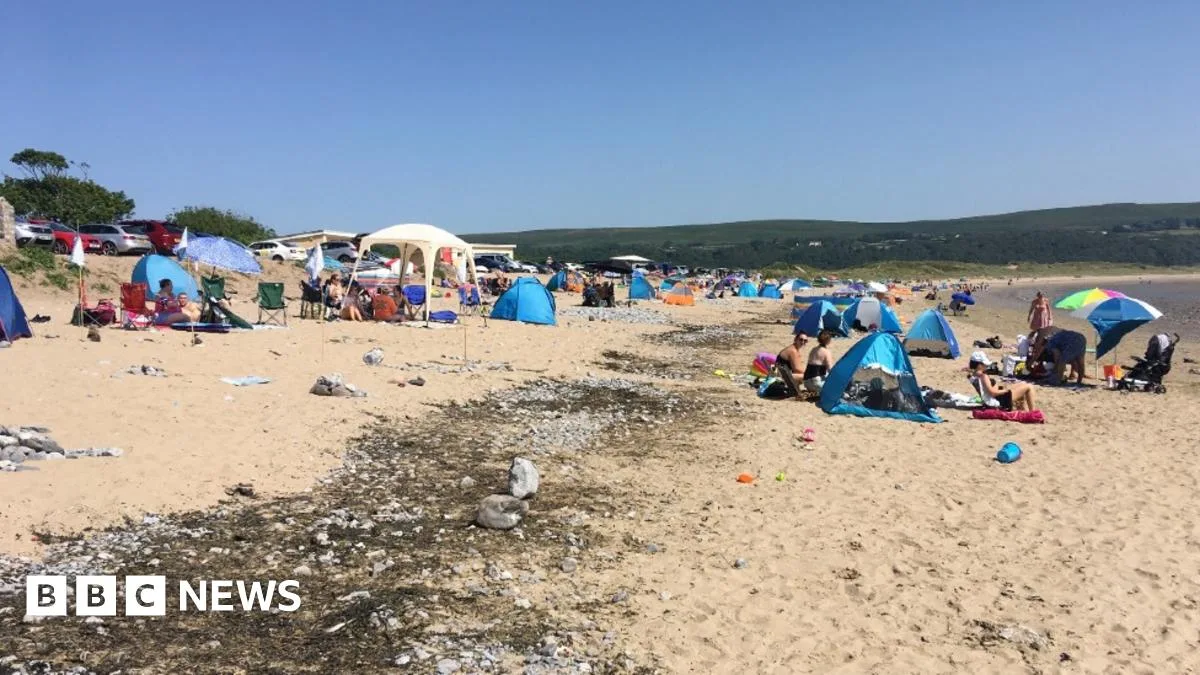
Temperatures in Wales have reached some of the highest levels this year as the heatwave continues, with the Met Office issuing an extreme heat warning covering large parts of the country. On Wednesday, temperatures hit 30°C in south Wales, and forecasters predict even hotter weather to come.
The heatwave coincides with the start of the summer holiday getaway, as millions of Britons opt for staycations due to travel restrictions. The RAC has warned that Wednesday could be the busiest day on UK roads, with an estimated 2.6 million leisure trips, followed by 2.3 million on Friday. Traffic data firm Inrix predicts delays up to a third longer than normal July traffic.
Emergency services are under severe pressure. The Welsh Ambulance Service declared an 'incident' on Monday evening due to 'extreme pressure', handling 2,000 emergency calls per day. Dr Mark Poulden, clinical director of emergency medicine at Morriston Hospital, warned that most hospitals in Wales are 'under extreme strain' and at capacity, with heat exacerbating respiratory and heart conditions.
Water demand has surged, with Welsh Water reporting a record 1 billion litres used in a single day, up from the usual 800 million litres. In tourist hotspots like Pembrokeshire, demand has increased by up to 20%. Chief executive Peter Perry urged customers to 'use water sensibly'. Meanwhile, Lido Ponty is adding 160 extra spaces on Friday after selling out 5,000 spaces due to high demand.
Coastguards in Llandudno reported verbal abuse from some beachgoers while attempting rescues from the incoming tide. Doctors advise parents to keep children in the shade, wear hats and long sleeves, and apply sun cream regularly. However, a change is expected over the weekend, with a yellow weather warning for heavy, thundery showers across much of Wales.




