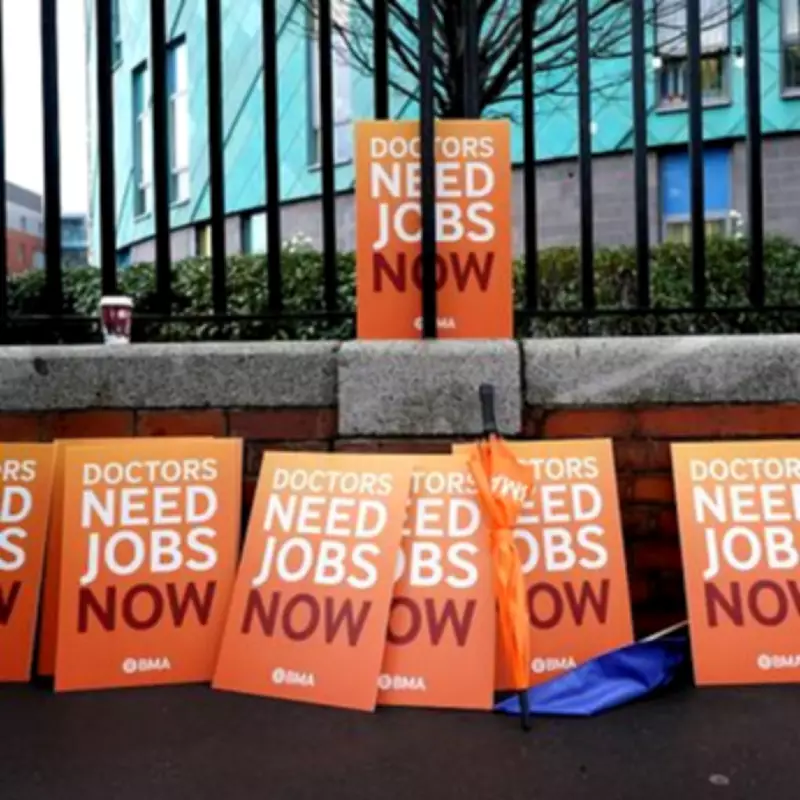
Tens of thousands of resident doctors across England are poised to embark on a six-day walkout starting April 7, following the collapse of last-minute negotiations aimed at averting industrial action. This significant strike comes after the government retracted a crucial component of its proposed deal: an offer to create 1,000 additional training positions within the National Health Service.
Government Withdraws Training Places Offer
The Department of Health and Social Care has officially withdrawn the pledge for extra training places, stating it is no longer "financially or operationally" feasible to implement. This decision was communicated as part of the government's response to the British Medical Association's (BMA) resident doctors committee, which had been given a 48-hour ultimatum by the Prime Minister to accept the broader pay and jobs package.
Failed Negotiations and Escalating Tensions
Earlier this week, the Prime Minister issued a deadline to the BMA committee, urging them to reconsider the government's proposal, which included enhanced pay scales and the now-cancelled training posts. In response, the BMA outlined a series of demands that needed addressing to call off the planned strikes. However, as the deadline lapsed, the Health Department confirmed the withdrawal of the training places, attributing it to the need to prepare for strike-related disruptions and ongoing uncertainty.

A spokesperson for the Department of Health expressed disappointment, noting, "It is disappointing that the BMA has decided to press ahead with strikes next week, despite recent constructive discussions. The government had offered a generous deal that would have seen resident doctors, on average, 35.2% better off compared to four years ago. Due to the BMA's refusal to call off the strikes and put the offer to its members, we cannot proceed with the 1,000 extra training places requested by the BMA."
Impact on NHS Operations and Patient Care
The spokesperson further explained that the training posts, originally scheduled to launch this month, will not be implemented in time for this year's recruitment cycle. They emphasized that this withdrawal does not affect the overall number of resident doctors and assured that the NHS will remain operational for patients. The focus now shifts to minimizing disruption across the health service during the strike period.
BMA's Response and Ongoing Dispute
Dr. Jack Fletcher, chairman of the BMA's resident doctors committee, responded with dismay in a statement released on Wednesday evening. He described the government's move as "extremely disappointing," highlighting the urgent need for more medical jobs and doctors to address patient demands. "It is genuinely disheartening to reach this point after what had been constructive talks until the government shifted the goalposts," Dr. Fletcher stated.
He criticized the use of training place development as a bargaining chip, asserting, "It is simply wrong that the future of doctors is being used as a pawn in this manner." The BMA maintains its willingness to postpone industrial action if a credible offer is presented, a stance that remains valid up to and during any strike period.
Broader Context and Implications
This development underscores ongoing tensions within the NHS regarding pay, working conditions, and career progression for medical staff. The six-day strike, one of the longest in recent history, is expected to cause significant disruptions to healthcare services, exacerbating existing pressures on the system. As both sides dig in, the outcome of this dispute could have lasting effects on doctor recruitment, retention, and the overall stability of the NHS in England.