

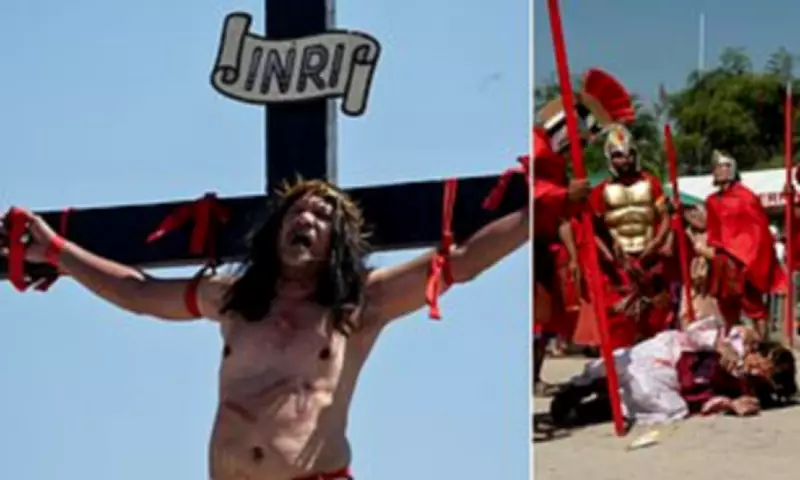
In a harrowing and deeply symbolic annual ritual, a devout Catholic follower was nailed to a cross in a graphic re-enactment of the crucifixion of Jesus Christ. The event unfolded in the small village of Cutud, located north of Manila in the Philippines, where hundreds of spectators, both local and foreign, gathered to witness the ceremony on Good Friday.
Grisly Re-enactment of Crucifixion
Sixty-five-year-old Ruben Enaje took on the role of Christ in this intense display of faith. The ritual began with Enaje struggling to carry a heavy cross to the crucifixion site, while being whipped and mocked by participants dressed as Roman soldiers. Once at the location, he donned a white gown and the iconic crown of thorns before positioning himself on the cross, which was laid flat on the ground.
Nails Driven Through Hands and Feet
The most visceral moment came as two-inch nails, sterilised with alcohol, were hammered through Enaje's palms. Authentic screams echoed from the participant as the nails pierced his skin. The cross was then hoisted upright, with red ribbons used to help secure him in place. Enaje continued to wail throughout this process, embodying the suffering of Christ.

Two other individuals were tied to crosses on either side of Enaje, though they were not nailed in place, making his sacrifice the focal point of the ceremony. This re-enactment is among the most extreme expressions of faith in the Philippines, a nation where approximately 80 percent of its over 110 million inhabitants identify as Roman Catholics.
Prayers for Peace in the Middle East
Speaking after the event, Ruben Enaje revealed that while nailed to the cross, he prayed for an end to the conflict in the Middle East. He stated, 'We are praying for an end to the conflict in the Middle East... The whole world is being affected by what has been happening.' His prayers underscored the personal and global significance he attaches to this painful ritual.
Evolution of a Religious Tradition
What originated as a small community stage play in the 1960s has evolved into one of the Philippines' most striking and controversial religious traditions. The crucifixion re-enactment forms a key part of Holy Week, which spans from Palm Sunday to Easter Sunday, a deeply sacred period in the Philippine religious calendar.
During Holy Week, other devotees in the country engage in acts of penance, such as flagellating themselves with bamboo whips. They believe these practices wash away sins, cure illnesses, and bring blessings. However, the Catholic Church officially disapproves of these traditions, emphasising that prayers and sincere repentance are sufficient to commemorate Lent.
Significance and Controversy
Christians hold that Jesus died on the cross to atone for humanity's sins and rose from the grave three days later on Easter Sunday. The re-enactment in Cutud vividly brings this belief to life, though it sparks debate about the boundaries of religious expression. Despite the Church's stance, the event continues to draw large crowds, highlighting the enduring power of faith and tradition in Filipino culture.
The ritual not only serves as a personal act of devotion for participants like Enaje but also as a public spectacle that attracts attention from around the world, reflecting the complex interplay between religion, culture, and community in the Philippines.






