AI Technology Saves Woman's Life by Detecting Breast Cancer Before Human Eye Could
A woman whose life was saved by artificial intelligence technology has shared her remarkable story of how her breast cancer was detected before it was visible to the human eye during a groundbreaking medical trial. Yvonne Cook received a breast cancer diagnosis in 2023 after an experimental AI system flagged a potential abnormality that would otherwise have remained undetected.
Early Detection Through AI Screening
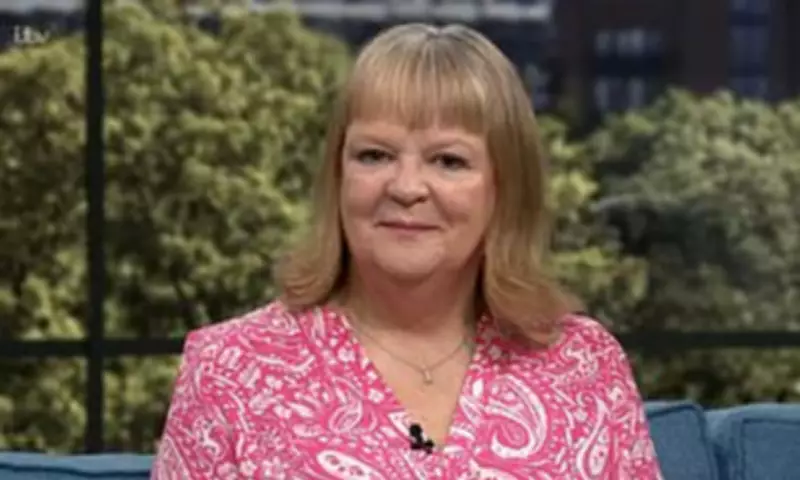
Yvonne Cook, who appeared on This Morning with hosts Cat Deeley and Ben Shephard, explained how she participated in an AI study that uses advanced algorithms to identify areas potentially linked to breast cancer before they become clearly distinguishable. She was joined by Professor Gerald Lip, clinical director of the North East of Scotland Breast Screening Programme, who detailed how the technology works.
"I was called for a routine appointment, and there was some information that an AI research programme was running and that I could opt out if I wanted to," Yvonne recalled. "When I arrived there was a large poster saying I could opt out, and just to let a member of staff know, but it didn't really occur to me at all to opt out as I think it's always good to take part in medical research programmes if you can."

She continued: "I thought, 'I've got nothing to lose', and then I received a recall letter, it was quite vague and gentle saying that potentially it could have been difficult to read. The appointment was with Dr Gerald and he explained the use of AI in the screening of the mammogram had thrown up something that couldn't be detected by the human eye, and he did a scan and confirmed that I had a small grade two tumour."
Positive Outcome and Treatment
The cancer was at a very early stage, and a biopsy confirmed the specific type. Yvonne expressed profound gratitude for the timing of her mammogram coinciding with the research period. "Gerald explained it was the AI part that had picked it up, and I just had a really, really positive reaction," she said. "I felt very grateful that my mammogram coincided with the period of the research and that AI had picked it up. I just felt very lucky, and it was a very positive mindset from the start and I maintained that throughout the treatment."
Following the early detection, Yvonne underwent treatment that proved less extensive than she had anticipated. "The treatment was less significant than I had imagined, it was a lumpectomy, a small slit and the tumour removed, and one week of low-dose radiotherapy," she explained. She has now received "two green lights" and is clear of cancer.
Yvonne emphasized the potential consequences if the tumour hadn't been detected early: "If the tumour hadn't been picked up at that time, at that very early stage, then potentially it would have been a routine mammogram a few years later and could have been a very different story. It could have involved chemotherapy and a much bigger impact on my life, and a much higher cost to the NHS, too."
Groundbreaking Technology and Research
Professor Gerald Lip provided crucial insights into the AI technology's capabilities. "If you pick up something that is less than 15mm, you have a 95% chance of survival over five years, so that's the key part of the breast screening," he stated. "Now we have AI tools that give us the extra oomph, to help us pick up even more."
The research team tested the AI with mammograms that had been deemed "normal" by human radiologists. The technology successfully identified additional areas of potential concern that had been missed. "We checked those women [with the AI flagging] and we found 10% more cancers in the women, including Yvonne's one," Professor Lip revealed.
He specifically noted: "Yvonne's cancer was a lobular type cancer, these are the nasty ones because they hide among the breast tissue, it's much harder to find and invasive. There are some types that the AI was good at seeing."

National Rollout of AI Trial
This pioneering research, conducted in Scotland, represents the first trial of its kind in the United Kingdom. The initiative is now being expanded across the UK through a major NHS study. Professor Lip explained: "The NHS trial, which is going to be 606,000 women across the UK over 30 centres, starting some time this year, as we're setting up the trial. That's going to be women across the UK, testing across several AI algorithms as we've got to make sure it's safe. It works for women in Aberdeen, does it work for women in London? We're just going to try it, and it's a very important trial from the UK National Screening Council."
Yvonne offered advice to other women based on her experience: "I would say when you're called for a routine mammogram, go to the appointment, it's important to attend and if you have an opportunity to have a mammogram read by AI, I'm a perfect example of the benefit."
Additional Health Awareness Stories
The segment also highlighted other instances where health awareness through media has saved lives. Another guest, Debra Lamb, shared how watching This Morning in 2023 prompted her to seek medical attention after recognizing symptoms of ovarian cancer discussed by resident health expert Dr. Nighat Arif. Debra was subsequently diagnosed with stage four ovarian cancer, and early intervention saved her life.
"I was just in my living room watching the telly and I see it come up and I thought, 'Oh, my stomach was a bit bloated'," Debra recounted. "I called the GP, got an appointment and had the test, and then three or four days later they called me back saying the [markers were] very high. The surgeons said that it was obviously stage four, and they said a few more weeks, it would've been too late."
Dr. Nighat Arif responded emotionally: "This is why we do the health items on This Morning. It validates all that medical information that we are seeing in our general practices."
Tragic Case Highlights Need for Improved Diagnosis
The programme also featured the heartbreaking story of Isla Sneddon, a teenager who died from breast cancer after doctors initially dismissed her symptoms as hormonal changes. Her parents, Mark and Michelle Sneddon, appeared on the show to campaign for better recognition of cancer symptoms in young people.
Michelle explained: "When she was 15, she came down the stairs and was like, 'I've got a lump', she let me feel her lump and I panicked. They told her she would grow out of it, they told her that it was hormonal and she would grow out of it - and we feel that was the start of her cancer journey."
Isla passed away six months after her cancer diagnosis at age 17. Her parents are now campaigning for Isla's Law in Scotland, which would encourage doctors to investigate cancer in teenagers and children with the same urgency as adults, similar to Jess's Rule already implemented in England.
Mark expressed their motivation: "We feel that a child should be treated as the same as an adult - we want the next Isla, because nothing will help us, but we want the next Isla to have a fighting chance that our Isla never got."
The family's petition has attracted over 35,000 signatures, and they are scheduled to meet with Scottish Health Secretary Neil Gray to discuss their concerns. Health Secretary Gray stated: "I would like to express my deepest sympathies to the family of Isla Sneddon for their very sad loss. I will be meeting with her family next week to further discuss their petition and concerns."