Woman Embraces Baldness After Lifelong Battle with Hair-Pulling Condition
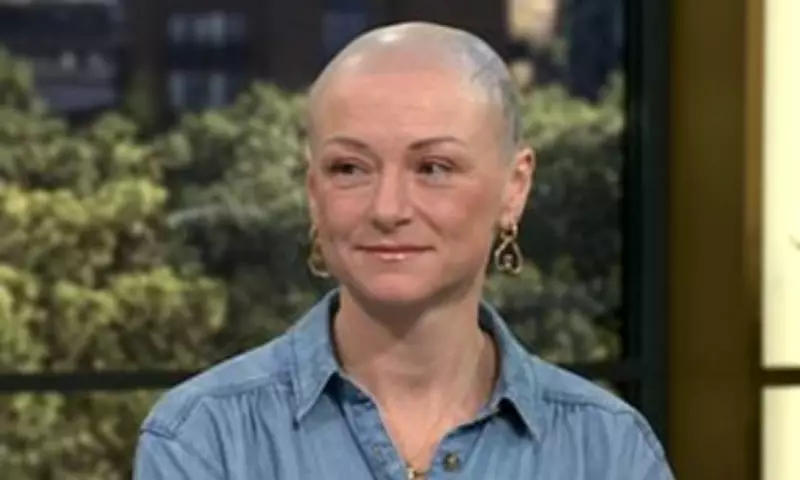
A woman who has been pulling out her own hair since childhood has publicly revealed why she ultimately decided to embrace baldness after exhausting numerous solutions for the medical condition driving her behaviour. Laura Darcy appeared on ITV's This Morning to discuss her lifelong struggle with trichotillomania, a psychological disorder characterised by an irresistible urge to pull out one's own hair.
Childhood Onset and Secret Struggle
Laura Darcy was just nine years old when she first visited doctors concerning bald spots resulting from her hair-pulling habit. By age eleven, she had removed most of her blonde hair. "I don't remember the trigger, but I was about nine or ten, and it became a real compulsion," she explained to hosts Cat Deeley and Ben Shephard. "I would fiddle with one hair at a time, and it felt nice to pull it out—so I'd pull it out and discard it on the floor, and I just couldn't stop."
As bald patches became noticeable and her parents grew concerned, Laura began concealing her behaviour. "Once I'd started having noticeable bald spots and my parents were worried, that's when I started doing it in secret," she admitted. "I might be doing it on the sofa, but secretly." Even during medical consultations where doctors suspected an illness might be causing her hair loss, Laura remained silent about her actions due to embarrassment.

Diagnosis and Failed Treatments
It was only when consulting a specialist that Laura confessed to pulling her own hair, describing the moment as "really scary." She recalled feeling profound sadness about her inability to control the compulsion. During her teenage years, she managed to curb the habit temporarily using fidget toys and gloves, allowing some hair regrowth that she concealed with ponytails.
In her twenties, after her brother confronted her about the issue, Laura embarked on an extensive treatment journey. She spent approximately £20,000 on various therapies including hypnotherapy and Prozac prescriptions. "I went straight to the doctor with enthusiasm that there must be something out there that can make me stop," she said. "All the treatments worked for a little while because I wanted them to work and was so determined, but nothing made that compulsion completely go away."
The Liberation of Shaving
After years of wearing hair systems and wigs to mask her hair loss, Laura reached a turning point. "I just decided one night, I walked up to my husband and said, 'help me,' and he helped me shave my hair off," she revealed. "It was really freeing, a bit scary, but I did it." She has since maintained a shaved head and even got a tattoo to signify that her baldness is a conscious choice rather than a symptom of illness, which also helps prevent her from pulling any remaining hair.
Medical Context and Advice
This Morning's resident health expert, Dr. Nighat, provided context during the segment, noting that an estimated 350,000 people in the UK currently suffer from trichotillomania. She explained that the condition extends beyond scalp hair to include eyebrows, eyelashes, and other body hair, falling under the umbrella of obsessive-compulsive disorders (OCD).
Reflecting on her experience, Laura emphasized how awareness has improved since her childhood. "When I was small it didn't have a name and there wasn't any help," she said. "The shame is the worst part. As a parent, try to be supportive and understand—it's not as easy as saying 'stop pulling your hair out' because nobody wants to pull their hair out. Accepting is half the battle, and then it's much easier to get help."
Related Health Story: Service Dog Transforms Life
The programme also featured Sophie Jackson, who spent five years confined to her home due to Postural Orthostatic Tachycardia Syndrome (PoTS), a condition causing sudden fainting spells up to fifteen times daily. Her medical assistance dog, Tashi, detects changes in her heart rate up to seven minutes before episodes, allowing Sophie to resume work and advocacy for service animals.

This Morning airs weekdays from 10am on ITV1 and ITVX.