
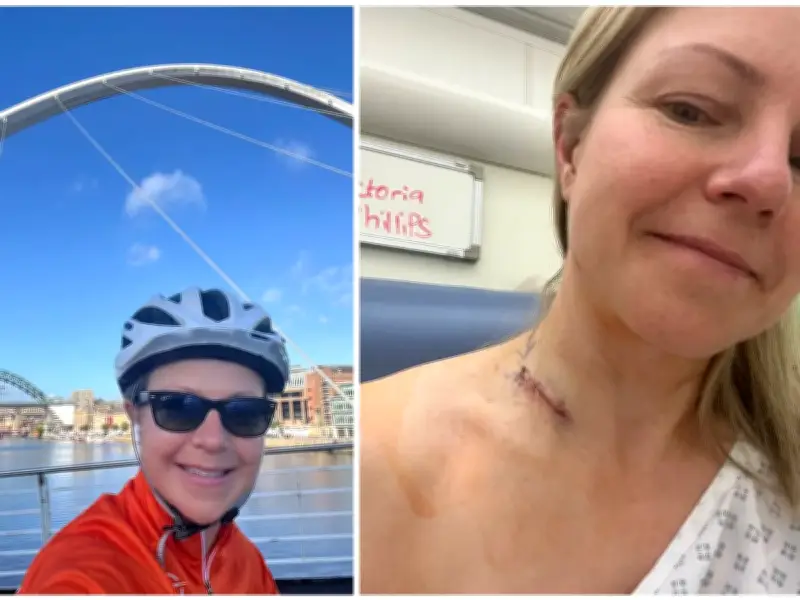
A Throckley mother who thought she had beaten cancer has spoken of how her incurable diagnosis "changed my perspective on life". Victoria McCartney, 47, was first diagnosed with breast cancer a decade ago, but in 2024 she learned the illness had returned and spread to her bones and lymph nodes.
The former physiotherapist now has secondary breast cancer, which is incurable. She has joined the "My Life, My Way" campaign from the charity Make 2nds Count and is speaking out for Secondary Breast Cancer Awareness Day on October 13.
Diagnosis came without expected symptoms
Victoria, who is married to Earl and has children Oliver and William, said the secondary diagnosis led to her taking medical retirement. She explained that when she found out the cancer had returned, she had expected significant pain.
She said: "I actually felt well at the time, apart from noticing a change in a lymph node and some occasional tingling in my arm, I didn't have the symptoms I expected. As a physiotherapist, I thought bone metastases would mean severe, unrelenting pain, but that wasn't my experience."
Early last year, Victoria began treatment but experienced complications, including drug-induced hepatitis. This required months of treatment and she decided to leave work.
Life after diagnosis
Victoria added: "Leaving work was incredibly hard because my career was such a huge part of my identity. But I knew I needed to prioritise my health and my family. Looking back now, I know it was the right decision. Secondary breast cancer has brought significant challenges to my life, but it has also changed my perspective on it.
"I've learned to slow down and appreciate things I would previously have rushed past. Spending time with family and friends, gardening, creative writing, breathwork and simply being present have become so important to me.
"The most important thing I want people to know is that your life is still valuable, meaningful and fulfilling after a secondary breast cancer diagnosis. There is hope, there are new treatments emerging all the time, and there are organisations, like Make 2nds Count, that can help you find the support you need."
Campaign highlights pressures
Secondary or metastatic breast cancer affects around 61,000 people in the UK, but the charity said it remains "under-recognised and under-discussed". Around 1,000 women die from it each month.
The campaign aims to "challenge assumptions about what it means to live well with the disease" and recognise that living well can include everything from "rest, grief, joy, creativity, purpose, good days and bad days". Charity figures show 85% of people living with secondary breast cancer feel pressured to appear positive, while less than a third felt "very confident" about talking to friends about their experience.
Sam Dixon, chief executive of Make 2nds Count, said: "Too often, people living with secondary (metastatic) breast cancer feel invisible and misunderstood. While treatment advances are helping people live longer, many continue to face significant physical, emotional and practical challenges that the public rarely see.
"Victoria's story highlights why awareness matters. Secondary (metastatic) breast cancer doesn't always present in the way people expect, and the reality of living with an incurable diagnosis is often far more complex than many realise.
"Our 'My Life, My Way' campaign is about giving people living with secondary (metastatic) breast cancer the opportunity to define what living well means to them. We want to challenge assumptions, increase understanding and show that there is no single way to navigate life with this disease.
"The findings from our research are a stark reminder of the pressures many people face following a diagnosis. When 85% of people tell us they feel pressure to appear positive, and only around a third feel very confident talking openly about their experiences, it's clear there is still much more work to do."




