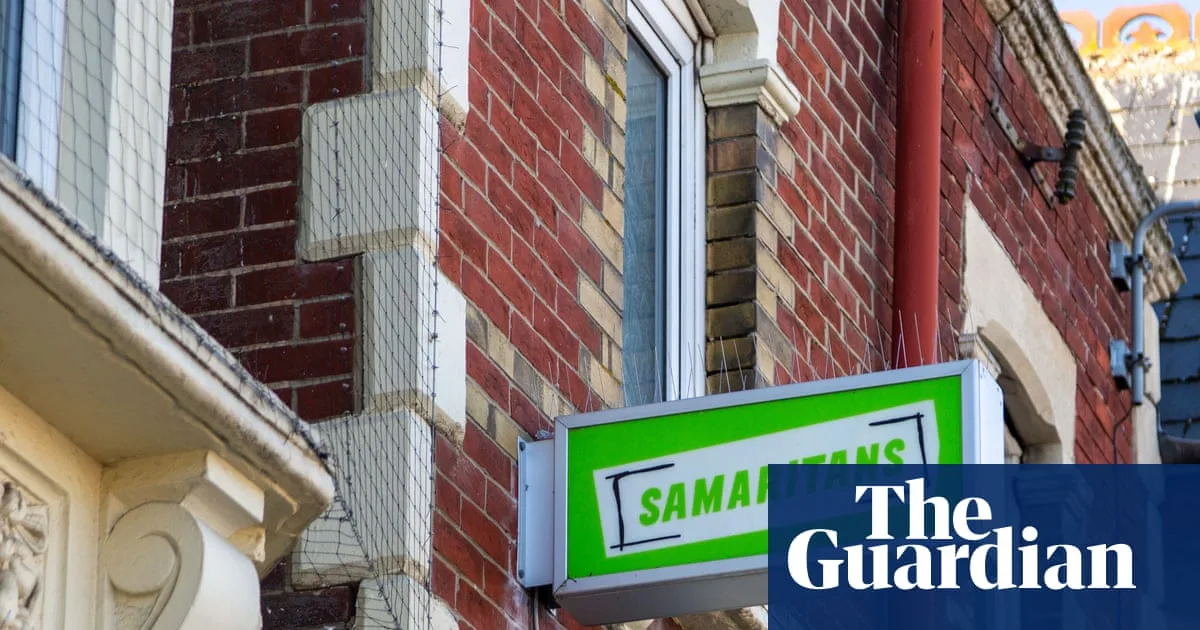
Samaritans is pressing ahead with controversial proposals to close some of its 200 local UK branches, insisting changes were necessary to make the 70-year-old organisation fit for the future. Julie Bentley, the mental health charity’s chief executive, told the Guardian the organisation will set up three-year regional projects “co-created” with volunteers to develop more efficient ways of working, including branch mergers and closures.
She described the changes as “evolution” not “revolution”, but conceded the Samaritans would operate a smaller branch network in future. “Change needs to happen, let’s make sure it happens in a clear and considered way,” she said. Proposals originally floated in July estimated about 100 branches – roughly half the network – would be shut down, triggering widespread dismay among volunteers concerned the charity would lose its local community roots and connections.
A letter sent by Samaritans to its volunteers on Tuesday night no longer mentions branch closure targets, suggesting the charity has been bruised by strength of volunteer opposition since July when the proposals were first mooted. “We acknowledge and understand the concern expressed about how the loss of any branch may impact morale and retention for some volunteers,” the letter said. “It has confirmed just how much local branches and local communities mean to our volunteers.”

But it confirms the three pilots – in south-east England, Yorkshire and Humberside, and Scotland – would examine “how to reconfigure branches, considering all options including branch scale up, mergers, coalitions, clusters, relocations, and regrettably where needed, closures”. The charity argues the changes, which are likely to lead to fewer, larger regional branches, would help it improve services by enabling more calls to be answered, shortening call waits and attracting a wider base of volunteers.
Currently between 70% and 80% of calls are answered, and Samaritans aims to raise this to 90%. Creating fewer, larger, more accessible regional branches would attract more volunteers and increase the volume of shifts. Some branches have just 10 volunteers while others have 200, Bentley said. Volunteers said the local branch closures would make hundreds of volunteers quit because they would not want to or be able to travel to new branches, or because they would not enjoy volunteering without the camaraderie of local connections.
Some volunteers have called for a vote of no-confidence in the Samaritans chair, Keith Leslie, at the charity’s annual general meeting in October. Bentley said this was a “distraction” as the board was united in its support for the plans. Colm Martin, a Samaritans volunteer in Kingston-upon-Thames who has helped organise opposition to the proposals, criticised the charity for continuing to offer no certainty about the future for branches and volunteers.