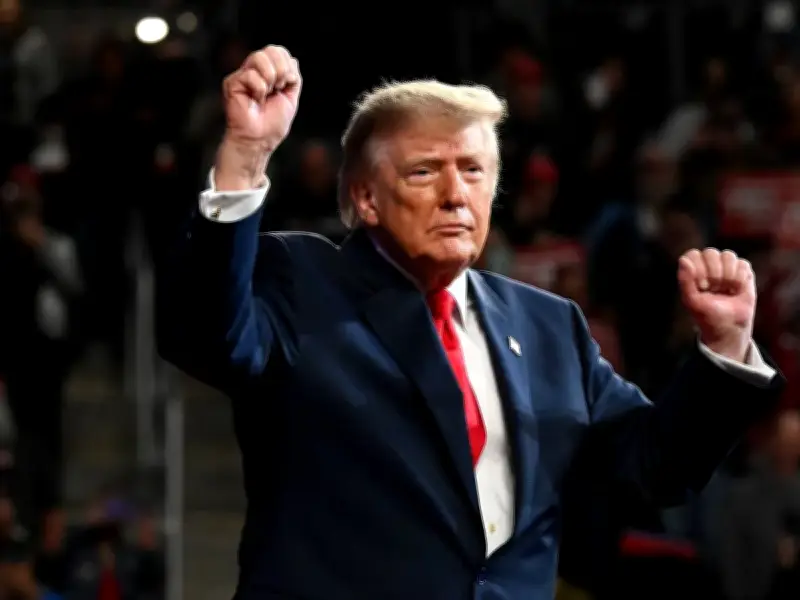
Donald Trump told supporters at a midterm rally in Tennessee that he could say "the stupidest things" and they would still clap, a remark a clinical psychologist says reveals a belief that actions have no consequences.
The US President made the comments during a rally at F&M Bank Arena in Clarksville, Tennessee, on October 10. He told the crowd: "There's such love in these rooms. It's like, I mean, it's amazing, when you stand up here, it's like the love. I could say the stupidest things, and you'd clap."
Despite the suggestion that they would applaud regardless of how absurd he was being, the audience appeared to take no offence. Trump then assured his admirers that "we don't say the stupidest things" and that they actually "say things of common sense".
Social Media Reaction
Viewers were startled by his remarks. One person posted on X: "Donald Trump just admitted that his followers are in a cult." Another commented: "He calls them stupid to their faces and they still clap."
Given the 80-year-old's observations set social media ablaze, the comments were presented to clinical psychologist Dr Tracy King, who was asked what they might reveal about his personality.
Psychologist's Analysis
Dr King explained: "Trump seems to suggest that his supporters would clap for him even if he said something ridiculous, and he believes this is because they love him. Thinking this way can lead to a belief that actions have no consequences."
She outlined several psychological processes at work, including how we discover ourselves through others' reactions to us. This can be as straightforward as a child cracking a joke at dinner and everyone chuckling, causing them to believe they are the family entertainer. However, she added: "If adults laugh even when the joke is inappropriate, this sends the message that their behaviour is not only ok but also welcome."
Dr King stated this was recognised as "operant conditioning" where we increase what gets rewarded and we modify ourselves around what others encourage, tolerate or challenge. Regarding how this affects the President, she added: "If Trump says something inappropriate and people still accept it, he might start to care less about what he says or feel he can push boundaries even further next time."
Potential Dangers
She stated this might not be a deliberate decision but that over time some individuals can forge identities based on being provocative. "For someone in power, this is even more embedded due to the larger audience," she explained.
Regarding why this is potentially dangerous, she continued: "If Trump truly believes people will love him no matter what he does, he loses an important way to keep himself accountable. In these situations, people may start speaking just to get a reaction, instead of thinking about the value of what they say."
Observably, this may look like growing confidence, but it can turn into entitlement, where someone feels normal rules no longer apply to them. There can be a gradual pushing of boundaries, similar to how grooming works, with more intense behaviours being accepted or even applauded over time and no negative consequences.
Cult Comparisons
Dr King also said the cult comparison was fascinating because we are less likely to judge someone if we feel close to them. She said people can develop a bias that makes them ignore their own sense of right and wrong. The psychologist added: "People may not notice their own critical thinking gradually fading. In the worst cases, criticism of the admired person can feel like a personal attack and in cults we see this when members defend the leader with their lives."
Regarding the crowd cheering and clapping after Trump made the remarks, she said some may have participated because they view him as an authority and they believe what he says. However, she said others may have applauded due to "some form of group pressure even when they disagree with what is being said".
Concluding her point, Dr King, a chartered clinical psychologist with 27 years of experience working in forensic and secure environments, said: "Healthy relationships let us care or admire someone but also speak up when we think they're wrong. If disagreement feels unsafe, then we have to think about control."