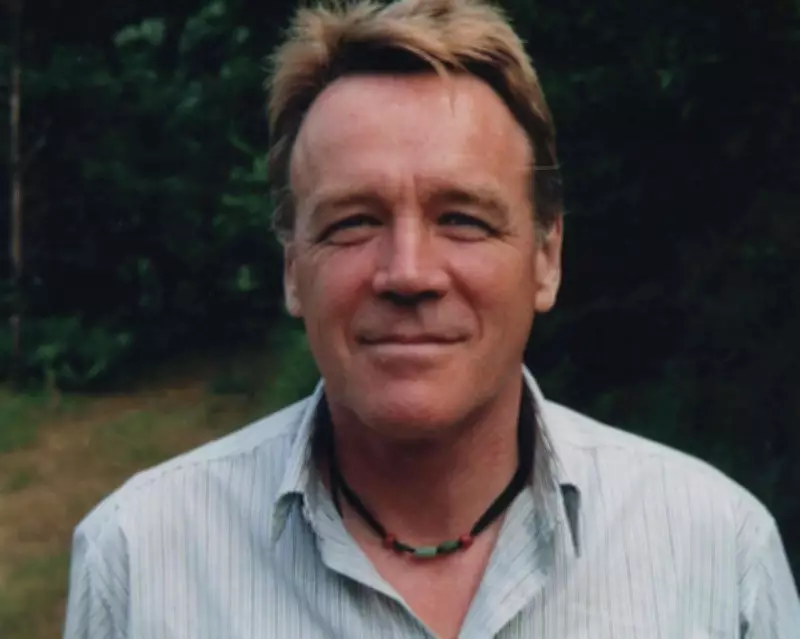
Michael Thompson, an anthropologist who studied how societies assign value and was a member of the first party to ascend the south-west face of Everest, has died aged 89.
Rubbish Theory and the creation of value
In his 1979 book Rubbish Theory: The Creation and Destruction of Value, Thompson used everyday examples to illustrate how value operates. For instance, beaded curtains from the 1970s, once considered cheap and destined for landfill, now fetch real money in vintage shops. Nothing about the object changed; what changed was the social construction placed upon it.
Thompson proposed that goods and services fall into three categories: durable objects (value rises over time), transient objects (value falls), and rubbish (no value). Crucially, these categories are not fixed but are assigned by societies and can shift.

Cultural theory and plural rationality
Thompson's work raised a central question: if value categories are socially constructed, what limits them? He argued that assuming a single shared rationality fails to explain human diversity, while assuming unlimited variation dissolves social science into travel literature.
With collaborators, he developed cultural theory, or the theory of plural rationality, which identifies four recurring ways people live together: hierarchy, individualism, egalitarianism, and fatalism. These combine to generate social diversity. Published as Cultural Theory (1990) with political scientist Aaron Wildavsky, the framework has practical implications.
Practical stakes
Each way of living carries a coherent way of perceiving risk, fairness, and nature. Different communities looking at the same flood or data are reasoning from different premises. For climate change, hierarchical approaches favour regulation, individualists prefer markets, egalitarians advocate restraint, and fatalists stress adaptation.
Thompson insisted that sustainable solutions require clumsy combinations of competing rationalities, not clean victories. Failure to include dissenting voices is a failure of listening, not data.
Career and collaborations
Born in Brackenthwaite, Cumbria, Thompson trained at Sandhurst and served in Malaya. He left the army by standing for parliament in a 1962 byelection, forcing his release. He studied anthropology at University College London and Oxford, completing his PhD in 1976.
At the International Institute for Applied Systems Analysis in Laxenburg, he worked with ecologist Crawford Holling, hydro engineer Dipak Gyawali, and others on Himalayan water politics, urban environmentalism, and flood hazards. He held professorships at the University of Bergen and Oxford.
Climbing achievements
Thompson joined Chris Bonington on the first ascent of Annapurna's south face (1970) and the first ascent of Everest's south-west face (1975). His understanding of risk as a perception shaped by perspective became central to his scholarly work.
He married Anne Musgrave in 1966. She survives him, along with their children Will, Ursula, and Martha, and five grandchildren.