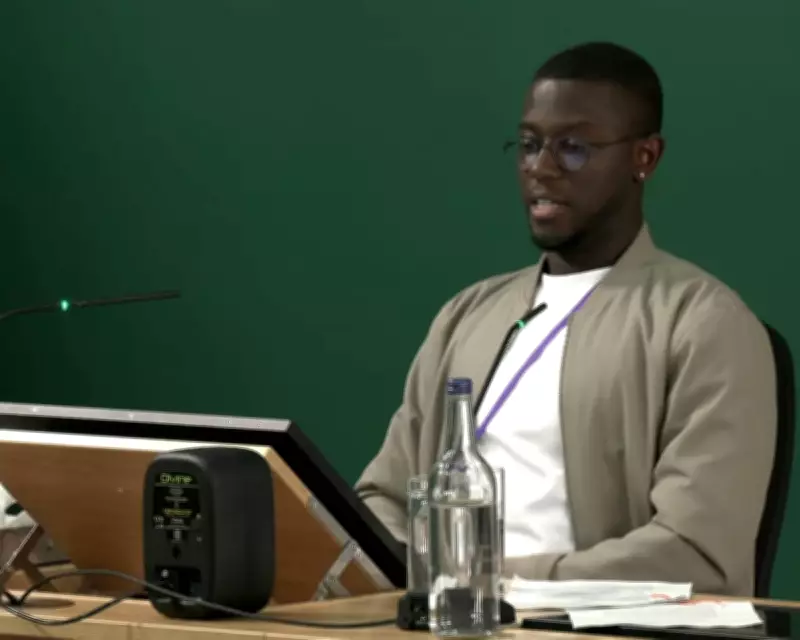
Valdo Calocane's younger brother, Elias, told the Nottingham inquiry on Wednesday that he felt "powerless" over his sibling's mental ill health and believed violent messages his brother had sent were related to suicidal thoughts, not plans to harm others.
Background of the Attacks
Valdo Calocane, who was diagnosed with paranoid schizophrenia in 2020, stabbed to death Barnaby Webber and Grace O'Malley-Kumar, both 19, and caretaker Ian Coates, 65, on 13 June 2023. He also seriously injured three others. The inquiry is examining the events leading up to the attacks.
Elias's Evidence
During his testimony, Elias was questioned about messages he received from Calocane in 2020, before his first hospital admission, which contained violence and paranoia about technology. In one message, Calocane said he was "thinking about red rum" (murder spelled backwards), and in another, he told his brother he wanted to "hurt permanently."

Elias repeatedly told the inquiry that from 2020 until the attacks, he had a "belief" Calocane would take his own life. The inquiry saw messages where Calocane described "immense anguish, paranoia, anger, hatred" and having the "darkest thoughts." Elias said he believed an "I love you" message from January 2020 was a "goodbye message."
Rachel Langdale KC, counsel to the inquiry, suggested the messages did not explicitly state Calocane would hurt himself. Elias responded: "If you take the messages around it, there's no other subject other than Valdo, right? He's talking about the situation, the monitoring thing, feeling immense anguish and talking about it being overwhelming." He added: "I guess maybe it's difficult for people to read these messages now without the context of what happened on 13 June... At this point, Valdo had never been violent at all to anyone."
Sophie Cartwright KC, representing survivors, suggested Elias was "fully aware" the messages referenced "violence and aggression" and was "seeking to downplay" those. The inquiry heard that between January 2020 and June 2023, Elias saw Calocane only twice, partly due to Covid-19 restrictions, but also because he "struggled" with the relationship and did not fully understand his brother's mental health issues.
Pausing to gather his emotions, Elias said: "Part of this was a defence mechanism on my part, of dealing with the loss ahead of time... every time Mum called me, during that period, I thought that was gonna be... I just found it really hard." He described a "sense of hopelessness" and feeling that from services, "unless something happens, nothing changes," adding: "I felt powerless."
Phone Calls Before the Attacks
The inquiry also heard that Calocane called his brother for 44 minutes the day before the attacks, and again the morning after killing Webber and O'Malley-Kumar. In the latter call, Calocane said it had "been done" and asked Elias to take their parents out of the country. Cartwright said Elias should have called 999 at that point, as Ian Coates had not yet been attacked. Elias said: "I guess I say this over and over again, that I had this long view of him wanting to commit suicide and me thinking that's what's happened."
Elias also revealed he discovered Calocane had been diagnosed with paranoid schizophrenia in October 2023, four months after the attacks. The families of the bereaved shook their heads in disagreement in response. The inquiry continues.