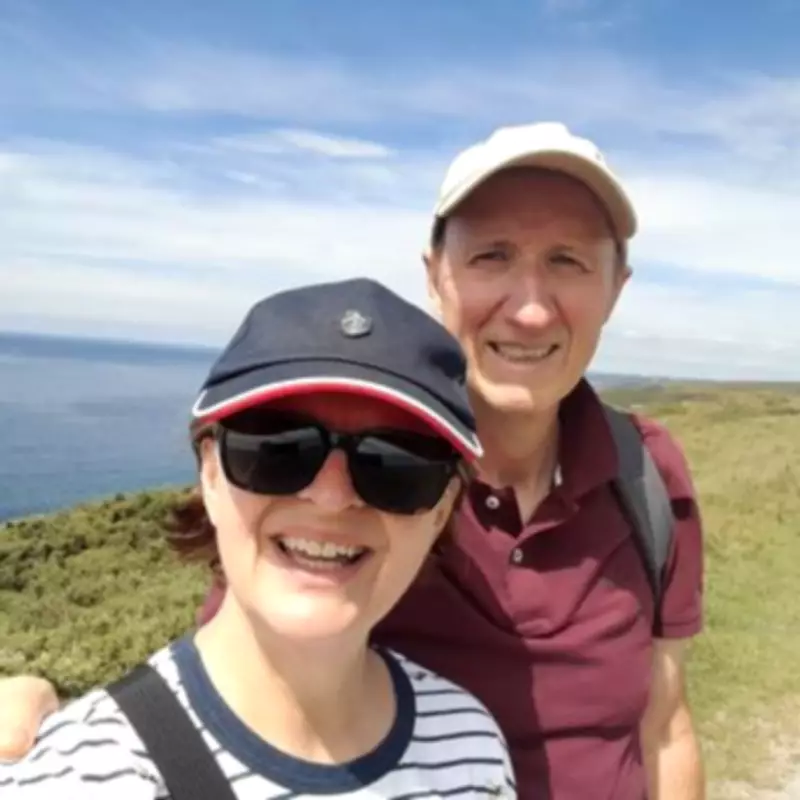
It was an ordinary day for Steve and his wife when his symptoms started. Steve Taylor and his family are working to raise awareness and funds for Brain Tumour Research as an ordinary day in 2024 left him 'living from scan to scan' after months of symptoms he didn't notice until it was too late.
A Day That Changed Everything
The Somerset local was 57 when he left the house in July 2024 with his wife, Helen, to vote in the General Election. Afterwards, the pair left the polling station and headed for a relaxed pub lunch when everything suddenly took a turn.
Steve shared: 'I started feeling strange while we were there. Helen said she didn't feel comfortable with me walking home, so she went to get the car. While she was gone, I apparently stood up and said to somebody that I wasn't feeling well.'

Then Steve collapsed into a full tonic-clonic seizure, hitting his head on the way down. Luckily a former nurse was at the pub with her family and they stepped in to help.
Steve continued: 'The paramedics arrived very quickly and even the air ambulance attended. Meanwhile my wife came back to the pub and saw complete chaos unfolding. She genuinely thought I was dying.'
Diagnosis and Treatment
After being blue-lighted to Weston General Hospital, Steve underwent a barrage of tests before a CT scan discovered a mass on his brain. He was referred to a specialist at Southmead Hospital in Bristol where he was diagnosed with a glioblastoma, an aggressive and incurable brain tumour, right in his temporal lobe.
Steve recalled: 'With hindsight, there were probably symptoms earlier that year. Around February 2024, I'd been having dizzy spells and strange sensations, but I put it down to low blood sugar because I'd been dieting and not eating properly. It didn't seem serious.'
'I'd still been driving, travelling and going on holiday without any issues, so it never crossed my mind that something major was happening.'
After considering his options, Steve underwent a nine-hour operation with risks including neurological damage, hearing issues, sight loss and death. Steve said: 'I wrote Helen a letter before the surgery and left it in my hospital bag in case the worst happened.'
Thankfully his surgery went well and results confirmed it was a grade 4 glioblastoma. Shortly after, Steve began 'gruelling' six weeks of radiotherapy and chemotherapy followed by a 15-month course of chemotherapy tablets.
He now follows a 'strict health regime alongside conventional treatment', having cut out alcohol, refined sugar and processed foods from his diet while also adding in between 70 and 80 capsules and supplements a day.
Living with Scan Anxiety
Steve continued: 'I have MRI scans every three months and, of course, scan anxiety is very real. You live from scan to scan.'
'But I consider myself fortunate in many ways. I'm not dealing with major neurological symptoms, speech problems or cognitive issues and I'm incredibly grateful for that. When people hear 'brain tumour' they often think it's immediately the end, but many people are living good, fulfilling lives with brain tumours.'
Over 100,000 people are believed to be living with a brain tumour or the long-term impact of their diagnosis. The condition kills more men under the age of 70 but has received just 1% of national spend on cancer research since records began in 2002, according to the charity.
Raising Awareness and Funds
After he first got his diagnosis, Steve had been searching for hope in positive stories from people who had the condition, which prompted him to share his own. He added: 'Yes, brain tumours are devastating and frightening, but mindset matters too. I truly believe trying to stay positive helps your body cope with trauma and treatment.'
Steve's family have also been a relentless support, from Helen's research on therapies, supplements and treatment protocols to his niece's husband, Nathan, who ran the AJ Bell half marathon in Bristol to raise awareness and funds for Brain Tumour Research.
He continued: 'Nathan is an amazing man. He works incredibly hard, he's a wonderful father and despite everything else going on in life, he still found the time to train and run a half marathon to raise awareness of this awful disease. That means the world to me.'

Nathan, who also lost his close friend David Burton in April 2026, added: 'Seeing people you care about go through something like that changes your perspective completely. Losing David so young and watching my uncle Steve endure two years of treatment has made me even more determined to do something meaningful and help fund research that could make a difference.'
Brain Tumour Research is leading the call for a national annual spend of £35 million in order to improve survival rates and patient outcomes in line with other cancers such as breast cancer and leukaemia.
Steve added: 'Research into brain tumours remains desperately underfunded and awareness is so important. Anything that helps people understand the reality of this disease and supports better treatments in the future matters enormously.'