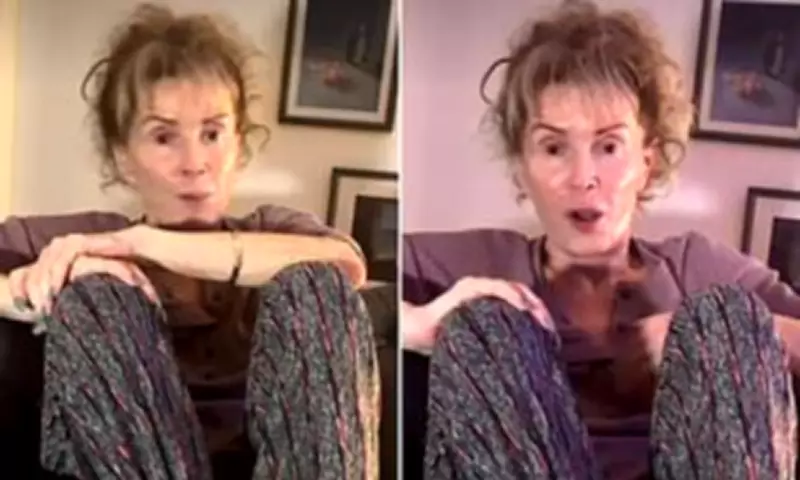
Beverley Callard has candidly disclosed that her mind feels 'manic' as she gears up to resume her professional duties, providing a heartfelt health update following her recent breast cancer surgery. The 68-year-old soap star, who publicly announced her diagnosis last month after relocating to Dublin for a new role on the Irish series Fair City, shared these personal insights in an Instagram post on Friday.
Emotional Struggles and Practical Challenges
In a detailed message to her followers, Beverley opened up about the difficulties she is encountering while preparing for a work trip to London. She explained, 'Well, what a day today. I've been packing because I was told I have got to go to work on Sunday and Monday in London.' The actress expressed her preference for elegant attire but highlighted the physical limitations she faces post-surgery.
'I'm fine now, but what do you do when you can't put a bra on because you're still sore and you still have wounds?' she questioned. Beverley described attempting to use a soft bra with socks for balance, but found it ineffective. 'No, it didn't work at all, so then I thought, well, I can't stick a shoulder pad on myself or something because I'm too sore everywhere.'

Mental Health and Resilience
This led to feelings of doubt and anxiety, with Beverley admitting, 'So I was completely, oh, well, I shouldn't be going. Why am I doing this and the rest of it?' However, she maintained a positive outlook, noting, 'But I have got good shoes to wear. That is the only thing. I've got great shoes to wear, and that's it.' She reassured fans that she would find a solution, stating, 'And I will sort it, but it was just one of those days today. I'll work something out somehow.'
Reflecting on her mental state, Beverley added, 'So that was my day really, and I can't sleep. My mind is manic at the moment. I think maybe it's nerves about going back to work and everything else, but I'm being strong, and I hope you are all as well.'
Earlier Updates and Heartfelt Gestures
Earlier in the week, Beverley had shared another emotional update on social media, revealing she was experiencing soreness, nausea, and emotional vulnerability following her operation. In a post on X, she described a difficult day, saying, 'I woke up this morning and I put on yesterday's clothes, which were dropped on the floor last night when I went to bed. I have not cleaned my teeth, I have not combed my hair. I cannot answer my phone because if someone says a kind word to me, I cry.'
She expressed feeling 'absolutely rubbish' and tired, with bouts of queasiness. Beverley also mentioned her hesitation to post updates, worried about making others feel 'miserable'. During this time, she received a heart-shaped cushion and a card from a stranger, intended to ease her pain under the arm. This gesture moved her to tears, and she plans to re-gift the cushion after use.
Understanding Breast Cancer
Breast cancer remains one of the most prevalent cancers globally, affecting over two million women annually. In the UK, there are more than 55,000 new cases each year, with approximately 11,500 fatalities. In the US, the disease strikes 266,000 individuals annually and claims 40,000 lives.
Causes and Symptoms
The condition originates from cancerous cells in the breast ducts or lobules. When it spreads to surrounding tissue, it is termed 'invasive', while 'carcinoma in situ' indicates confinement to the original area. Most cases occur in people over 50, though younger women and, rarely, men can be affected. Staging from 1 to 4 indicates size and spread, with grading from low to high reflecting growth speed.
Risk factors include genetics, though the exact cause involves damaged genes leading to uncontrolled cell multiplication. The primary symptom is often a painless lump, though many are benign cysts. Spread typically first affects lymph nodes in the armpit.
Diagnosis and Treatment
Diagnosis involves initial assessments like mammograms, followed by biopsies to confirm cancer. Further tests may check for spread. Treatment options include surgery, chemotherapy, radiotherapy, and hormone therapy, often used in combination. Surgical approaches range from breast-conserving to full removal, depending on tumour size.

Radiotherapy uses radiation to target cancer cells, while chemotherapy employs anti-cancer drugs. Hormone treatments are effective for oestrogen-sensitive cancers. Early detection through routine mammograms for women aged 50 to 71 improves outcomes, with surgical removal at early stages offering good cure chances.
For more information, visit breastcancernow.org or call the free helpline at 0808 800 6000.