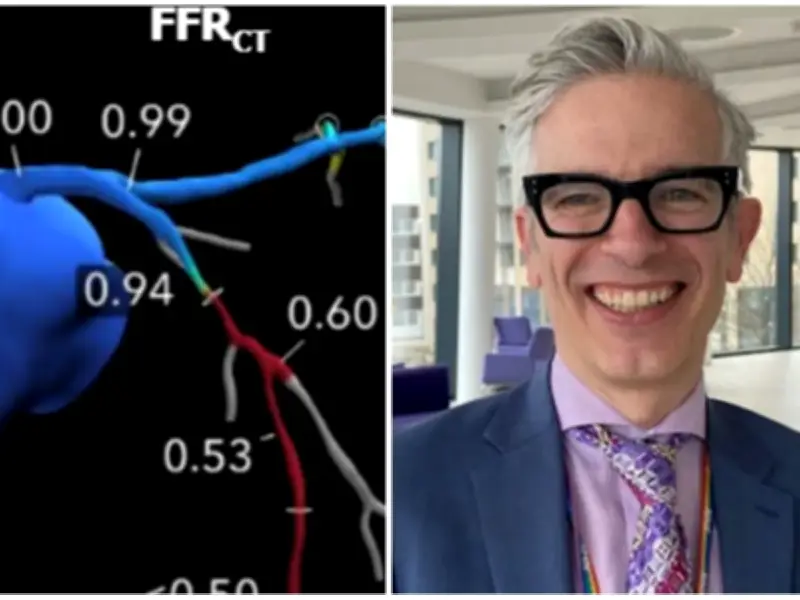
A trial led by experts in Newcastle has demonstrated that 3D modelling can predict whether patients with angina may need a stent fitted, potentially helping surgeons to plan care more effectively.
Currently, details such as the size of the stent needed and the scale of damage to a patient's arteries may not be known until the surgeon has begun the procedure. The research, led in the UK by Dr Alan Bagnall, a consultant cardiologist at the Newcastle Hospitals NHS Trust, aimed to address this limitation.
How the technology works
Patients with angina have fatty deposits, known as plaques, which have built up in their arteries, putting them at higher risk of a heart attack or stroke. An invasive angioplasty involves placing a stent in an artery to improve blood flow.
Using advanced CT scan technology, called CT coronary angiography, doctors can get a detailed picture of the blood supply to the heart. Specialist software, known as "fractional flow reserve", can then produce a 3D model, allowing doctors to plan how to proceed with a procedure, including visualising what would happen if a stent was inserted in a particular place.
Benefits for patients
Dr Bagnall explained that the benefits would include reducing the time taken to insert a stent. He said: "Invasive angiograms have been used for many years and are a safe and effective way of helping doctors to plan and deliver a stenting procedure, however there are some limitations. Currently, some information, such as the size of the stent required and the extent of damage to the arteries, can only be gathered once the doctor starts the procedure."
He added: "Our research found that, with the addition of specialist software, the same CT [scan] used for diagnosis can now also provide the level of detail needed to help doctors plan the procedure ahead of time. This gives time to discuss the risks and benefits with patients in advance and ensure that all the necessary equipment is available. We also found that advanced planning shortened procedure time by around 17 minutes."
Trial results and global impact
The trial, led internationally from the Cardiovascular Research Foundation in New York by Dr Carlos Collet, involved 1,105 patients globally, including on Tyneside. The results have been published in the New England Journal of Medicine. Dr Bagnall was supported by Dr Ian Purcell, consultant cardiologist at the Freeman Hospital, and the trust's cardiology research team.
Dr Collet said: "[This trial] shows that, in appropriately selected patients, planning treatment with a detailed CT scan can achieve comparable clinical outcomes to ultrasound guidance from inside the artery, while shortening procedures and using less contrast dye. The opportunity is to make better use of the information we already have before the patient enters the catheterisation laboratory. This could help us deliver more efficient, personalised treatment and bring carefully planned care to more patients worldwide."
The trial was sponsored by CoreAalst Bv, which received research grants from GE HealthCare and Heartflow Incorporated.