
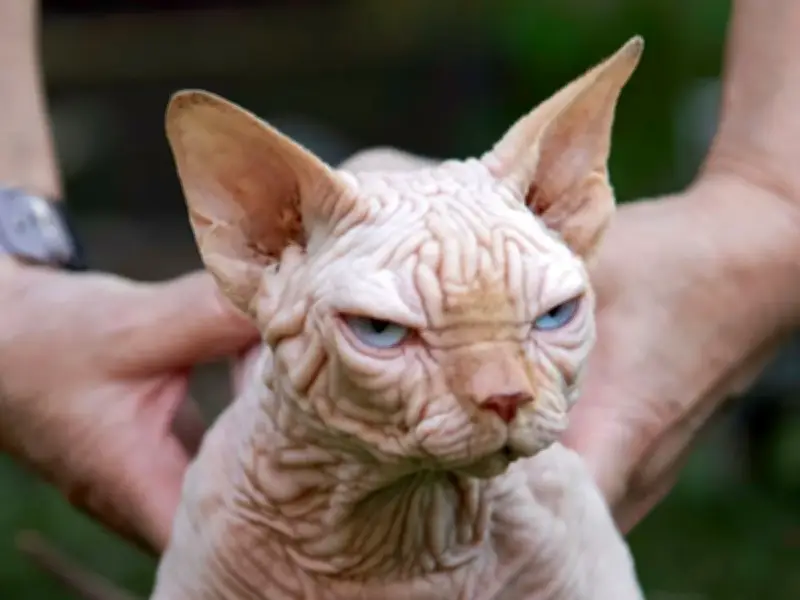
Animal charities are warning that a feline version of XL Bully dogs is booming in popularity, despite the cats being riddled with health issues. Shelter bosses say they are seeing increasing numbers of cats with 'extreme traits' coming into their care, including stocky, hairless XL Bully cats. The cats first appeared in the UK in 2024, the same year owning XL Bully dogs became a criminal offence.
Health problems and breeding practices
XL Bully cats are bred by combining the mutant gene that causes hairlessness in the Sphynx breed with the short legs of Munchkin cats. These genetic mutations typically lead to early-onset arthritis and crippling joint pain, while their lack of whiskers restricts their ability to navigate and communicate. Excess folds also leave them vulnerable to painful skin conditions.
Combined, these health issues mean XL Bullies 'cannot exhibit normal cat behaviour' and are prone to irritability and stress, charity bosses said. Social media is said to be fuelling the rise of "Frankenstein's moggies," with one Instagram account promoting XL Bully cats having over 7,000 followers and receiving hundreds of likes on each post. Some of the wrinkled, short cats are given nicknames like Mr Extreme and Little Alien.
Charities call for regulation
The RSPCA and Cats Protection are urging the government to tighten rules around breeding after noticing a dramatic change in cat body shapes in recent years. More designer cats are ending up in shelters as owners struggle with high vet bills from their health problems.
Madison Rogers, Associate Director of Advocacy at Cats Protection, described one XL Bully-type cat that struggled with serious conditions, including deformities in his front limbs and spine, and signs of arthritis. "There was also not much movement in some of his joints," she said.
The charity is demanding new legislation to regulate cat breeding across the UK. In Scotland, anyone breeding three or more litters of kittens within any 12-month period must hold a licence from their local council. But in England and Wales, a licence is only needed if you run a business, allowing 'hobby breeders' to engage in unscrupulous practices like inbreeding and overbreeding.
Warnings of 'Frankenstein' cats
Rogers warned that without action, more alarming examples of 'Frankenstein' cats will emerge. "If action is not taken quickly, we are likely to see more alarming examples of what we are calling 'Frankenstein' cats - who bear no resemblance to our beloved moggy and, tragically, come with multiple health issues," she said.
She urged governments across the UK to regulate cat breeding and ban the breeding of cats with known harmful traits, while also asking the public not to buy these cats and to sign the charity's petition. A Defra spokesperson said the government has committed to improve uptake of pet selling licences and is working with the sector to better understand cat breeding practices.




