
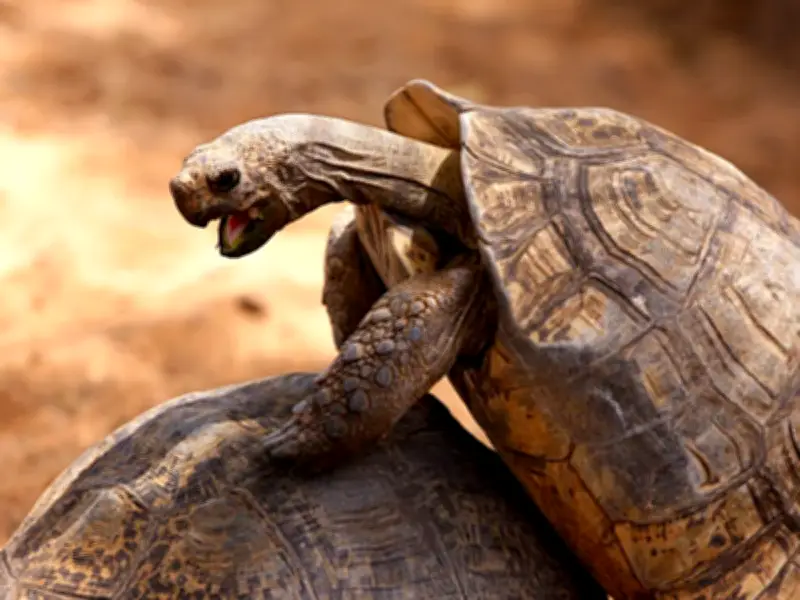
Tonight's solar eclipse could trigger unusual animal behaviour across the UK, from mating tortoises to giraffes running around frantically. More than 90% of the Sun will be obscured by the Moon between 6.17pm and 8.06pm on August 12, the most significant blockage above UK skies since the total eclipse in 1999.
Study of animal reactions
During a previous study of animal behaviour during a 2017 eclipse, researchers in South Carolina observed wild reactions as soon as the Sun disappeared. The study, titled "Total Eclipse of the Zoo: Animal Behavior during a Total Solar Eclipse," documented 13 behavioural changes across 17 species.
The strangest behaviour came from a group of Galápagos tortoises, which stopped lounging in the sun once the eclipse started and began mating. Prof Adam Hartstone-Rose, who led the research, said: "Galapagos tortoises are not charismatic animals. They're like funny-looking boulders that live to well over 100 years old." He added: "They started mating behaviour. They literally started breeding in front of our eyes."
Other unusual reactions
Siamang gibbons produced strange noises they had not made before, while gorillas gathered together and showed behaviour similar to settling down for bedtime. The most dramatic change came from giraffes, which became visibly startled during the event.
Hartstone-Rose previously stated: "During the peak of the eclipse, the giraffes started running around like crazy and in a potentially dangerous way. In the wild, giraffes are pretty calm animals; they're kind of gangly and delicate. They really don't do crazy behaviour unless they need to, and so the only time I've ever seen giraffes running around is if they're startled by a predator or maybe a vehicle or something like that."
Return to normality
He added: "The good news is that all of the animal behaviour returns to normality very rapidly, like literally within minutes." However, Hartstone-Rose cautioned that such stories should be viewed as anecdotal rather than scientific. He said: "Basically everything that you've ever heard about animal behaviour during an eclipse could reasonably be regarded as anecdotal from a scientific perspective."
Most species responded in one of four ways: no reaction, starting their night-time routine, exhibiting anxiety, or exhibiting novel behaviours. Hartstone-Rose explained: "Most animals fell into a category that we refer to as relating to circadian rhythm. So basically, animals treat the eclipse as if it were evening, then night, and then morning, and so go into those routines."
Bird behaviour during eclipse
Researchers also observed birds during the 2017 eclipse. Recordings revealed that 29 of the 52 bird species showed changes in their usual singing patterns. Some "dawn chorus" performers burst into song during the cosmic event, while other species fell silent during the darkness and then erupted into a synchronised false dawn once the Sun reappeared.




