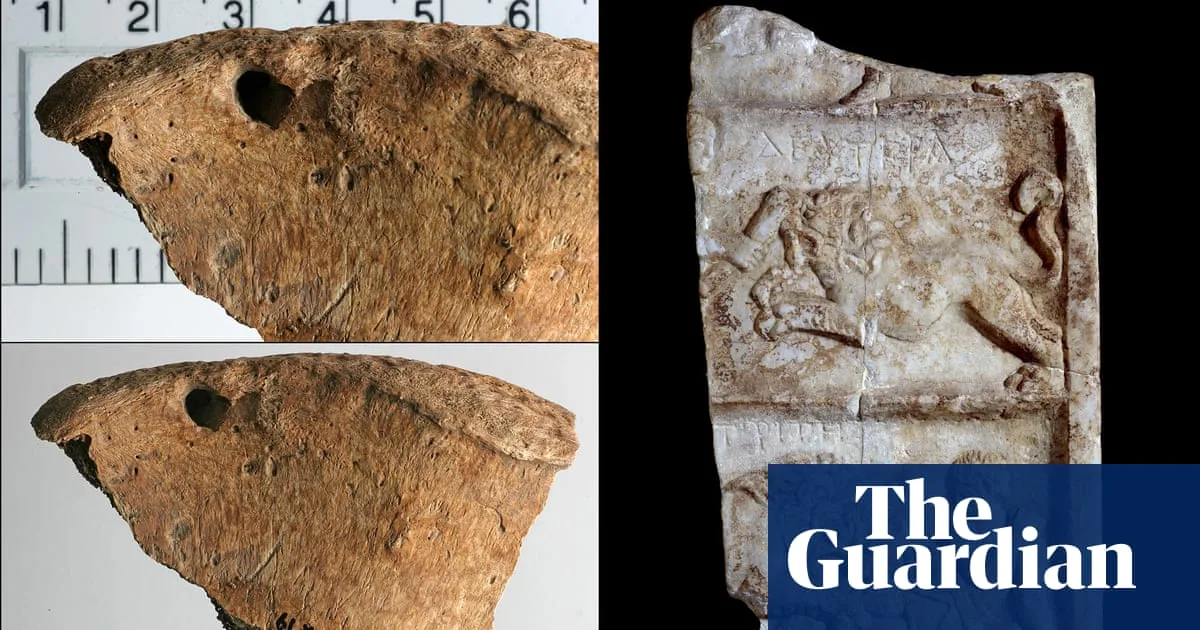
A study of a 1,800-year-old skeleton from York has provided the first physical evidence of human-animal combat in the Roman empire. Bite marks on the pelvis of a man, aged 26 to 35, match those of a lion, researchers say.
The skeleton was excavated from the Driffield Terrace burial site near York city centre, where about 80 decapitated skeletons were found. Most belonged to well-built young men with signs of brutal violence, leading experts to suspect a gladiator graveyard.
Professor Tim Thompson of Maynooth University, lead author of the study, said: 'This is the first time we have physical evidence for gladiators fighting, or being involved in a spectacle, with big cats like lions in the Roman empire.' The bite marks were compared with bones chewed by big cats in British zoos.
The man may have been incapacitated before the lion dragged him away, as the pelvis injury is not fatal. Roman gladiators typically fought each other, but bestiarii took on exotic animals. The study suggests a gladiatorial school linked to the Roman legion may have existed in York.
Dr John Pearce of King's College London, co-author of the study published in Plos One, said York was the second largest population centre in Britain after Londinium. The discovery raises questions about where the fights occurred, with a possible arena beneath the city yet to be found.