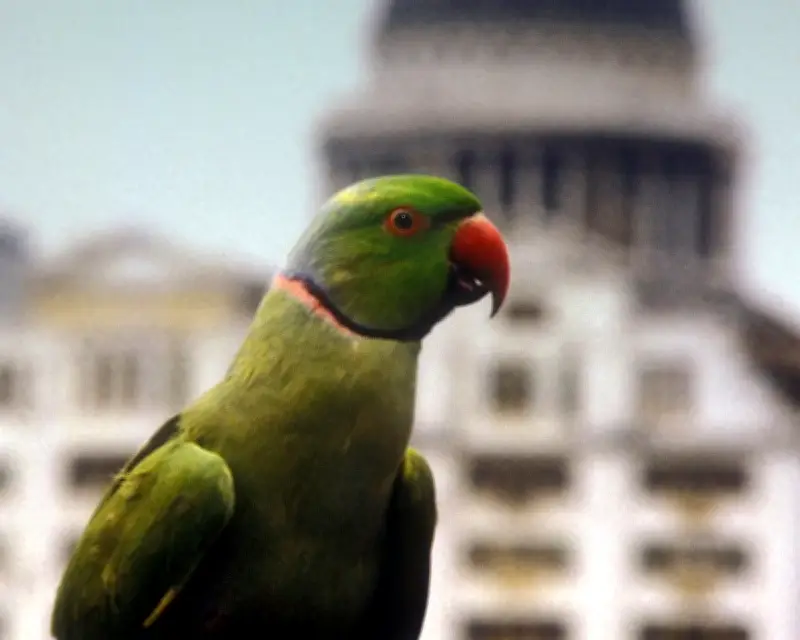
The ring-necked parakeet, a fixture of London's skies for decades, has been recast as an ecological threat, prompting a debate over whether to cull the birds and whether the concept of invasive species itself is flawed.
At Hither Green cemetery in south-east London, one of the city's largest roosts, thousands of the green parakeets gather each dusk in a line of poplars. The birds, an admixture of two Asian subspecies, have established a genetically distinct population in Britain over the past half century.
From Curiosity to Pest
Politicians, conservation bodies and the public have begun to question the presence of tens of thousands of these Himalayan birds. European studies suggest negative impacts on native bird and bat populations, and the parakeets are known vectors for Newcastle disease and Cryptosporidium. A government cull was allegedly considered in 2021 but abandoned due to expense and impracticality.
The British Association for Shooting and Conservation (BASC) has proposed adding the ring-necked parakeet to the quarry list of birds that can be shot in season. Conor O'Gorman, BASC's head of policy, said the aim was to give landowners a quick legal option when birds appear in orchards or vineyards, not to cull urban populations. "The urban population is here to stay," he said.
The Origins of an Invasion
Origin myths involving Jimi Hendrix, The African Queen and Henry VIII are unfounded. A 2019 study suggests the parakeet established itself through a steady trickle of runaway pets, deliberate releases and aviary jailbreaks, a process known as "propagule pressure."
Britain's postwar bird-keeping boom saw pet birds rise from 600,000 to 11 million between 1947 and 1961. By 1971, a self-sustaining population existed in Croydon. The most recent official count in 2016 put the UK population at 12,000 breeding pairs, with 50,000 commonly cited today.
Debating the Response
Naturalist Chris Packham has argued the case against parakeets is overblown, driven by fear of newcomers. Nick Hunt, author of The Parakeeting of London, objects to the rigidity of terms like "alien" and "eradication." "Accepting borders and current ranges as the natural way of things, that they can never change, that they must always be fixed in place – well, it seems, paradoxically, to go against the natural order of things," he said.
Invasion biology has long debated its own ambiguities. A 2011 paper in Nature by Mark Davis argued that "the practical value of the native-versus-alien species dichotomy in conservation is declining, and even becoming counterproductive." Daniel Simberloff led a rebuttal, accusing Davis of downplaying severe impacts and urging the public to remain "vigilant of introductions."
The parakeets occupy an ambiguous position: a pest to fruit farmers, a potential nest thief to nuthatches, but a welcome addition to grey cityscapes for many. As one visitor to Kensington Gardens remarked, "It's so nice to come here and see them in their natural habitat."