
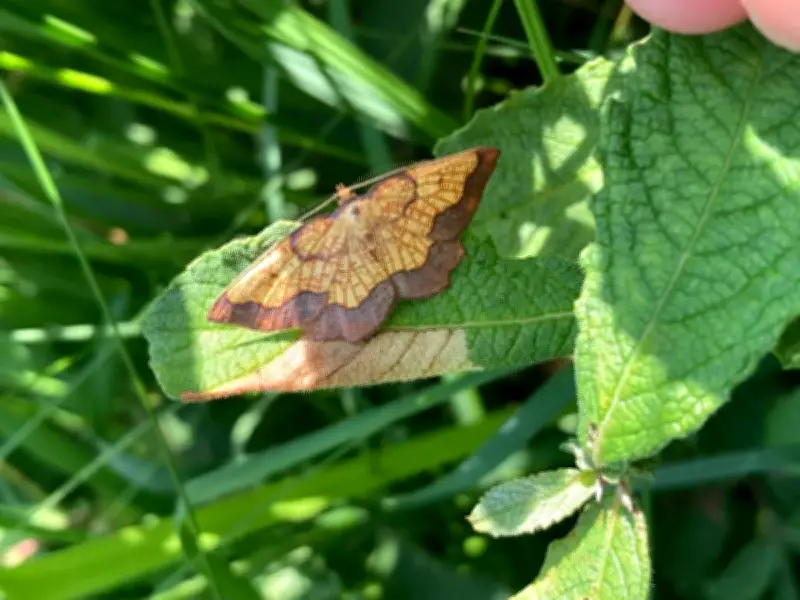
A conservationist has described the discovery of a rare moth colony at a Northumberland National Trust estate as the "highlight of his career". Dr Dave Wainwright of Butterfly Conservation said that discovering a hidden population of Dark Bordered Beauty at the Wallington Estate had left him with an "overwhelming feeling of relief".
Second population in England
The custard-and-chocolate-coloured moth has not been seen at the site since 1952. For decades, the only site where it was found in England was Strensall Common in Yorkshire, but that population has declined partly due to climate change; and wildlife has ravaged part of the site. Last year, the species' numbers were barely in double figures. Dr Wainwright believes that the discovery of a second population of Dark Bordered Beauty provides a new hope for a fragile species.
He said: "I was hopeful - I'm always hopeful - but I definitely didn't expect it because I've been to so many sites to look for this species over the years, so my heart and my head were in two different places."
"We rocked up on site and within a few a minutes we found one - it was one of the highlights of my career. Overwhelmingly it was just a feeling of relief that we weren't just fighting the fight at one site anymore."
Habitat loss and recovery
The Dark Bordered Beauty is a day-flying moth which has lemon-yellow wings and a deep chestnut border. It used to be widespread across northern England and Scotland, but habitat loss caused a serious decline. It is restricted to two small areas on Deeside and Speyside and Strensall Common. One of the main challenges in species conservation is that its caterpillars will only eat two plants; aspen and creeping willow.
Dr Wainwright has been searching for new colonies of the moth in England since starting work at Butterfly Conservation in 2004. He visited the Wallington Estate then, but was unable to track down any of the winged insects. However, the transformation of the land by tenant farmer Fiona Goodfellow using nature-friendly farming, reducing livestock grazing in key areas and restoring peatland appears to have provided the right conditions for the Dark Bordered Beauty to return.
Monitoring and future plans
Wallington ranger Emily Johnson has been monitoring moth populations on the estate over the years. She said: "We couldn’t be more excited to find that Wallington is a stronghold for such a rare species."
"We have been working hard to manage the land better for nature, and it seems to be paying off. So far this year we have already recorded 130 different moth species across the estate. Just a few weeks ago we were also thrilled to discover the return of the endangered Large Heath butterfly at an area of bog on the same farm. It’s discoveries like these that make it all worth it."
The team behind the Wilder Wallington nature recovery project hope to expand potential habitat for the rare moth, with advice from Butterfly Conservation.




