
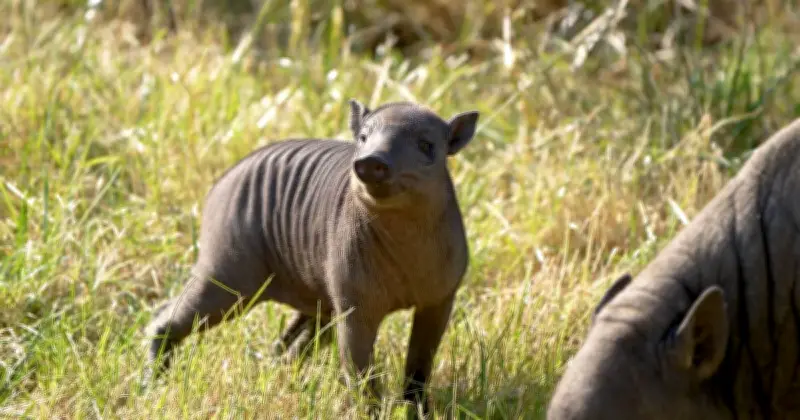
A rare baby “pig-deer” has been born no bigger than a grapefruit at Chester Zoo, boosting a species facing a growing threat of extinction in the wild. The tiny babirusa piglet, named Rana, was born in May and weighed just a few hundred grams. Keepers described her as looking like a “grapefruit with legs” when she arrived.
Unique appearance and habitat
Babirusas are found on just four Indonesian islands and are known for their unusual appearance. Their name means “pig-deer” in Malay, while males are recognisable for their distinctive upper tusks, which grow through the snout and curve back towards the face.
The species was until recently classed as vulnerable to extinction, but wild populations have suffered a sharp decline following the arrival of African swine fever on the islands around five years ago. Babirusas are now expected to be moved into the critically endangered category, with conservationists warning that the deadly disease could push the species towards extinction without urgent action.
First birth in years
Hannah Owens, assistant team manager at Chester Zoo, said Rana was the first babirusa born at the zoo for several years and described her as a “very special little lady”. “When she was born, she was tiny - about the size of a grapefruit, with legs,” she said. “She's grown a lot and is doing really well.”
Rana is the fifth piglet born to her mother Matano, who was born at Chester Zoo 11 years ago and now has descendants living at zoos across Europe. Keepers began preparing for the birth after spotting Matano with male babirusa Bamm Bamm earlier this year. Her pregnancy lasted exactly 161 days, with staff giving her a quiet den and extra bedding before she gave birth.
Conservation efforts
Unlike most pigs, babirusas generally have only one or two young at a time, meaning populations can be slow to recover after disease outbreaks. To avoid disturbing the nervous new mother, zoo staff initially monitored Matano and Rana remotely using a baby monitor before allowing visitors to see them.
Owens said babirusas were doing well in human care but remained under serious pressure in their natural habitat. “The numbers are radically reducing, and it would be horrendous if they disappeared, because they are amazing, charismatic animals,” she said. “Piglets like Rana are a lifeline for the species.”
Chester Zoo conservationist Amy Humphreys is working with the Action Indonesia programme to understand the scale of the decline among wild babirusas. She said conservationists were “in a race against time” to establish what was happening to the remaining population.
Ecological importance
Babirusas also play an important role in their island ecosystems, dispersing seeds as they forage and helping forests regenerate. Humphreys warned that losing the species would mean losing an important part of Indonesia's natural and cultural heritage. “Rana's arrival is worth celebrating,” she said. “Her birth is a chance to shine a light on babirusas and show people why they deserve protection.”




