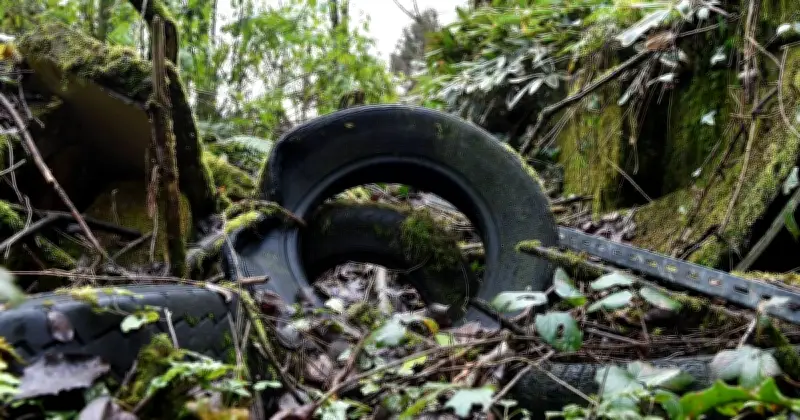
Penscynor Wildlife Park, a cherished family attraction in Cilfrew, Neath, permanently closed its gates in 1998 after 27 years of operation. The site has since been left to decay, gradually reclaimed by nature, yet it remains vivid in the memories of those who visited during its heyday.
The Unintentional Beginnings
The park's origins were almost accidental. In 1966, Neath builder Idris Hale purchased the dilapidated Penscynor House on an 11-acre estate. His deep passion for wildlife, cultivated during trips to Indonesia, led him to transform the grounds into a sanctuary for a private collection of exotic parrots. Public demand to see the birds prompted charity events, and by 1971, Idris officially opened the wildlife park to visitors. The launch was headlined by beloved television personality Johnny Morris of Animal Magic, cementing its reputation.
The Golden Era: 1980s and the Alpine Slide
The 1980s marked the peak of Penscynor's success, driven by a thrilling new attraction: the alpine slide. This toboggan run, inspired by Idris's vision, featured a chairlift up the hillside, a bucket seat descent, and the ability to control speed. The attraction cost £250,000—a substantial sum at the time—but recouped its investment within 18 months due to immense popularity. At its height, the park employed 40 full-time staff, swelling to 150 in summer, and attracted 250,000 visitors annually, making it one of Wales' top three tourist attractions.

Change of Ownership and Decline
In March 1996, Idris's grandson, Jonathan Hale-Quant, took over the park. Speaking to ITV Cymru Wales, Jonathan said: "It started off in my grandfather's imagination. It was a ridiculous, impossible dream but one that he actually did create. There's no doubt that he was a visionary, with a touch of eccentricity thrown in for good measure." Despite his efforts to revitalise the park, Wales' unpredictable weather, declining visitor numbers, and insufficient financial returns forced its closure. Jonathan told BBC Wales Today: "It was borne out of one man's dream and commitment to the conservation and to education of future generations. But really if it's not paying for itself then it has to go. It was difficult. You've got a lot of emotions, a lot of memories tied up."
Closure and Aftermath
The park closed in 1998, and all 174 animals were relocated to new homes. From 1999, the northern section was redeveloped into 41 residential properties. By 2005, Penscynor House was put on the market. Many enclosures remain standing, crumbling and overgrown, as nature slowly reclaims the land.
Enduring Memories
Facebook groups and pages dedicated to the park keep its memory alive. One user wrote: "Loved the place as a kid." Another recalled: "Always went here as a 70s kid." A former visitor added: "Brill day out as a child, shame to see it like this." Someone posted photos of the derelict site, noting: "Abandoned Penscynor Wildlife Park closed in 1998! I imagine a lot of people have fond childhood memories of this place. Part of it has since been converted into housing, whilst the rest is 'left to rot' and taken over by Mother Nature." Another commented: "Every car in Wales had this sticker [of Penscynor Wildlife Park] on the back window." Reflecting on the park's legacy, Jonathan told WalesOnline: "I had a fantastic upbringing at the park. But it's been closed for more than 20 years now, and nature has reclaimed the park. I haven't been there for a long time. There is a twinge of sadness when you see these photos of what it looks like now. When I close my eyes I can see it exactly as it was, and these pictures conflict with what is in my head." He added: "I come from a close family, and I was glad that two of my daughters, who were aged five and eight, got to experience a year of the park while it was open. I wish my third daughter had the same opportunity. It was an incredible way to grow up, and it taught me and my sister a massive amount about life."