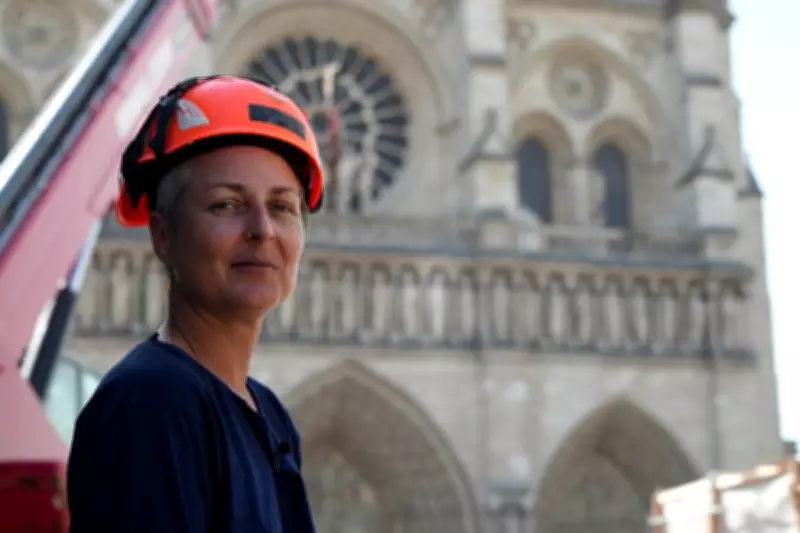
An archaeological excavation beneath the forecourt of Notre Dame Cathedral in Paris has uncovered artefacts spanning 2,000 years, from the Roman era to the Middle Ages. The dig, prompted by the 2019 fire and subsequent plans to redevelop the square, has been described by French media as the “dig of the century”.
Among the finds are a fourth-century coin bearing the image of Emperor Constantine and fragments of medieval pottery with mysterious undeciphered markings. The team has also uncovered the cellars of medieval houses, Merovingian and Carolingian grain pits, and a dense Roman quarter from the fourth and fifth centuries.
Lucie Altenburg, a conservator with the Paris archaeology unit, said: “It’s a rare opportunity for us to work on something that’s tangibly going to make a difference to the history of Paris.” The first historical traces appear just 50cm below the surface, but the team continues to unearth history at depths of up to four metres.
Some of the most remarkable finds come from pits beneath medieval houses that served as latrines and rubbish dumps. The soft organic waste helped preserve complete ceramics, including jugs and cups, which archaeologists say are rarely found intact.
The excavation has captivated visitors. Emily Carter, 34, a tourist from Manchester, said: “It makes Notre Dame feel alive again. You come to see the cathedral, then realise there’s another city under your feet.” The dig is expected to continue as part of the broader urban renewal project.