
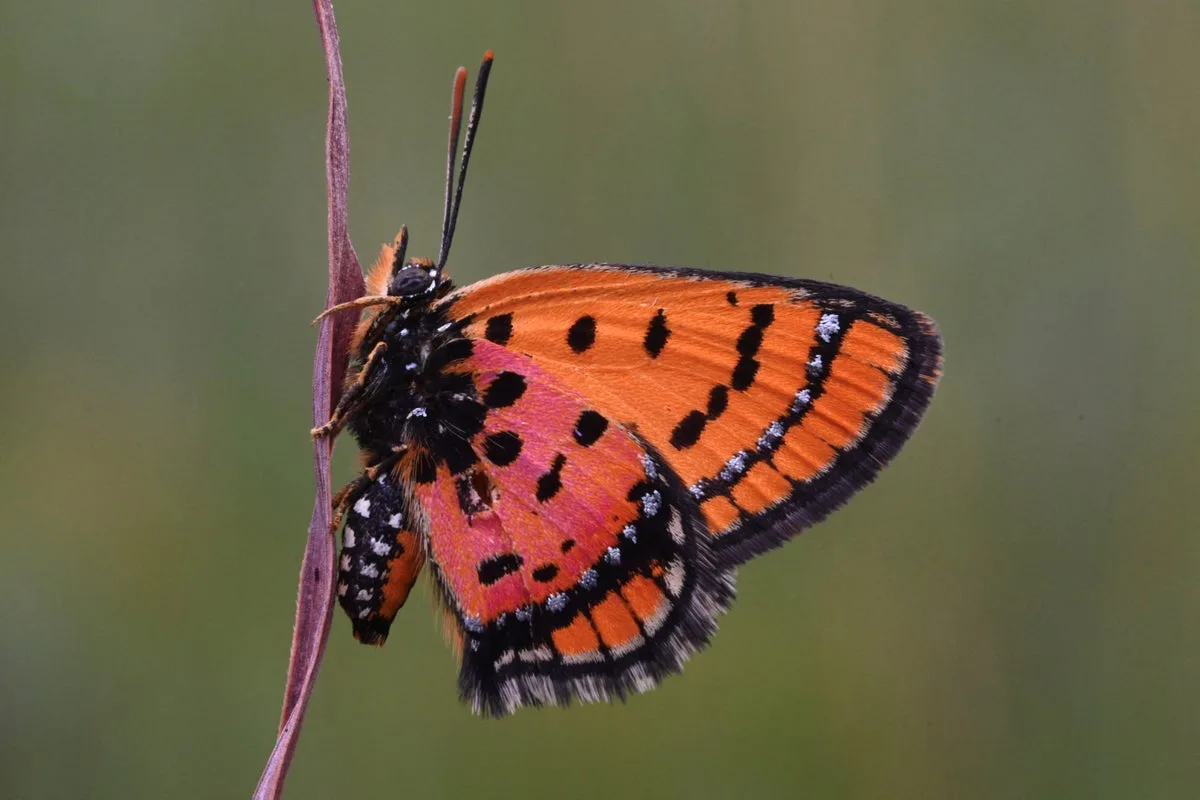
An expedition to Angola's remote Lisima plateau has uncovered a remarkable array of previously unknown species, including eight new dragonfly species, three grasshopper species, and approximately 60 butterfly and moth species.
The discoveries made by The Wilderness Project in February highlight the rich biodiversity of a region whose waters feed four of Africa's major rivers: the Congo, Okavango, Zambezi, and Cuanza.
Among the unique finds were an armored, predatory cricket, a previously undescribed copper caterpillar and its adult butterfly, and a crowned crab spider that fluoresces under ultraviolet light. Experts also identified a new blood orange-hued ladybird orb-web spider, which mimics ladybirds by using bright coloration to signal to predators that it is bitter or toxic.
Expedition leader Rob Taylor described the armored crickets as "very cool ... very fierce-looking," adding that "as a defense mechanism, they can actually squirt fluid onto whoever's trying to attack them."
These discoveries arrive as scientists globally intensify efforts to document species amid a deepening ecological crisis. An estimated one million plant and animal species are on the brink of extinction, with only 1.5 million of the world's estimated 8.7 million species currently identified. Human activity has already led to the disappearance of over 800 animal species since around 1500.
Tragically, the wildlife of the Lisima plateau faces immediate threats. Taylor warned that the region is endangered by "tree-felling, deforestation and ... the artisanal diamond mining industry," as well as by slash-and-burn agriculture, which destroys natural forests and depletes soil nutrients.




