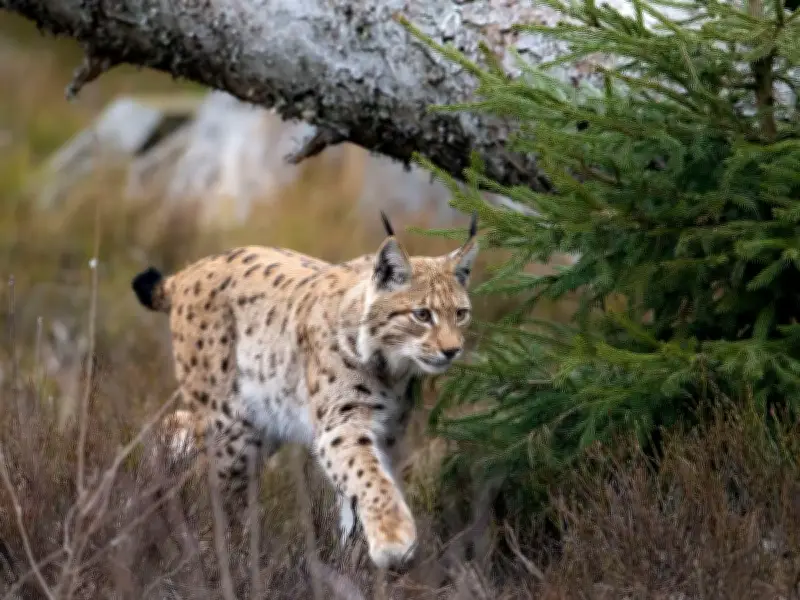
An organisation advocating for the return of lynx to the UK has failed in a High Court challenge against Natural England's refusal to assess whether the animals could be released into a Northumberland forest. Lynx UK Trust had contested the environment body's decision not to proceed to a full assessment of a proposed trial release of three lynx – two females and a male – into Kielder Forest.
The species has been extinct in the wild in the UK for more than 300 years, but reintroduction efforts have been pursued to support biodiversity, including by helping to control deer populations.
Background of the applications
Lynx UK originally applied in July 2017 for six lynx to be released into the forest as part of a five-year trial, but this was refused by the Department for Environment, Food and Rural Affairs (Defra) the following year. The group then submitted a revised proposal in 2022 for a three-year trial involving the release of three lynx from Sweden. That application was also refused by Natural England that year, with the body claiming such a release was prohibited by the Dangerous Wild Animals Act 1976 (DWAA).
The DWAA makes it an offence to release certain animals – including a number of mammals formerly native to the UK, such as the lynx – into the wild.
The legal challenge
Lynx UK challenged the second refusal at the High Court, with its lawyers arguing that the animals could still be released because the Wildlife and Countryside Act 1981 (WCA) still allowed authorities to issue licences for the release of animals which are not “ordinarily resident” in the wild in the UK, despite the terms of the DWAA. They also argued that the terms of the DWAA had been “impliedly repealed” by the terms of the WCA.
Natural England and Defra opposed the claim, which was dismissed by Ms Justice Obi in a ruling on Friday.
The judgment
In a 16-page judgment, she said: “Properly construed, the DWAA continues to apply to lynx as a scheduled dangerous wild animal. I am unable to accept either the claimant’s primary submission that the Act ceases to apply upon deliberate release pursuant to a licence under… the WCA, or its alternative submission that the relevant provisions have been impliedly repealed by the later enactment of the WCA.”
The judge also said Natural England’s decision not to undertake a full assessment, as it considered the release would be unlawful, was “open to it” and “rational”. She said: “On Natural England’s understanding of the law, the proposed release could not lawfully be implemented. In those circumstances, it was entitled to conclude that determining the 2022 application would serve no useful purpose.”