
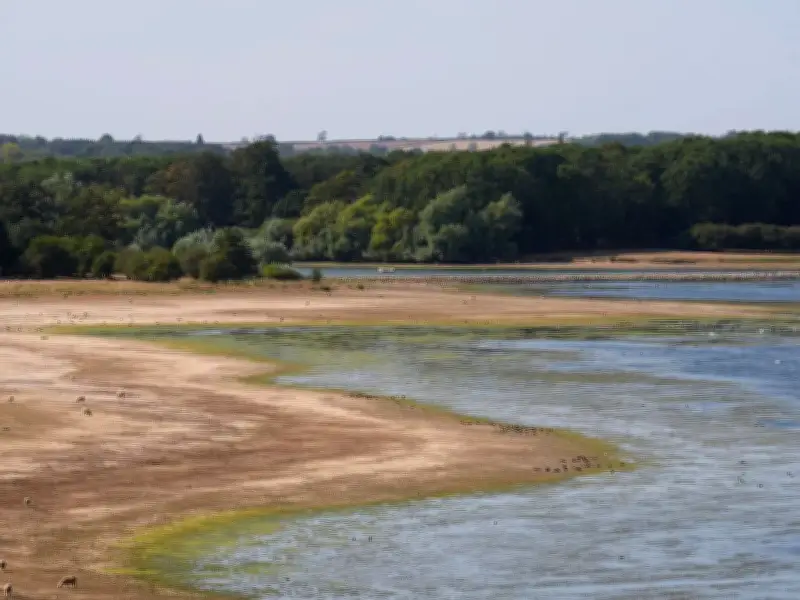
The remains of a lost village have emerged from the receding waters of Rutland Water reservoir in the East Midlands, as the UK endures a summer drought that is on track to be the warmest on record.
The Met Office confirmed on Tuesday (August 11) that the UK is set to experience its warmest summer ever, with only average conditions needed for the rest of the month to break the record.
Met Office senior scientist Mike Kendon said: "Another record-breaking summer now looks increasingly likely for the UK, following the second-warmest June, and second-warmest July on record and yet another heatwave imminent."
Record Temperatures and Dry Spell
Kendon noted that temperatures have reached 38°C in June and 35°C in early and late July, with similar highs expected in the coming days. He added that 35°C was also reached in late May, easily surpassing previous all-time records for May and June.
"These statistics are a clear reminder – if one were needed – of the stark changes that we are seeing in the UK's climate," he said. Forecasts indicate temperatures will remain well above average through much of the coming week, with another spell of heatwave conditions expected in some areas.
Village Emerges from Reservoir
With many parts of the nation going weeks without rain, low water levels at Rutland Water have uncovered the stonework of buildings that once formed the village of Nether Hambleton. Along with other small villages including Middle Hambleton, residents were relocated in the 1970s before the buildings were demolished to create the reservoir.
The reservoir was created by damming the Gwash valley near Empingham and was finished in 1976. Flooding took another three years, submerging over 3,000 acres of land to create one of the largest man-made bodies of water in western Europe. The reservoir covers more than four square miles, with cottages, farms and farmhouses destroyed to make way for it. At its maximum, it is 34 metres deep.
Drought Conditions Worsen
The past five months have seen rainfall across the East Midlands below average. The Environment Agency (EA) said the spring and summer period has been the driest since 1995, with July being the driest on record. The East Midlands, Lincolnshire and Northamptonshire, Kent and East Sussex, and Solent and the South Downs became the latest areas to move into drought status on Monday (August 10).
With an amber warning for extreme heat issued by the Met Office for Thursday (August 13), Tony Grayling, the strategic drought lead at the EA and chairman of the National Drought Group, said: "Drought conditions are worsening and will continue to do so until we see significant and sustained rainfall."
"We know the hot and dry weather is taking a real toll on farming and there will be long-lasting impacts on our environment. We want everyone to stay safe and hydrated over the summer, but we need everyone's help in using a little less water to make sure our current water reserves last. Every drop we can save is a drop more for your local farmers, local wildlife and local rivers."




