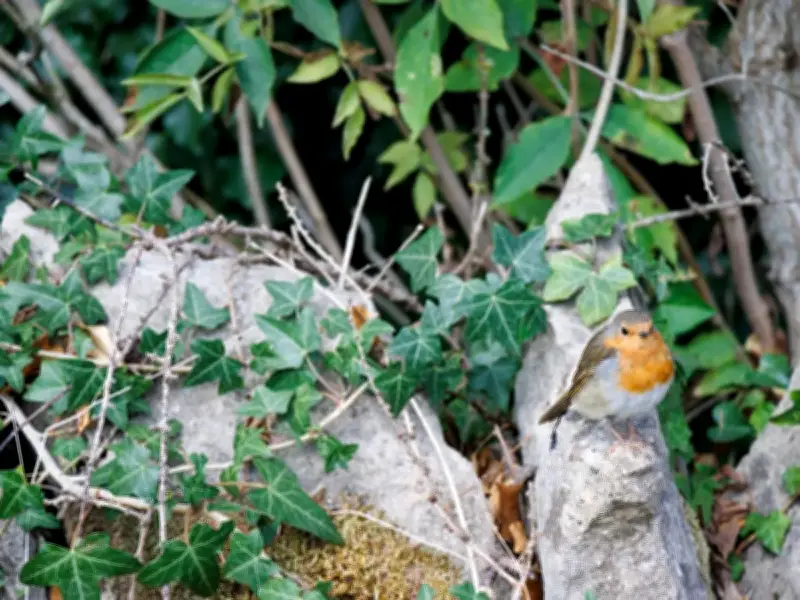
Robins and other garden birds will be drawn to gardens where common ivy is left to grow untrimmed, as the plant provides essential food and shelter during winter.
While much of nature lies dormant, robins, wrens, sparrows and blackbirds remain active throughout the colder months, and gardens can act as a vital refuge for birds seeking food and shelter. Households can help without necessarily purchasing or planting anything new.
Why Ivy Is a Haven for Birds
According to the Woodland Trust, "Ivy and honeysuckle are also popular with birds – they provide dense cover, fruits and attract insects for birds to feast on."
The Royal Horticultural Society (RHS) adds: "It may not be fashionable to grow ivy on walls and fences, but it's an absolutely excellent plant for providing nest sites for colonies of house sparrows as well as robins and wrens."
The Canal & River Trust describes holly and ivy as a "winter haven" for birds, noting that ivy berries are a valuable winter food source. The charity estimates that "these berries have the same number of calories as a chocolate bar, gram for gram," adding that they are "darkly coloured and rich in fat" and grow in abundance along canals and rivers.
Let the Lawn Grow Longer
Although ivy blooms in November, the trust explains that birds will consume shorter-lived fruits such as holly berries first, before turning to the hardier ivy berries from December onwards.
Another gardening task to strike from the to-do list is obsessively mowing the lawn. The RHS points out that dandelion seedheads serve as food for goldfinches, while shorter grass enables blackbirds, thrushes and starlings to forage for worms and other invertebrates.
Building a Bird-Friendly Garden
In general, a bird-friendly garden comprises a varied mix of plants, trees and shrubs that offer both food and shelter for wildlife. Shrubs that produce berries, such as hawthorn and elder trees, are an invaluable asset to birds.
Come May, the elder will burst into bloom with large clusters of creamy, highly fragrant elderflowers that are cherished by both humans and wildlife alike. Crab apple trees and rowans may draw in waxwings, while bullfinches are "particularly keen" on guelder rose berries, according to the RHS.