
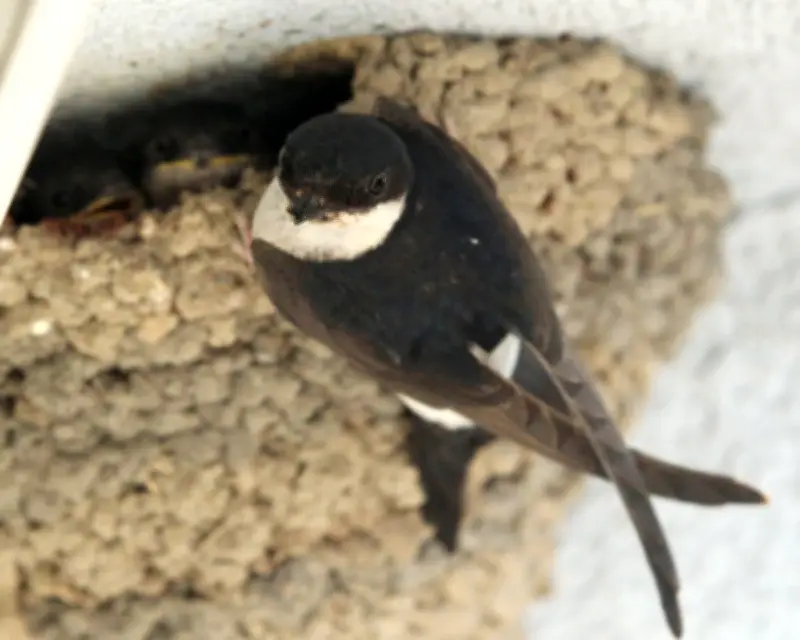
Looking out of her bedroom window, nine-year-old Freya noticed fast, blurry movement. She went outside with her father to investigate. He could not believe it: house martins.
Her father explained that house martins were common on their street in Norfolk 20 years ago, but then they vanished without explanation. This summer marks their return, and they have built a nest right next to Freya's window.
Nesting Activity Observed
House martins are small birds, about 12cm long. They swoop past the window in and out of the nest all day, suggesting chicks may be inside. House martins typically lay four or five white eggs, which hatch after around 14 days. They may lay eggs two or three times in a summer and feed their young flying insects.
To enter the nest, the birds dip near the bottom of the window and fly up rapidly, revealing their bright white bellies. Freya notes that if she sits quietly by the window, she can hear fast, high-pitched cheeping, as if the birds are chattering.
Mystery of Return and Conservation Status
Freya wonders why the house martins have returned to her street after two decades and where they spent their summers in the intervening years. She discovered that house martins are on the UK bird red list, meaning they are endangered. “We are very lucky to have them here,” she says. “I hope they come back every year.”
The birds migrate from Africa each spring, and their return to this specific location remains a puzzle. The family hopes the nest will continue to be used in future summers.




