
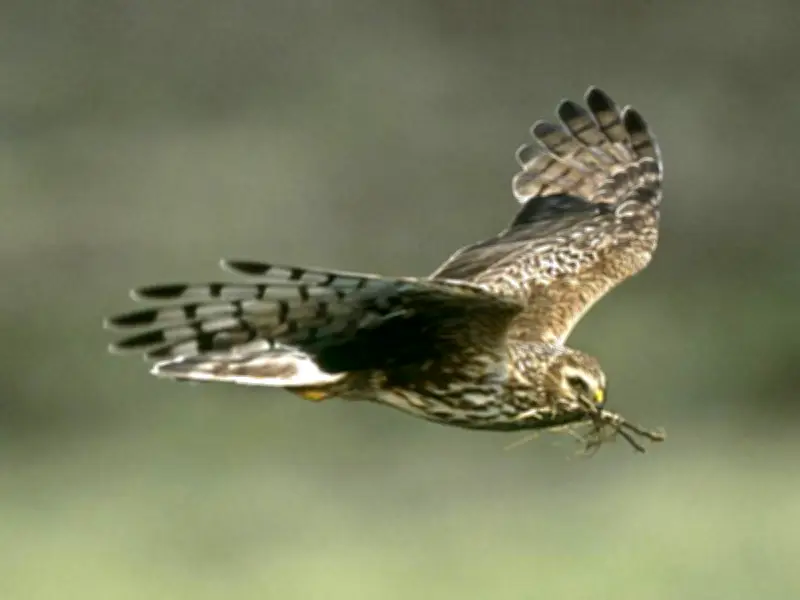
An appeal has been launched after a satellite tag was discovered cut from a missing Hen Harrier on a North Wales grouse moor. The bird, which had flown from the Peak District National Park to Ruabon Moor near Wrexham, has not been found since August 2025.
Disappearance and Discovery
In late August 2025, a satellite-tagged female Hen Harrier disappeared while on a driven grouse moor near Wrexham. The bird had fledged from a nest on the National Trust High Peak Estate in the Peak District National Park and was satellite tagged by the RSPB, with funding provided by the National Trust.
Towards the end of August, data indicated that the young bird had left the National Park and settled on Ruabon Moor, a driven-grouse moor in North Wales, on 28 August. On the evening of 31 August, the bird's satellite tag data said it was dead.
Following a search, the tag was subsequently recovered on Ruabon Moor on September 2, 2025, but the bird's body was nowhere to be found. The tag was submitted for forensic examination by North Wales Police, and analysis revealed the tag's harness had been deliberately cut with a sharp implement, like a knife.
Persecution Hotspot
Hen harriers are the most intensely persecuted of all the UK's birds of prey despite decades of legal protection under the Wildlife and Countryside Act 1981. Most crimes are associated with land managed for grouse shooting.
Ruabon Moor has become widely recognised as one of the UK's most notorious bird of prey persecution hotspots. Between 2018 and 2026, there has been the suspected persecution of five satellite-tagged Hen Harriers, the illegal poisoning of a Raven, and the use of illegal hawk traps in two consecutive years.
Mark Thomas, RSPB’s UK Head of Investigations, described the area near Wrexham as Wales' 'Bermuda Triangle' due to the fact it's the most notorious bird of prey persecution hotspot in the country. He added: "This three-month-old bird survived for just three days in the area before it vanished in highly suspicious circumstances. Based on years of evidence and intelligence, we suspect the criminal shot the harrier, cut the harness off the Hen Harrier’s body, discarded the tag and disposed of the body in separate locations to avoid detection."
Legal and Conservation Context
Anyone found to have killed or injured a bird of prey faces an unlimited fine and/or a maximum six-month jail sentence. The Hen Harrier is a scarce and vulnerable, red-listed species throughout Wales and the UK. The RSPB said its recovery across the country is being directly hindered by illegal persecution.
Decades of evidence, including the RSPB's recently published Patterns of Persecution report, have revealed how individuals on certain gamebird shooting estates unlawfully kill birds of prey to eliminate any perceived threat to their gamebird numbers to increase those available for shooting. These offences are frequently financially driven.
RSPB Cymru is calling for the introduction of a licensing system for Red Grouse shooting and release of non-native gamebirds to protect native wildlife.
Police Appeal
Sgt Peter Evans of North Wales Police Rural Crime Team said: "The circumstances surrounding the bird's disappearance are being treated as suspicious. Hen Harriers are a rare and protected species in Wales, making incidents of this nature particularly concerning. We urge members of the public to remain vigilant. If you witness any suspicious activity involving birds of prey, please report it to North Wales Police or the RSPB."
Anyone with any information is urged to call North Wales Police on 101 or report a wildlife crime on their website. Members of the public are urged to report any suspected incidents of bird of prey persecution by contacting the police on 101 and by submitting a report to the RSPB.




