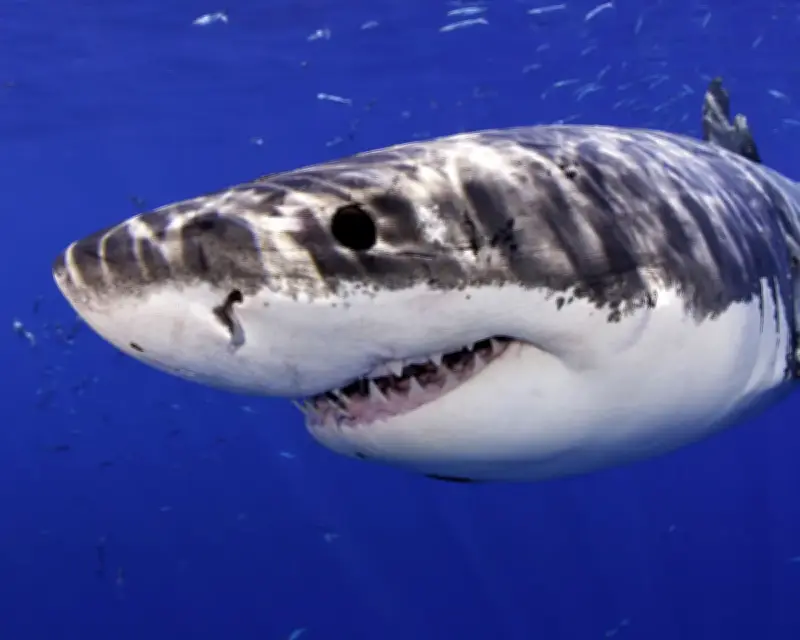
A great white shark launched itself several feet out of the water off Marina State Beach in California over the weekend, photobombing a group of friends as they posed for photos along the shore. Videos circulating online captured the breach in the background of the group's photo session.
Officials Confirm Shark Breach
California State Parks said in a statement to the Guardian that they independently confirmed a shark matching the characteristics of a great white breached off the shore near Marina State Beach at the same time as the video. Posted shark notices are in effect at the beach in accordance with the department's protocol.
State Parks reminded visitors that sharks are an important part of the coastal ecosystem and that interactions between people and sharks are rare.
Shark Habitat and Migration Patterns
Great white sharks frequent Monterey Bay seasonally, traveling to offshore waters near Hawaii before returning to California's coast in late summer and early fall. The Central Coast provides important habitat for these predators, which feed on fish and marine mammals, including seals.
In recent years, great white shark sightings have increased along parts of the west coast, with changing ocean conditions amid the climate crisis influencing their migratory patterns. El Niño events, which can bring marine heatwaves and warmer-than-usual ocean temperatures, can disrupt marine ecosystems, prompting cold-water species such as the great white to shift northward or move into deeper waters in search of cooler temperatures.
Ecological Role and Conservation Challenges
Classified as vulnerable by the International Union for Conservation of Nature (IUCN), great white sharks can grow up to 20ft (6 metres) long and weigh as much as 4,000lb (1,800kg). As apex predators and keystone species, they play a vital role in maintaining healthy marine ecosystems by regulating prey populations, redistributing nutrients and helping limit the spread of disease by consuming sick or injured prey.
Despite their critical ecological roles, great whites have long been misrepresented as man-eating predators, a portrayal popularized by films such as Jaws that have threatened their conservation. The species has faced steep population declines, exceeding 90% in some regions during the 20th century. Recreational and commercial fishing, by-catch, illegal poaching and trafficking, habitat degradation and the climate crisis continue to threaten their survival.