
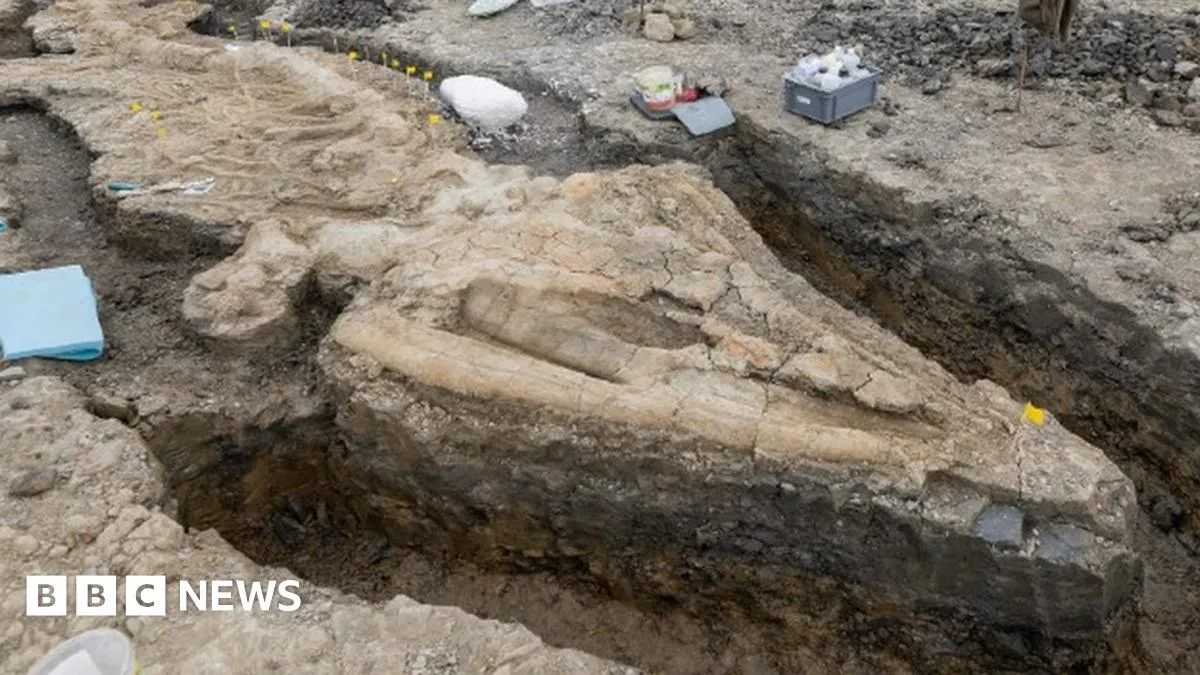
The team behind the discovery of the UK's largest and most complete ichthyosaur skeleton in Rutland has detailed the numerous obstacles they faced, from fossil thieves to bird droppings. The 33ft (10m) remains of the prehistoric 'sea dragon' were found at Rutland Water last February and unveiled to the public on Monday.
Conservator Nigel Larkin explained that the site's status as a bird sanctuary meant they had to spend much of the initial phase shovelling bird poo. 'It remained a hazard throughout the whole three weeks,' he said. The team also had to keep the discovery secret to prevent theft, closing nearby bird-watching hides as a precaution.
The bones themselves were extremely fragile, described as having 'the consistency of biscuit'. They were embedded in Jurassic clay that baked hard in the sun, risking cracks that could damage the fossil. The skeleton was recorded in 3D before being lifted in large sections protected by plaster.
Unexpected weather added further difficulty. 'It was so cold the plaster of Paris wouldn't set at first,' Larkin noted. The two largest pieces, weighing up to 1.5 tonnes, were moved to Shropshire for further study. Funding for the next phase of conservation and a permanent display in Rutland has yet to be secured.




