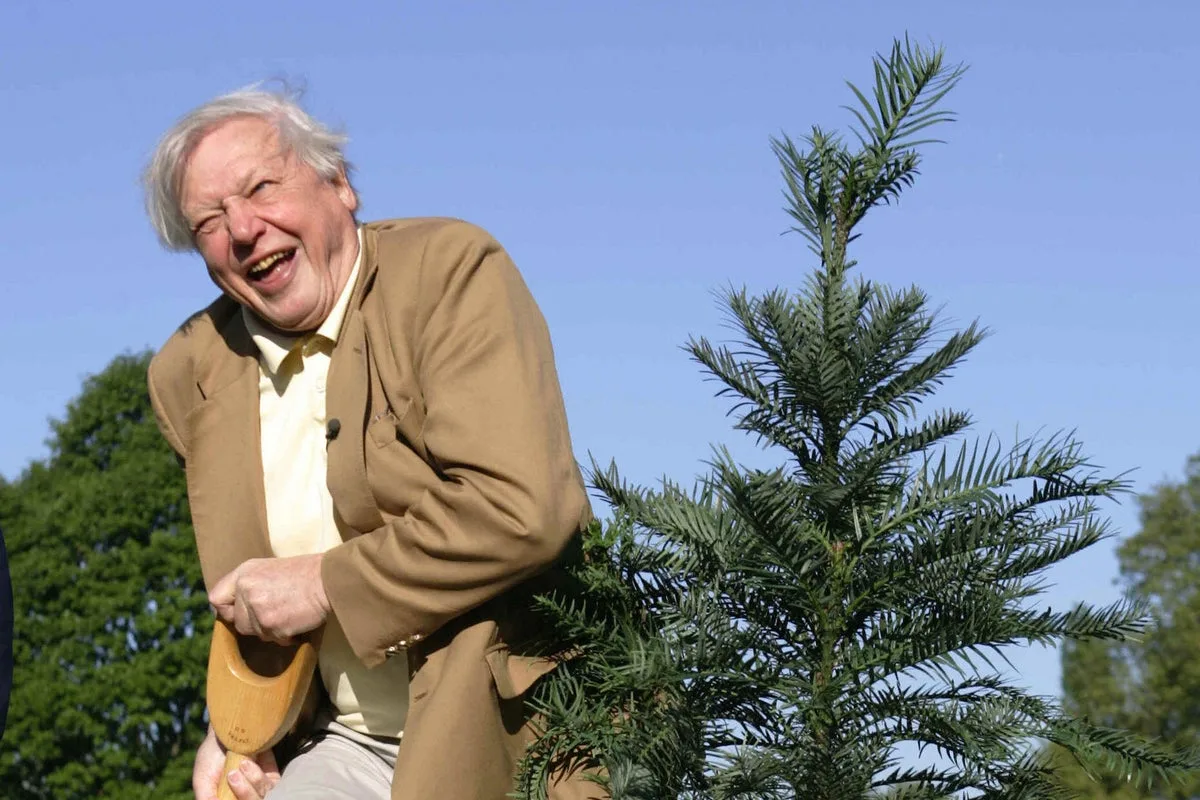
Sir David Attenborough's profound influence on public understanding of the natural world has led countless researchers to honour him by naming newly discovered species in his recognition. As the revered naturalist celebrates his 100th birthday on 8 May, here is a selection of the fascinating flora and fauna that bear his name.
This wildflower holds the distinction of being the first living species in the UK and Ireland named after him. Discovered in 2004 in the Brecon Beacons, it took a decade for scientists to confirm it was new. Taxonomist Tim Rich told the Guardian he named the “special little plant” after Sir David because “he inspired me to study ecology when I was 17. This is a personal thank you for the years of fascination he has given me going to different places to search for new things.” Sir David responded: “Bestowing a name on a new species is surely one of the greatest of biological compliments and I am truly grateful. It is an added joy that Hieracium attenboroughianum should be so beautiful and live in such a lovely part of the country.”
Among the animals named after him are a rare Amazonian butterfly found in the lowland tropical forests of the upper Amazon basin across Venezuela, Colombia and Brazil, and an Indonesian species of flightless weevil belonging to the genus Trigonopterus. There is also an extraordinary plant endemic to Palawan Island in the Philippines, and a long-beaked echidna inhabiting the highland forests of New Guinea.
One of the most ancient creatures to bear his name is a dinosaur that roamed Europe during the Sinemurian stage of the early Jurassic period. Sir David told the Washington Post in 2015 that this was his favourite of all the flora and fauna named after him. Others include a ghost shrimp from Madagascar, notable for its pectinate claw fingers, and a placoderm fish fossil discovered in the Gogo area of north-west Western Australia.