
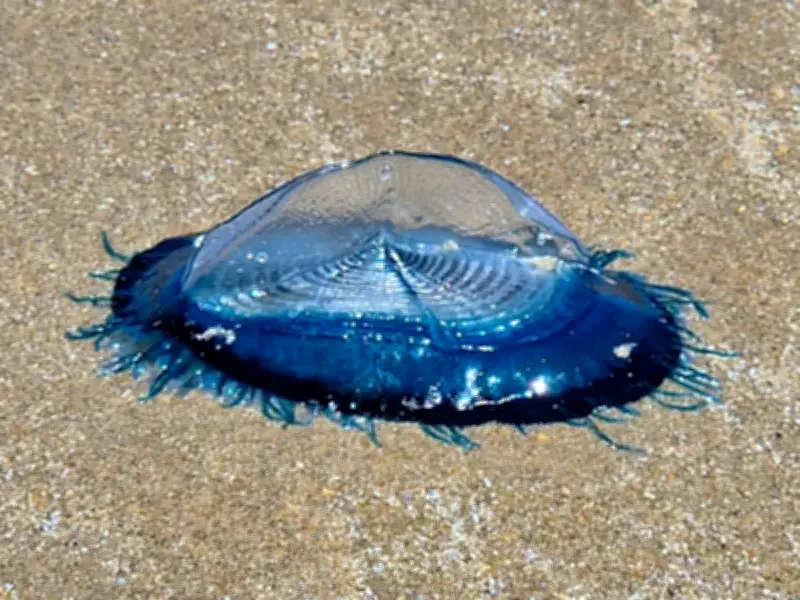
Beachgoers in Wales have been astonished by the arrival of hundreds of electric blue sea creatures washing up along the coastline. Marine experts have identified them as Velella velella, commonly known as by-the-wind sailors, and have advised the public not to touch them.
What Are These Creatures?
The Velella velella, closely related to the Portuguese Man o' War, are typically found in the Atlantic, Indian, and Pacific oceans. They are colonial hydroids, meaning they are not single creatures but colonies of tiny individual animals. Despite their jellyfish-like appearance, they are not true jellyfish.
Locals have described them as "crystal-like" and "stunningly beautiful." Sightings have been reported across Anglesey and the west Gwynedd coast, with one woman in Barmouth noting hundreds littering the beach.
Expert Advice
Frankie Hobro, owner of Anglesey Sea Zoo, explained that while their sting is generally mild, it can cause irritation if touched, especially on sensitive areas like the lips or eyes. She recommends covering up when in the sea and avoiding direct contact.
"By-the-wind-sailors are not dangerous, but their stings can irritate. You wouldn't want to touch your face or eyes after contact," Hobro said.
Why Are They Appearing Now?
Although usually seen in autumn and winter, the creatures are appearing in June due to a warm spell in late May followed by unsettled weather. This late appearance may be linked to changing ocean currents caused by climate change, which is also bringing Portuguese Man o' War earlier in the year.
- These creatures are around 7cm long with a small sail that catches the wind.
- They are carried by wind and currents, making their landfall a matter of chance.
- Experts advise wearing a rash vest and swim socks for protection.
Hobro added, "We’ll soon see more reports of dangerous creatures like Weever fish and Portuguese Man o' War. It can be difficult to avoid contacts, but protective gear helps."
While the blue tide may be surprising, it serves as a reminder of the diverse marine life along the UK coast and the impacts of climate change on ocean ecosystems.




