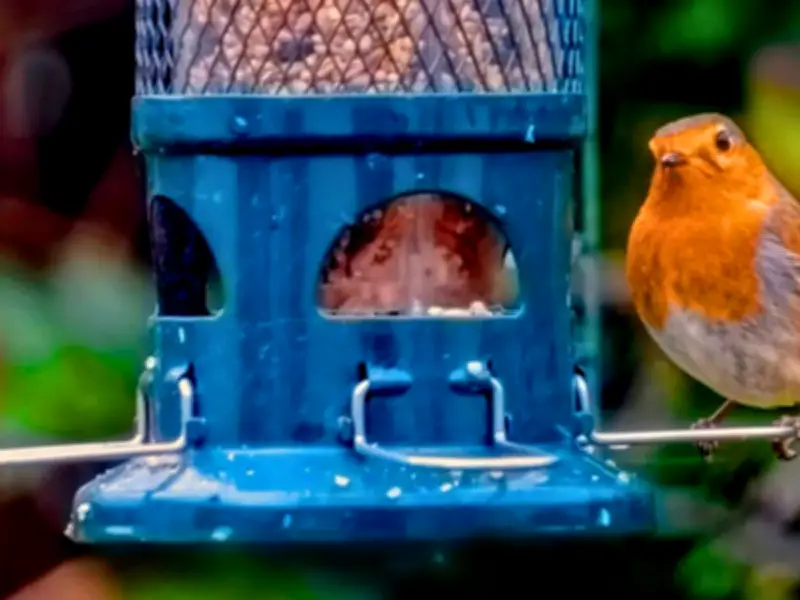
Putting up a bird feeder can be a thoughtful way to support birds during hot weather, but without regular maintenance, it could actually put them in danger. Birds can find it difficult to locate sufficient food during dry spells, as berries and worms tend to be in short supply, making garden feeders a vital source of nourishment.
Yet many people with a feeder simply top up the trays without giving it much further thought, when in fact these feeders need to be checked on a weekly basis to safeguard the health of visiting birds. Wildlife charity the RSPB is cautioning gardeners that numerous British bird populations are declining, partly due to bird feeders not being cleaned adequately.
Trichomonosis risk from unclean feeders
The RSPB said: "Research has shown a worrying decline in some of our much-loved garden birds due to a disease called trichomonosis. This is a highly contagious disease and can spread where birds gather in large numbers, such as at bird feeders."
Bird feeders can become hotbeds for bacteria because birds that would not ordinarily gather together are feeding in the same spot and leaving droppings throughout the area. When a feeder is not cleaned on a regular basis, faeces can accumulate nearby, increasing the likelihood of food becoming contaminated and raising the risk of disease passing between birds.
Weekly cleaning routine
The most reliable way to keep birds safe is simply to clean the feeder at least once a week using hot soapy water and a non-toxic disinfectant, readily available at most pet shops. Bird feeders also tend to become soiled quickly because most people position them in the wrong part of their garden, and relocating them on a regular basis will help keep them in better condition.
Spending just a few seconds each week repositioning a bird feeder helps prevent droppings and seeds from accumulating in one spot, and reduces the risk of birds consuming contaminated food.
Where to position a bird feeder
One of the most common errors people make is placing bird feeders beneath areas where birds like to perch, such as trees or shed roofs, which are typically exposed to greater amounts of bird droppings. It may seem logical to place a feeder close to a nest, but this will simply cause it to become soiled more rapidly, meaning you'll need to clean it far more frequently.
Try to avoid positioning feeders directly on soil and instead place them on a hard surface, as this will make them considerably easier to maintain. Some of the most ideal spots for a feeder are on patios, paving slabs, or concrete, as you can sweep away droppings or scattered seeds within just a few minutes.
It can feel like considerable effort to keep birds safe, but a quick clean and regularly shifting your feeder around the garden can make a genuine difference to British birds struggling during the summer heat.