
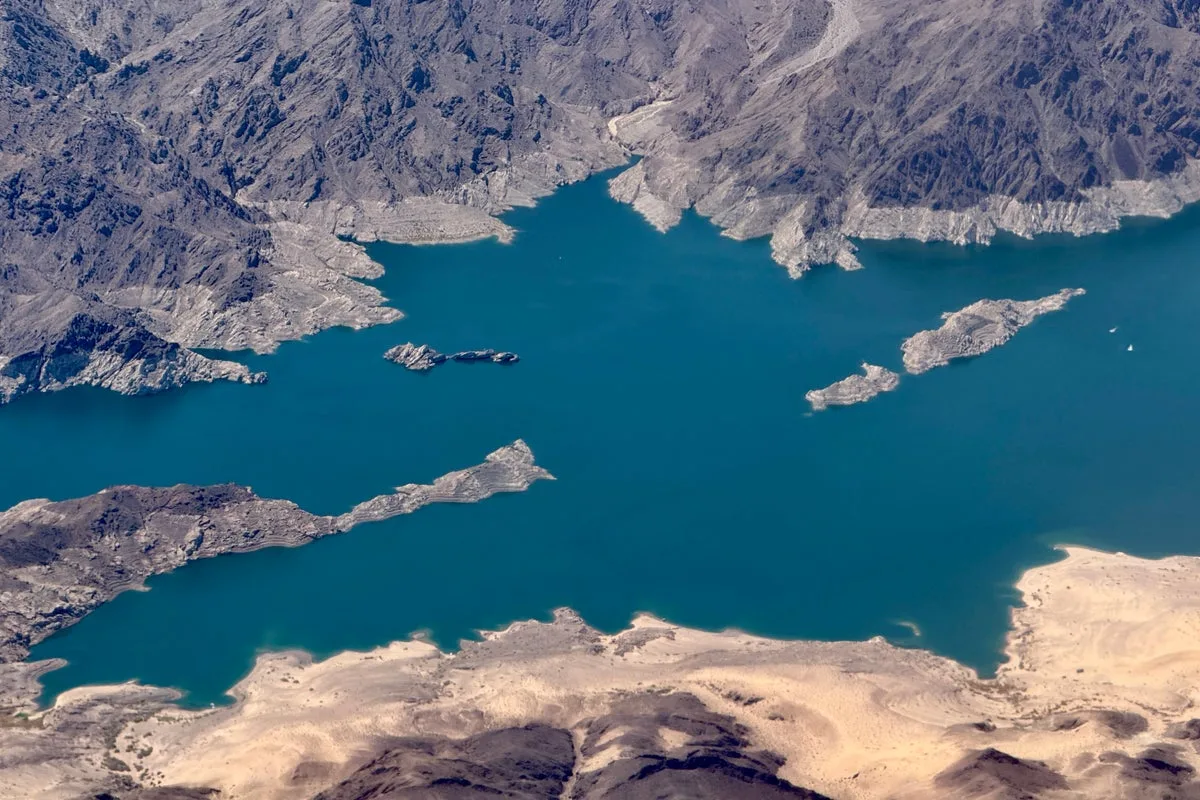
Lake Mead, the largest reservoir in the United States, has dropped approximately six feet since March 1, bringing it within 20 feet of its all-time low, according to reports. Located on the Nevada-Arizona border, the reservoir is now at about 35 percent capacity, with officials warning it could drop another 16 feet by 2027.
Bronson Mack, an outreach manager for the Southern Nevada Water Authority, attributed the decline to a very low snowpack this past winter, which supplies most of the lake's water. Despite the low levels, Mack assured that Southern Nevada's water supply remains safe, as water is drawn from the deepest part of the lake through pumping stations capable of reaching the lowest elevations.
Federal projections released last month indicate that Lake Mead could reach a record-low water level of approximately 1,032 feet by November 2027, eight feet lower than the previous record set in 2022. Drought conditions and the climate crisis have also caused water temperatures to rise, posing challenges for water treatment operations and the Hoover Dam's turbines, which rely on cooler water for cooling.
In March, officials issued a warning after a harmful algal bloom was detected in Government Wash within the Lake Mead National Recreation Area. The National Park Service stated that the bloom may contain toxins and is unsafe for swimming or contact, with children and pets at higher risk if contaminated water is swallowed.




