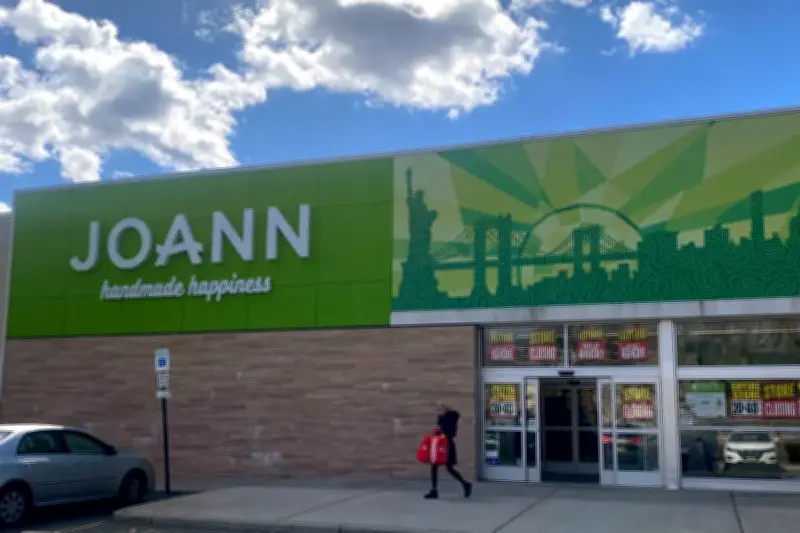
US crafters are looking to build a communal network to replace JoAnn Fabrics, the fabric and craft chain that was bankrupted by private equity investors in 2025. Fans are investigating how member-owned or worker-owned cooperatives could recreate the store's essence, minus the investors who gutted the company.
A cherished hub for crafters
To its dedicated fans, JoAnn Fabrics was more than a fabric store. It served as a vital hub for small businesses, including wedding dress makers, upholsterers, milliners and rug repairers. It taught generations to make, fix and craft, and a visit sparked new ideas in a way that shopping online cannot replicate.
The chain's rise and fall, from a Cleveland, Ohio, store founded by German immigrants in the 1940s to the 800-store chain closed by Leonard Green & Partners, has been memorialized in videos and Halloween costumes.
Exploring a co-op model
Sandy McClenahan, 35, a legal assistant, hat maker and former tech industry relationship manager, published a survey last month suggesting a call to action: “A craft and fabric co-op, owned by us.” The post drew hundreds of responses, including one person from every US state and 30 who wanted to be founding members.
“The ultimate big dream is to try to create an ecosystem that connects all of these people in the crafting world,” McClenahan said. “The model we’re investigating is how member-owned and/or worker-owned co-ops can help do that.”
It would not be just about buying fabrics, McClenahan added. The goal is to preserve individually owned businesses and the skills owners have. “How can we create an ecosystem that helps all of these crafts stay afloat and not get eaten up by private equity?”
Co-ops on the rise
Businesses that prioritize users and workers over profits are deeply embedded in US history and are growing as a reaction to the current state of US capitalism, cooperative specialists say. Worker-backed cooperatives have more than doubled from 315 firms in 2014 to 820 in 2024, partly due to driver-owned rideshare platforms. They join about 30,000 other US cooperatives, including REI, Ace Hardware and Land O’Lakes.
The number of employee stock ownership plans, or Esops, has also risen for the past three years on record, with more than 6,400 companies offering plans. A federal bill passed 16 September is expected to make it easier for more to form.
Julie Bosland, head of the Cooperative Development Foundation, a national non-profit, said these entities invest and earn revenues but use capital to grow a business “that serves the members and the community”.
Silver tsunami opportunity
About 40% of US small businesses are owned by baby boomers, who are retiring and about to transfer about $5tn in small business assets, McKinsey estimates. Private equity funds are already snapping up businesses from retiring owners, but a growing chorus, including Harvard Business School, suggests owners consider cooperatives instead.
Charity Schmidt, development specialist at the University of Wisconsin’s Center for Cooperatives, said the transition “isn’t going to be for everyone”. “Some people are like: ‘I’m tired, I want to retire, give me my check,’” she said. “But a lot of people want to see their legacy of what they built continue.”
Formerly family-owned Ward’s Lumber in upstate New York is among recent success stories. “That lumberyard is still locally rooted, so the profits are still in the community, and people don’t have to drive an hour” to get supplies, said Bosland.
Doug O’Brien, president and CEO of the National Cooperative Business Association, a trade group, suggested REI, the Washington state outdoor cooperative started nearly 90 years ago, could be a model for JoAnn’s users. “They care about really good products, and … the culture of that sector, and the community of that sector,” O’Brien said.
McClenahan stressed it is still very early days for JoAnn’s resurrection plans, but a shared physical space is key. “Being able to talk to people who don’t even do the same craft is just as important as being able to talk to somebody who does the same craft as you, because you never know what you’re gonna learn,” she said. “Those stores, they spark creativity just as much as they provide the things that you need.”