
British cities are bracing for a phenomenon known as 'firewaves' as early as this weekend, with climate change driving rising temperatures and increasing fire risks, experts warn. Researchers at Imperial College London, collaborating with the London Fire Brigade, have developed a predictive model to identify conditions that trigger multiple urban wildfires simultaneously, overwhelming emergency services.
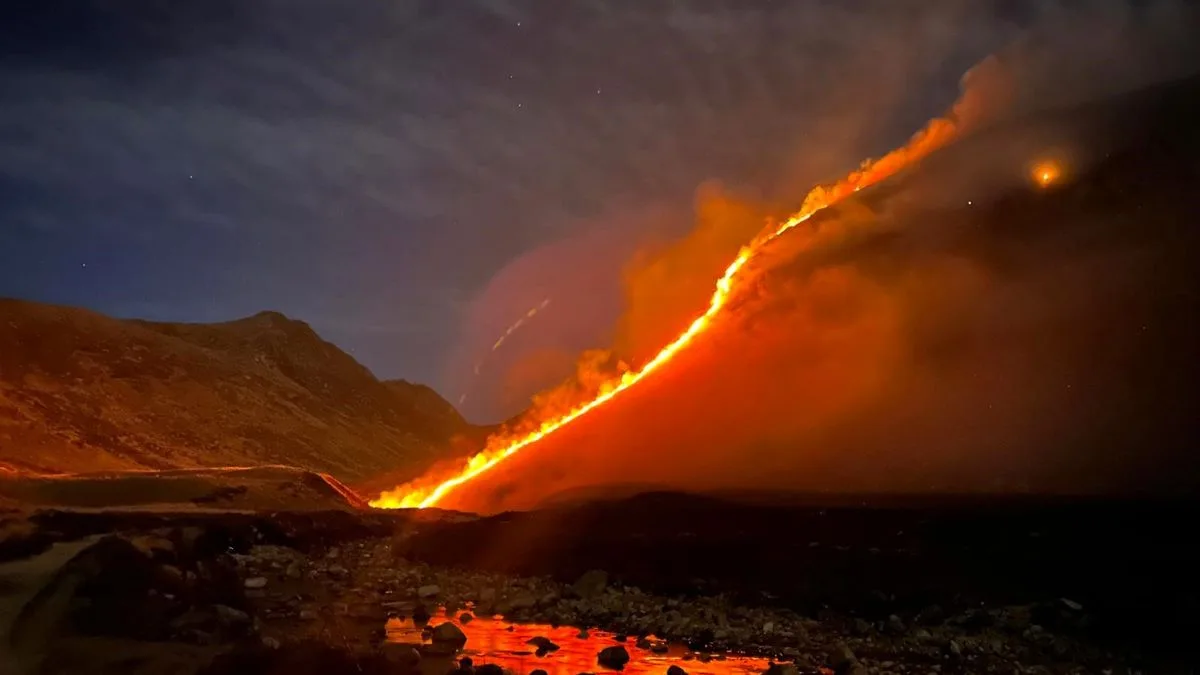
The warning follows a large blaze on Arthur's Seat in Edinburgh and three separate heath fires in London during the current UK heatwave. Professor Guillermo Rein of Imperial College London stated that current forecasts could make London a fire risk by this weekend. His team's research indicates that ten consecutive days of dry weather dramatically increase the likelihood of multiple fires igniting at once due to reduced moisture in vegetation.
The Imperial College team suggests the Met Office should adopt the term 'firewave' to reflect the risk of wildfires in urban areas during heatwaves. Professor Rein has been working with the London Fire Brigade (LFB) to predict firewave conditions. LFB Assistant Commissioner Tom Goodall welcomed the research, stating the brigade is 'ready to tackle the threat of wildfires head-on to help protect London's communities and green spaces'.
The research, which analysed data from 2009, identified key factors leading to urban wildfires, including the 'vapour pressure deficit'—a measure of how much moisture is extracted from the land. 'Vegetation doesn't just become a bit more flammable; it becomes much more flammable,' Professor Rein said. 'Once the moisture content drops below a certain threshold, even a small spark can lead to a fast-spreading fire.'
While most fires are started accidentally or deliberately by humans, rising temperatures are exacerbating the situation. 'Climate change is bringing more heatwaves and longer dry spells,' Professor Rein added. 'That risk is much greater now than it was even a decade ago.' He expressed particular concern for UK cities and other northern European cities, which lack institutional experience in dealing with wildfires.
Urban environments like London are considered most at risk due to green spaces adjacent to residential areas. In 2022, when London experienced temperatures over 40°C for the first time, the LFB had its busiest day since World War Two, with simultaneous fires destroying 37 buildings in Wennington, east London. The LFB has invested in drones and off-road vehicles to improve wildfire response.




