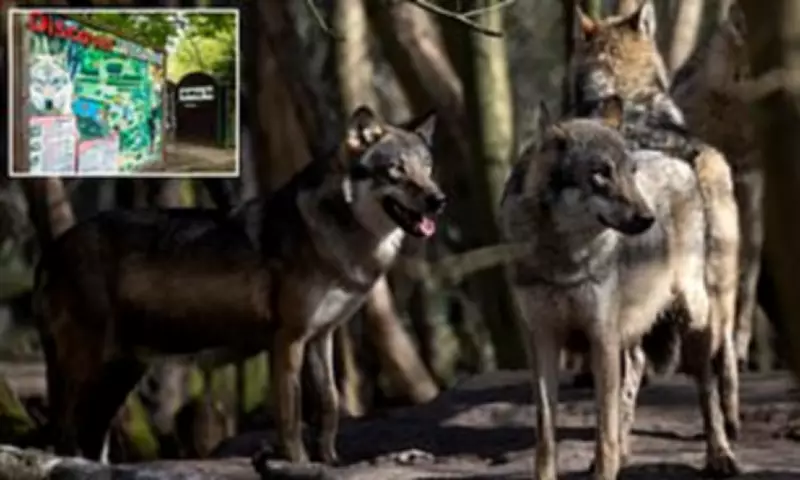
An entire pack of European grey wolves has been euthanised at an animal park in Kent due to escalating severe aggression among the animals. The Wildwood Trust in Herne Common described the decision as an 'absolute last resort' after violence within the pack resulted in multiple life-threatening injuries.
Drastic Measure Taken After Pack Dynamics Breakdown
The park, located near Herne Bay, Kent, had been home to five European grey wolves until recently closing their exhibit. Three of the five wolves had reportedly sustained serious injuries as aggressive behaviour intensified within the group.
A spokesperson for Wildwood Trust stated: 'There has been a severe escalation in aggressive behaviour within the Wildwood Kent wolf pack, resulting in multiple life-threatening injuries. Due to the volatility within the pack, our team has been unable to safely intervene or provide the level of veterinary care required.'

Extensive Expert Consultations Preceded Decision
Park bosses emphasised that the decision to euthanise the wolves was made only after taking extensive advice from veterinary professionals and animal experts. Detailed discussions between staff and specialists had taken place over a prolonged period.
'Euthanasia is only ever considered as a last resort,' the animal park added. 'Over a prolonged period, extensive efforts have been made to manage the pack, support individuals, and prevent escalation. However, the situation presented an ongoing and unacceptable risk to welfare, and we were no longer able to ensure the safety or quality of life of the animals within the group.'
Heartbroken Staff and Complex Social Structures
Wildwood Trust described this as an 'incredibly difficult moment' for staff members who have been left heartbroken by the outcome. Paul Whitfield, Wildwood Trust's director general, explained the challenges of managing wolf pack dynamics.
'Wolves are highly social animals that live within complex family structures, and when those dynamics break down, conflict and rejection can increase,' Whitfield said. 'In this case, it led to ongoing welfare concerns and an unacceptable risk of serious injury. Euthanasia is never taken lightly, but in responsible animal care it can sometimes be the most humane option when welfare can no longer be maintained.'
The Beloved Wolf Pack
The pack consisted of commanding duo Nuna and Odin along with their three male offspring: Minimus, Tiberius and Maximus. They had become a beloved attraction among local visitors, with news of their euthanasia prompting an outpouring of sadness from the community.
One visitor wrote: 'Devastated to see this. The wolves were so important and always my main reason to visit. Absolutely heartbreaking.' Another added: 'A sad day for all concerned, had the privilege of feeding these a few years back. Wolves being my favourite wild animal, this must have been a hard decision.'
Questions About Separation and Further Clarification
Some members of the public questioned why the wolves couldn't simply be separated rather than euthanised, describing the treatment as 'unnecessary'. One commenter suggested: 'In the wild they would at least be able to get away. This is why keeping packs and prides isn't a good idea.'
In response, Wildwood Trust released a further statement explaining: 'Unfortunately, moving the wolves was not an option. Wolves are highly social animals with complex pack structures, and once that breaks down in this way, relocation or separation is not safe or viable.'
Severity of Injuries and Welfare Considerations
The park revealed that the severity of injuries was extremely high, with multiple wolves sustaining life-threatening wounds and one individual already showing signs of sepsis. They declined to share images, describing them as 'very graphic'.
'At that stage, their condition could deteriorate very quickly, causing significant suffering,' the statement continued. 'Due to the instability within the pack, we were unable to safely intervene or provide the level of veterinary treatment needed. This meant that maintaining any acceptable quality of life for the animals was no longer possible.'

The decision was made alongside experienced animal managers and veterinary professionals, with euthanasia described as 'always a last resort' that in this case represented 'the only way to prevent further suffering'.