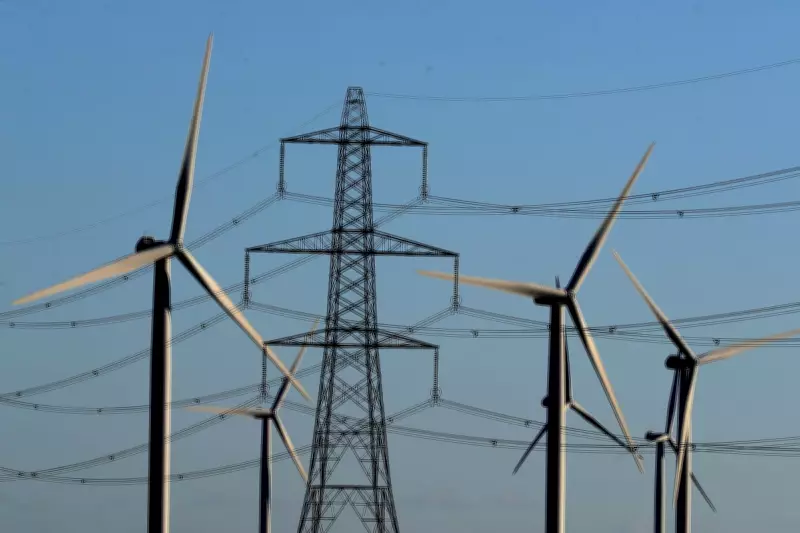
Renewables Surge to Record Share of UK Electricity Generation in 2025
Provisional figures released by the Department for Energy Security and Net Zero (Desnz) on Thursday confirm that renewable energy sources achieved a historic milestone in the United Kingdom last year. According to the data, technologies such as wind and solar power accounted for 52.5% of total electricity generation in 2025, marking a record high and underscoring a significant shift in the nation's energy landscape.
Record Output and Capacity Growth
The data shows that renewable sources collectively generated 152.5 terawatt-hours (TWh) of electricity in 2025, representing a 5.7% increase compared to the previous year. This surge was attributed to the accelerated rollout of renewable infrastructure across the UK, coupled with more favourable weather conditions that enhanced production efficiency.
In terms of capacity, the UK added 3.8 gigawatts (GW) of renewable capacity to the grid in 2025, bringing the total to 65.1 GW. This marks a substantial rise from 61.3 GW in 2024 and a dramatic increase from just 9.3 GW in 2010, highlighting the rapid expansion of clean energy technologies over the past decade and a half.

Political Context and Ministerial Response
This record achievement comes nearly two years after the Labour Party assumed power with a manifesto commitment to eliminate almost all fossil fuels from the UK's electricity grid by 2030. The government has argued that this transition will reduce household bills, stimulate economic growth, enhance energy security, and help meet international climate change obligations.
Energy Minister Michael Shanks hailed the 2025 figures as "a major step towards greater control over our energy, our bills and our future." He emphasised, "Britain didn't just break records in 2025 – we blew them away." Shanks also pointed to ongoing geopolitical tensions, such as the Iran conflict, which are driving up oil and gas prices, reinforcing the need for energy independence.
"Four years on from Russia's invasion of Ukraine we are again seeing what it means to be in the grip of volatile fossil fuel markets we do not control," he stated. "While we continue to fight for people's corner, with action taken at the budget cutting bills by £117 this week, we are also going further and faster on clean, homegrown energy such as solar and wind. This is how we get bills down for good and protect everyone from fossil fuel price shocks."
Breakdown by Renewable Source
The record share was driven by impressive performances from key renewable technologies:
- Wind power broke previous records, accounting for 30.0% of electricity generation after increasing by 4.1% and contributing 87.1 TWh.
- Solar power soared by 36.6% in 2025 compared to 2024, hitting a new record of 20 TWh and generating a 6.9% share of the UK's energy.
Challenges and Offsetting Factors
Despite the renewables surge, the overall picture was nuanced. Desnz reported that nuclear power hit a record low in 2025, which nearly offset the growth in renewables. Consequently, the share of generation from low-carbon sources dropped slightly from 65.0% in 2024 to 64.8% last year.
Meanwhile, fossil fuel generation increased by 2.0% compared to the previous year's record low, a rise attributed to reduced electricity imports. Overall UK energy production in 2025, which includes heating and transport as well as electricity, dropped by 1.0% to a record low, breaking the lows seen in 2023 and 2024. This decline was partly driven by falling fossil fuel production as output from older UK fields continues to wane, following the government's ban on new exploration licences for oil and gas fields in the North Sea.
Household Consumption and Emissions Trends
Household energy consumption in 2025 remained similar to 2024 levels, but officials noted it is significantly down on pre-pandemic averages. This reduction is due to factors such as higher energy prices and record warm temperatures in recent years.

In related data released earlier this week, the UK's greenhouse gas emissions produced within national borders decreased by 1.8% last year compared to 2024 and were down by 53.6% on 1990 levels. The sectoral breakdown for 2025 emissions is as follows:
- Domestic transport: 30.8%
- Buildings and product uses: 21.9%
- Agriculture: 12.5%
- Industry: 11.2%
- Electricity supply: 10.2%
- Fuel supply: 7.4%
Desnz highlighted that the largest emissions reductions were driven by decreased blast furnace use in the industrial sector and a fall in coal use in electricity supply, the latter following the UK's cessation of coal-fired electricity generation in September 2024 after the closure of the last coal power station at Ratcliffe-on-Soar.
Sector-Specific Emissions Changes
While industry and electricity supply emissions fell, the domestic transport sector saw a 2.2% increase in emissions, largely due to higher use of petrol and diesel in road transport. Conversely, fuel supply sector emissions decreased by 5.2% in 2025, driven by reduced generation from oil and gas supply compared to 2024. Additionally, a decrease in building heating usage led to a 1.7% drop in emissions from the buildings and product use sector.
This comprehensive data set illustrates the UK's mixed progress in its energy transition, with renewables achieving a landmark share but ongoing challenges in sectors like transport and nuclear energy requiring continued policy focus and investment.