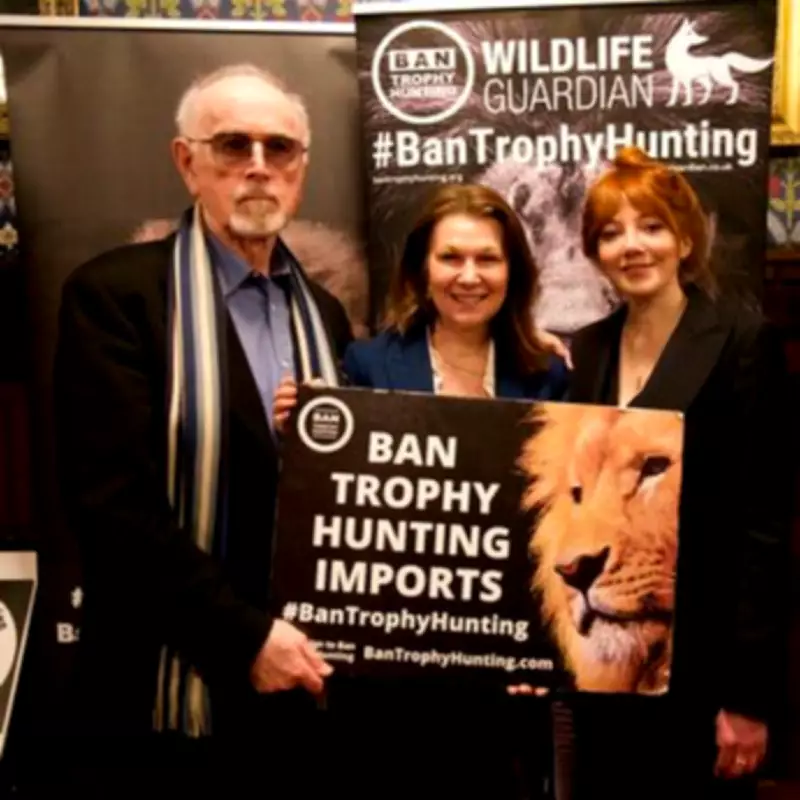
Comedian Diane Morgan Launches Scathing Attack on Trophy Hunting Practices
Diane Morgan, the celebrated comedian and star of Amazon's Last One Laughing and BBC's Motherland, has delivered a blistering critique of trophy hunting, describing it as "rich people playing the world's worst game of Pokemon." The 50-year-old actress has thrown her considerable support behind the Daily Mirror's ongoing campaign to end the import of hunting trophies into the United Kingdom.
Government Urged to End Legislative Delay
Speaking at a recent event in the House of Commons, Morgan issued a direct challenge to the government, urging ministers to "stop dithering" and implement a comprehensive ban. "Let's stop pretending this is complicated and let's finally pass a proper, comprehensive ban on trophy hunting in the UK," she declared. She lambasted the practice of killing majestic animals like elephants, lions, leopards, and zebras for decorative wall mounts, branding the resulting trophies as "the World's Most Disturbing fridge magnets."
Morgan elaborated on her analogy, stating, "Trophy hunting is a strange hobby. If someone said their hobby was collecting rare animals, you'd imagine they ran a wildlife sanctuary, not a hallway. Let's be honest about what trophy hunting actually is. It's not survival, it's not science, it's not conservation, it's rich people playing the world's worst game of Pokemon."

Persistent Imports Despite Public Outcry
Recent analysis reveals a troubling contradiction. Despite overwhelming public support and cross-party political backing for a ban, UK hunters continue to import trophies from endangered species. Data from the CITES Trade Database indicates that approximately 50 trophies from CITES-listed animals were imported into the UK in 2024 alone. This grim inventory included remains from elephants, lions, leopards, rhinos, and bears.
Public sentiment is unequivocal. More than 80% of the British public supports a ban on the import of hunting trophies, highlighting a significant disconnect between popular will and current policy.
Celebrity Advocacy and Conservation Claims Debunked
Morgan, best known for her character Philomena Cunk and her role in After Life alongside fellow animal activists Ricky Gervais and Peter Egan, dismissed common justifications for the practice. "I'm not a wildlife expert or a zoologist. I struggle to keep a houseplant alive," she quipped, "but even I understand the basic concept that if you love animals, you probably shouldn't be flying halfway around the world to shoot them and turn their head into a coat rack."
She specifically targeted the argument that trophy hunting aids conservation. "But that's not conservation. That's someone trying to recreate the Lion King in their living room. It's like saying, oh, arson helps the fire brigade to stay busy," she argued.
Legislative Stalemate and Campaigner Demands
The path to a ban has been fraught with delays. Although the House of Commons voted unanimously in favour of legislation to prohibit trophy imports in 2023, the bill subsequently stalled and failed to become law. This legislative inertia persists despite clear mandates.
Eduardo Goncalves, founder of the Campaign to Ban Trophy Hunting, echoed Morgan's calls for action. "With overwhelming public support and cross-party backing in Parliament, the time has come to close this loophole once and for all," he stated, "and ensure endangered animals are not killed abroad simply so their heads, skins or tusks can be brought back to Britain as trophies."
Government Response and Parallel Fur Trade Campaign
A spokesperson for the Department for Environment, Food and Rural Affairs (Defra) provided a cautious response, noting, "The government has committed to introduce a ban on the import of hunting trophies from species of conservation concern. We are carefully considering all available options. Our priority remains progressing and delivering legislation to introduce a ban as soon as Parliamentary time allows."

The Mirror's campaign against trophy hunting runs parallel to its successful efforts to curb the fur trade. A recent Defra consultation revealed that 96% of nearly 30,000 respondents strongly agreed that killing animals for their fur is wrong. Respondents cited inherent cruelty, the availability of faux fur alternatives, and the risks of outsourcing animal welfare violations.
Claire Bass, senior director of campaigns for Humane World for Animals UK, highlighted the inconsistency in UK policy. "It's clear from the Committee's findings that trading in fur from caged, tormented, diseased and injured animals is completely at odds with the UK Government's recent Animal Welfare Strategy commitment," she said. The organisation leads the #FurFreeBritain campaign, demanding the government uphold its promise to maintain high welfare standards in trade by enacting a permanent ban on fur imports.
The Animal Welfare Committee has published a damning report on the fur trade, concluding that consumer and market forces are insufficient to safeguard animal welfare and indicating support for legislative action. This adds further pressure on the government to align its trade policies with its stated ethical commitments on animal welfare.